Eileen O’Grady
Harvard Staff Writer
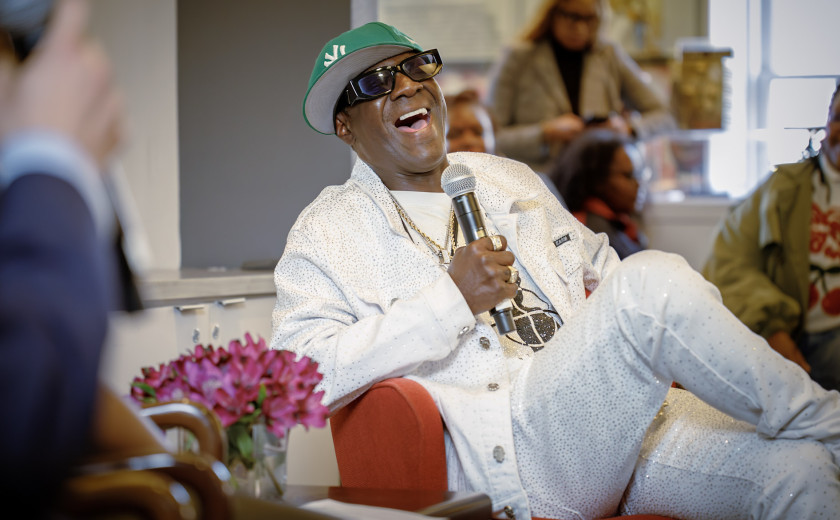
The Public Enemy icon discussed his career, his influences, and the power of music as political commentary.
/ Read time: 5 minutes
Harvard Staff Writer
A real-life tragedy inspired Public Enemy’s 1990 hit “911 Is a Joke.”
In an appearance at the Marcyliena H. Morgan Hip Hop Archive & Research Institute, the song’s primary creator recalled being in junior high school when a friend was stabbed during a gang fight. Paramedics arrived too late.
“On the way to the hospital, he passed away in an ambulance. That’s why I wrote the words the way I wrote them,” said William Jonathan Drayton Jr., better known as Flavor Flav, founding member of the group Public Enemy.
Speaking to an audience of a few dozen at the Marcyliena H. Morgan Hip Hop Archive & Research Institute, the hip-hop star quoted from his own lyrics, which critique slow ambulance responses to calls from Black neighborhoods.
“I dialed 911 a long time ago. Don’t you see how late they’re reactin’? They only come and they come when they wanna.”
The April 6 listening party and talkback was hosted by the Hutchins Center for African & African American Research and the Harvard College Dean of Students Office. The event featured Flavor Flav discussing his career and musical influences with Associate Dean of Culture & Community Alta Mauro and Dexter Griffin ’27.
While in Cambridge, Flavor Flav, an ardent supporter and sponsor of U.S. women’s sports, also visited with the Harvard women’s water polo team, made an appearance at the Cultural Rhythms festival, volunteered at the Harvard Square Homeless Shelter, and met with local youth.
Rocking bedazzled white pants with a matching jacket, sunglasses, and, of course, his signature clock pendant, Flavor Flav drew whoops and murmurs of recognition at the mention of beloved hip-hop classics and, at one point, his signature catchphrase “yeah, boyeeeee!”
Flavor Flav, who confirmed he can play about 14 instruments, attributed his talent for music to a highly musical family. His mother, Anna Drayton, was a pianist who once performed at Carnegie Hall, while his uncle, James De Leston, was a songwriter for Nat King Cole. Three of his cousins are members of the famous hip-hop collective Wu-Tang Clan: RZA, GZA, and Ol’ Dirty Bastard.
Flavor Flav played the organ as a child. He recalled that the first song he taught himself was the “Batman” theme song.
“I ain’t gonna lie, to me at that time, that was a big deal,” he said, laughing at the memory. His favorite instruments to play today are the piano, drums, and bass guitar.
Griffin asked about meeting Public Enemy co-founder Carlton Ridenhour, better known as Chuck D, at Adelphi University in the early 1980s. In those days, both men worked part-time for Chuck D’s father, delivering furniture around Greater New York City for interior designers and decorators.
“We wrote our first album, ‘Yo! Bum Rush the Show’ in the U-Haul truck,” Flavor Flav recalled.
Public Enemy, which formed out of the college radio scene in the mid-1980s, quickly became a leading political voice in hip-hop, using its music as a vehicle for political protest. Songs like “Fight the Power” and “Don’t Believe the Hype” spoke to issues like systemic racism, police brutality, and media bias.
The pairing of frontman Chuck D, who delivers searing social commentary, and “hype man” Flavor Flav, who provides comic relief, proved quite effective.
“Flavor Flav is based on a street character,” the artist told the audience. “This was an actual character that I actually lived. A lot of these things that I said in my records, I actually lived them. And that’s what really brought a lot of people to our Public Enemy shows.”
Mauro observed that the pairing works so well because Flav’s “party guy” persona helps to make Chuck D’s social commentary palatable for the casual listener.
“My dad used to say, ‘Give people something they need in a package they want to receive,’” Mauro told Flav. “I’m crediting you with creating this package that people want to receive so they can hear the political messages in the music.”
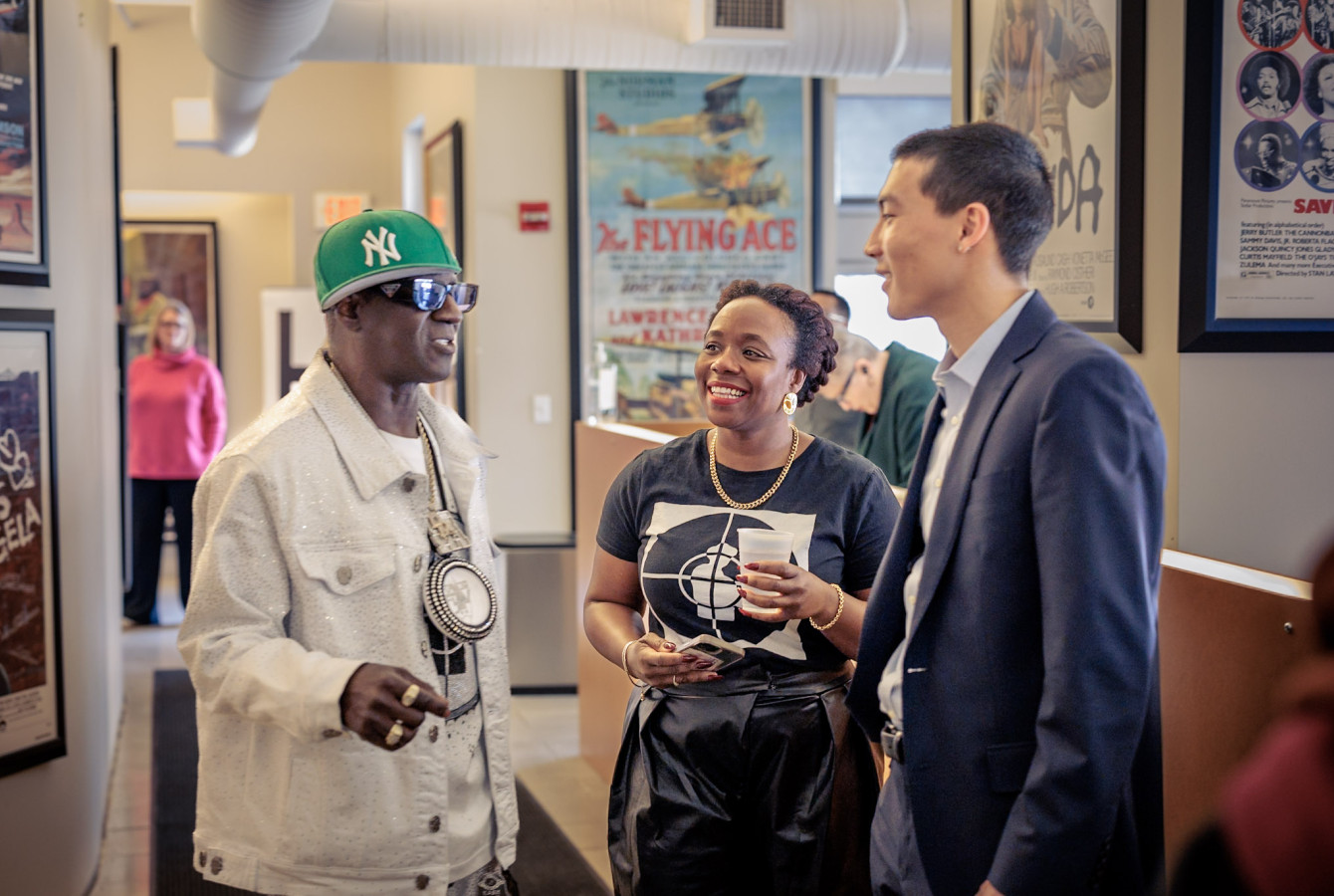
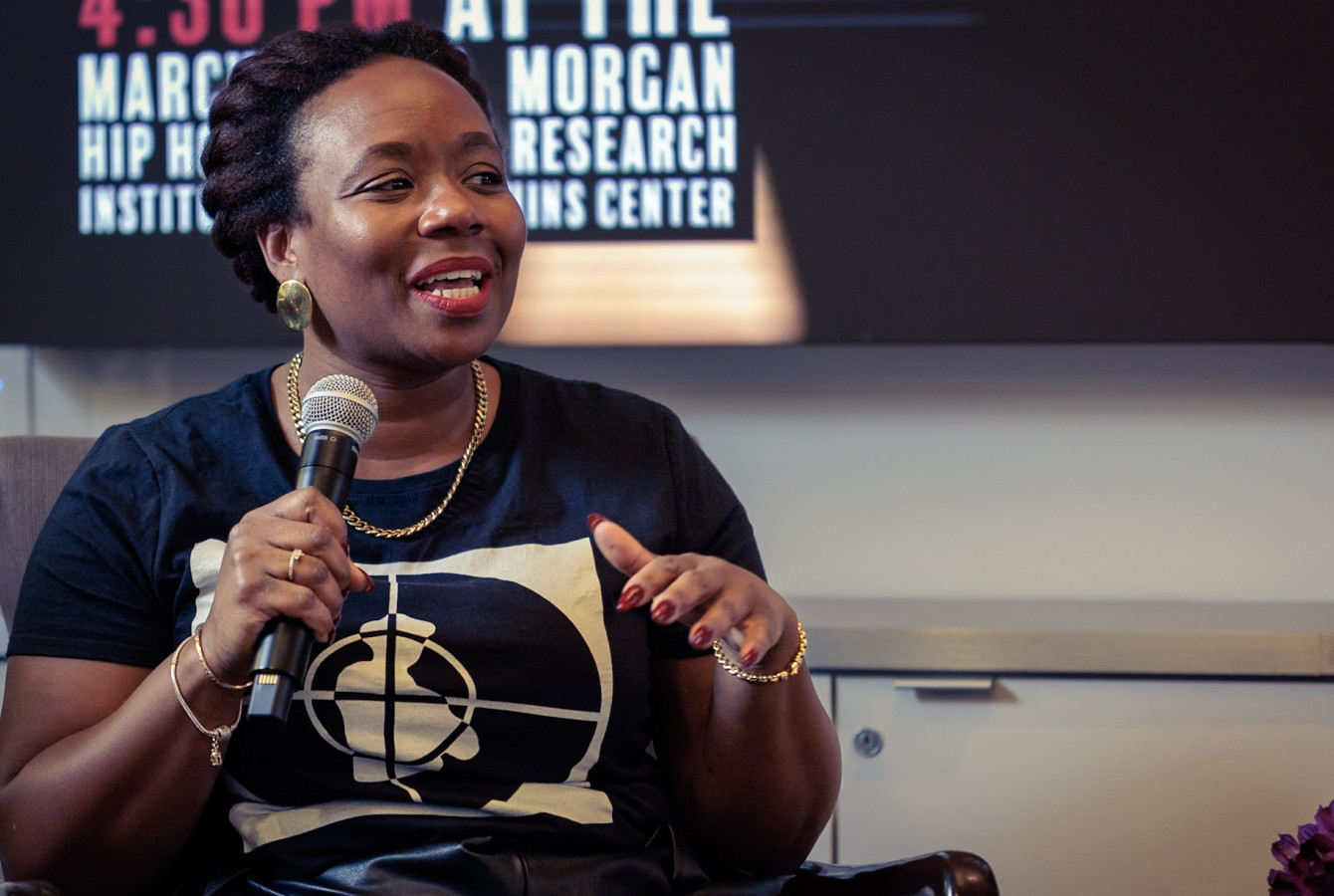
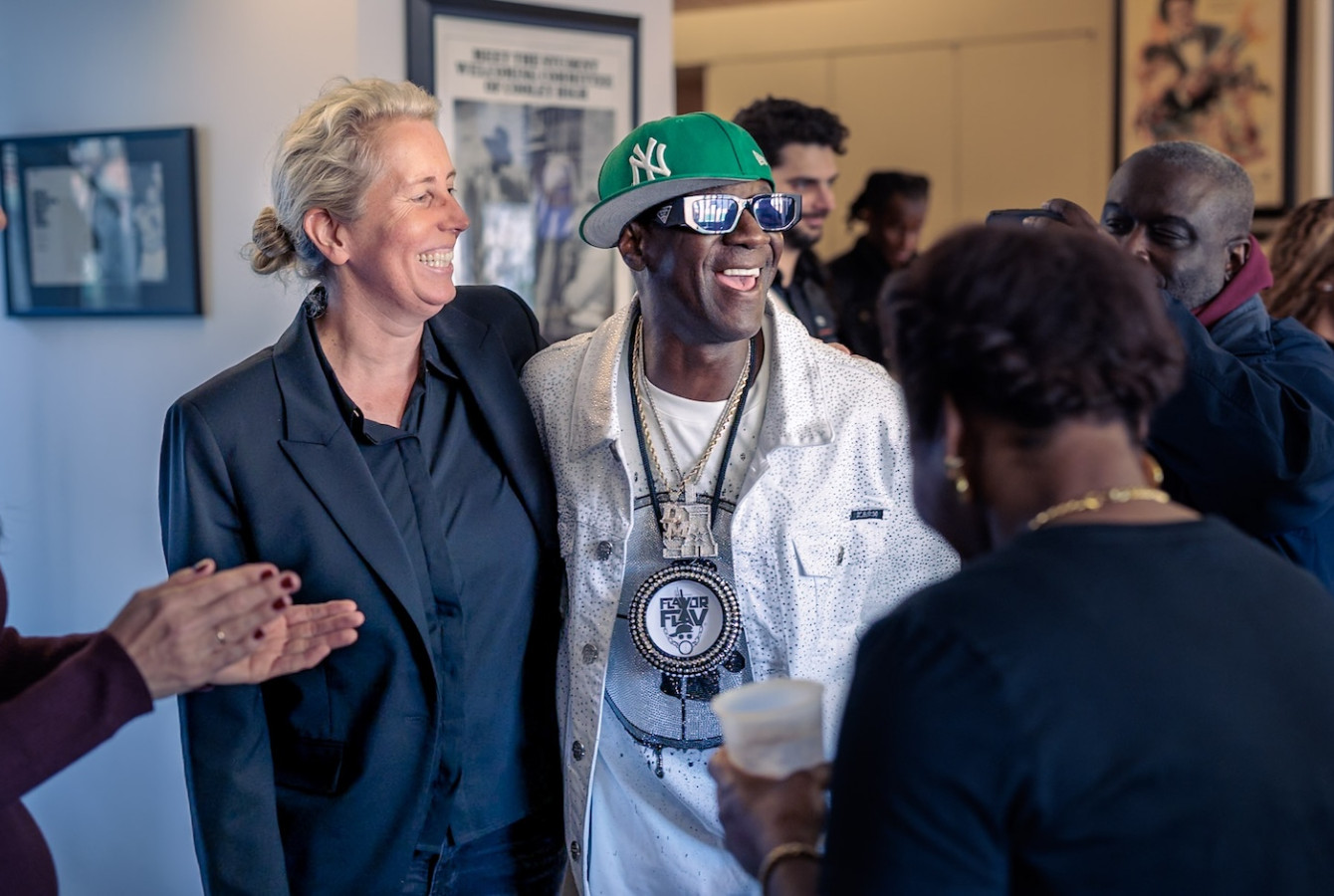
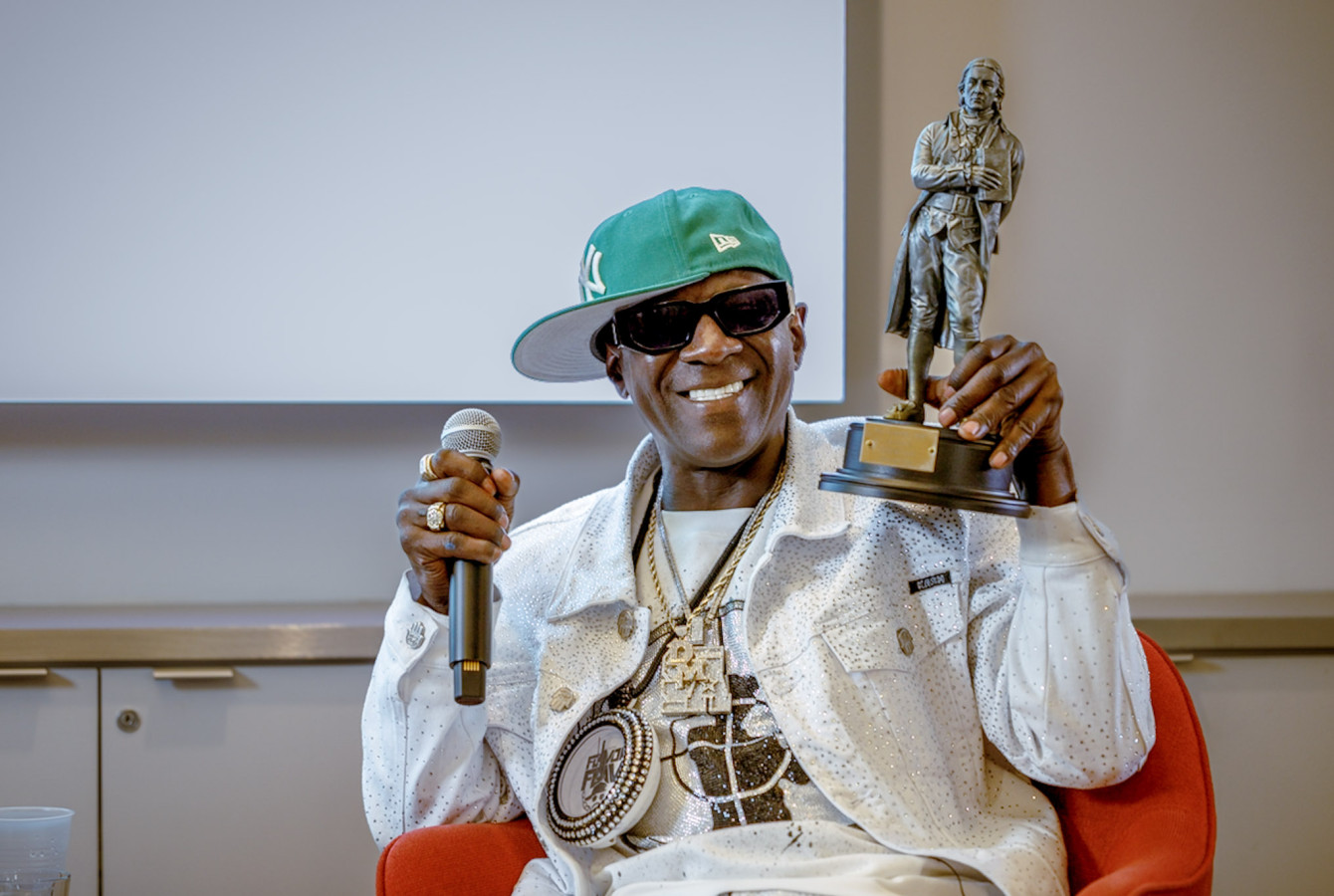
Flavor Flav said he feels honored when people come up to him to share how his music changed their lives or got them through challenging times.
“Through all of the work that we’ve done, I just really hope that it really made a difference,” he said. “When you can reach one person, you reach the whole world. I just hope that that message still continues to work upon people to this day.”
Still, Flavor Flav worries today’s hip-hop music lacks that social impact. He shared that he isn’t a fan of songs that “brag” about money or violence without having a larger purpose.
“We always wrote about the problems that was going on in our neighborhoods, but in the same record, we would try to come up with a solution to the problem,” he explained. “Today’s music, to me, is missing messages.”
When asked about which iconic hip-hop artists he would recommend to young people today, Flavor Flav cited some of his own heroes and influences: The Sugarhill Gang, Funky 4 + 1, Kurtis Blow, MC Shan, and Biz Markie.
“You, you got what I need,” he crooned, launching into the chorus of Biz Markie’s 1989 earworm “Just a Friend.” “Sing it, y’all, come on!”
The audience immediately joined him.

Harvard geoscientists reported that organic matter harvested from certain meteorites bears chemical traces of “primitive oxygen reservoirs” that have changed little since the birth of our solar system. The findings help trace the origins of organic matter that meteorites may have delivered to a young Earth, supplying the planet with ingredients essential for life.

Singer Mavis Staples, actress Angela Bassett, and soccer star Didier Drogba were among the honorees presented with W.E.B. Du Bois Medals Thursday at Sanders Theatre. The annual ceremony, hosted by the Hutchins Center for African & African American Research, recognizes outstanding contributions to Black history and culture.

“We will keep working at it until we get it right,” the FAS dean said.