Christy DeSmith
Harvard Staff Writer
Shayla Monroe, assistant professor of archaeology, renovated the space with an eye to honoring its storied collection.
/ Read time: 4 minutes
Harvard Staff Writer

Gone are the unprotected trays of animal bones that once lined the room. The Zooarchaeology Lab’s collection of 1,300 specimens is now neatly catalogued into sleek metal cabinets.
“This space is very important to our discipline,” said Shayla Monroe, assistant professor of archaeology. “I was cognizant that it deserved more resources.”
Real estate for the 850-square-foot lab, a hidden gem within the Peabody Museum of Archaeology and Ethnology, was originally set aside by the late Museum of Comparative Zoology curator Barbara Lawrence. Her student, the longtime anthropology lecturer Richard H. Meadow, filled it over the years with one of the world’s most historically significant and geologically diverse zooarchaeology collections.
Monroe calls Meadow a giant of their field, “one of the most experienced and sought after.”
Today, the lab Meadow formally established in 1981 is tidier and brighter, its walls freshly painted with a faint shade of lavender. Monroe, who joined the faculty in 2023, worked to create a more multifunctional setting for research and learning.
Only the lab’s second director, she is an expert in faunal analysis, or the study of animal remains recovered from ancient sites. As an undergraduate, the lifelong animal lover initially set out to study zoology. At Howard University, she ended up double majoring in English and anthropology.
An interest in Meroitic script, a writing system from the ancient civilization of Meroe, drew Monroe’s interest to northeastern Africa’s Nile Valley. For a time, she hoped to pursue the specialty of linguistic anthropology. But Howard’s interdisciplinary curriculum kept Monroe’s options wide open.
“I eventually became interested in what animals bring out in people,” she recalled. “Animals constantly inspire and sometimes require us to remake ourselves. When a group of people acquires a herd of cattle, they have to change the way they organize their time, their labor, and their schedules.”
Studying the Nile Valley, which follows the famous river from Sudan north to Egypt, led Monroe to graduate school at University of California, Santa Barbara. “I knew I wanted to focus on ancient Nubia as well as the relationship between people and animals,” she said. “I settled on a specialty called zooarchaeology. It’s prominent at Harvard because everyone knows Richard Meadow, but at most other schools people say, ‘zoo-what?’”
As Monroe advanced, the connections between people and cows proved especially salient. Cattle-centric symbolism turns up in all the great cultures of North Africa, from pharaonic Egypt to successive Nubian empires including the Kingdom of Kerma. The human-cow relationship persisted across the Sahara region over thousands of years, Monroe explained, even though the environment was desiccated by 4000 B.C.
“It is hard to keep something as large as a cow alive in a desert, but people kept investing in these animals,” said Monroe, whose co-authored book on the place of cattle across the entire history of what is now Sudan will be released in May.
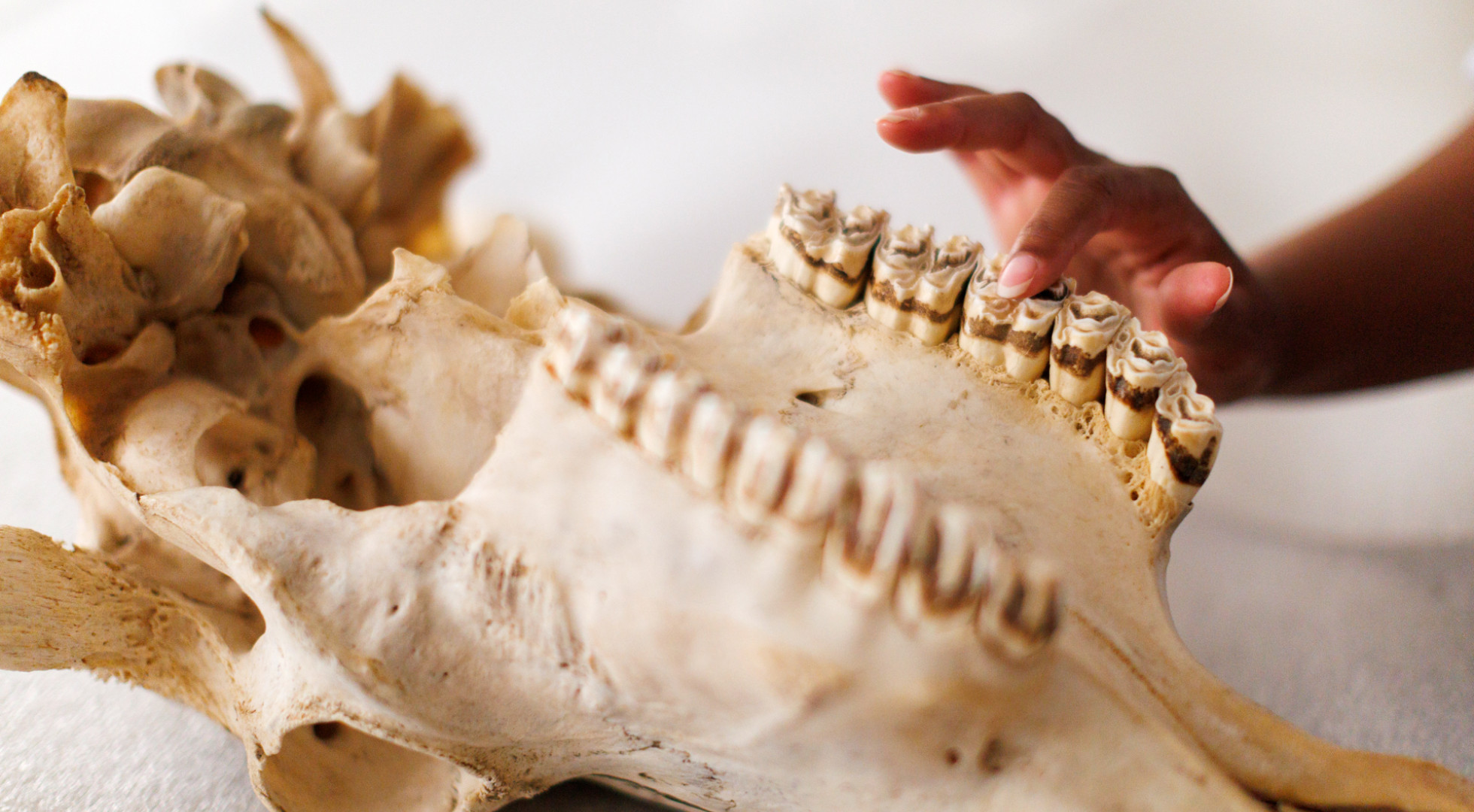
At an archaeological site called Tombos, in northern Sudan, Monroe first explored how pastoralists and their cattle fared amid political clashes between ancient civilizations. Her 2021 dissertation focused on animal bone remains found at Sudan’s enormous Fortress of Askut. It was built by Egyptian pharaohs circa 1850 B.C., at the height of tensions with neighboring Kerma.
“I’m trying to figure out why cows there were so incredibly small,” said Monroe, who is at work publishing additional findings from the site. “I’m wondering if there was a political ecology to who got access to the best grazing lands, who got access to the best water.”
Also intriguing is the inflammation evident in many bovine bones from the site. “Maybe we can learn from the condition of these cattle about how pastoralists survived extreme aridity,” Monroe offered.
At Harvard, Monroe has melded her interdisciplinary interests into a lecture course titled “Anthropology of the African Holocene.” The curriculum, focused on sites dated 12,000 B.C. to 1500 A.D., draws on knowledge from linguistics, archaeology, religious studies, and more. The undergraduate offering, last available to Harvard College students in the fall, is also available online at Harvard Extension School.
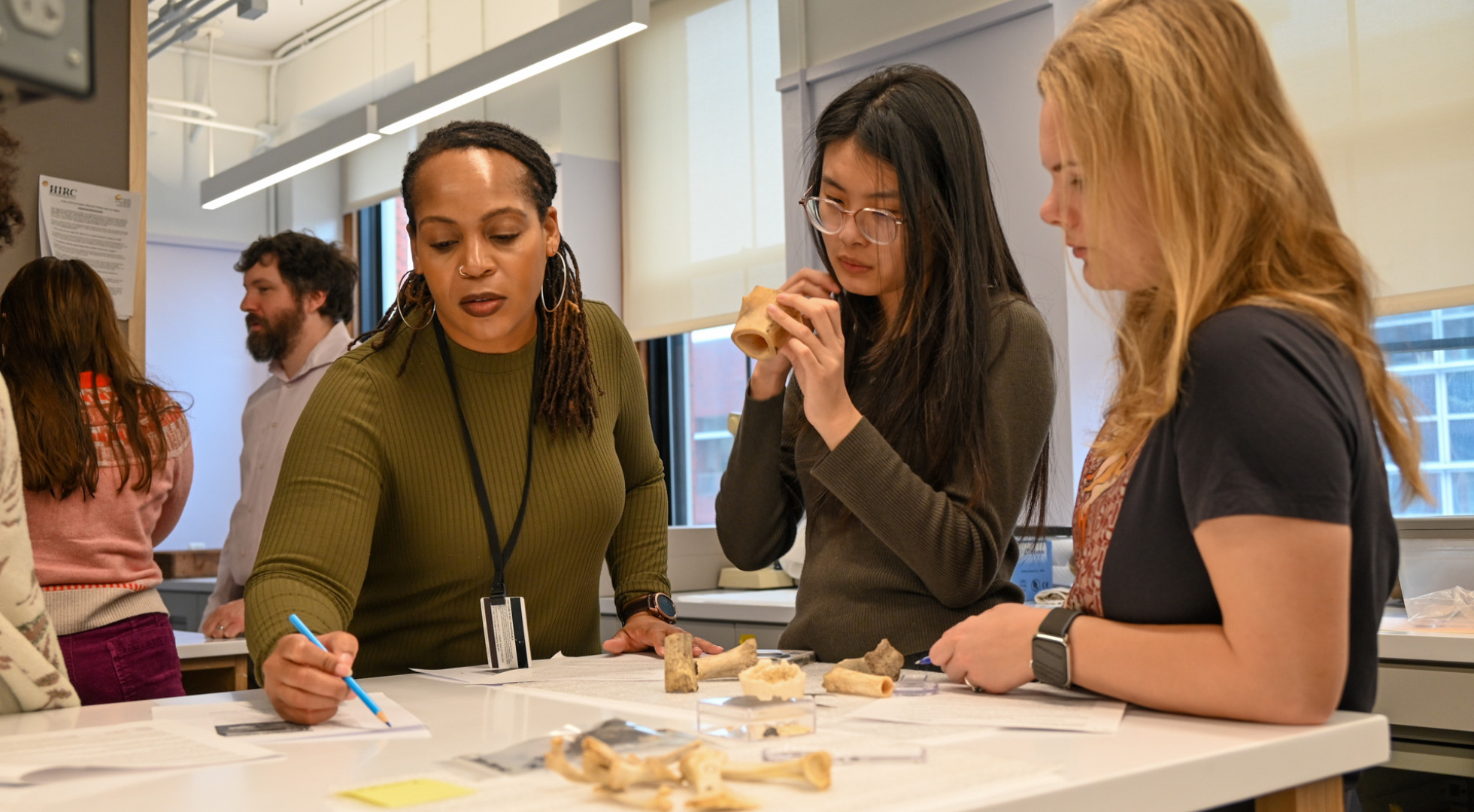
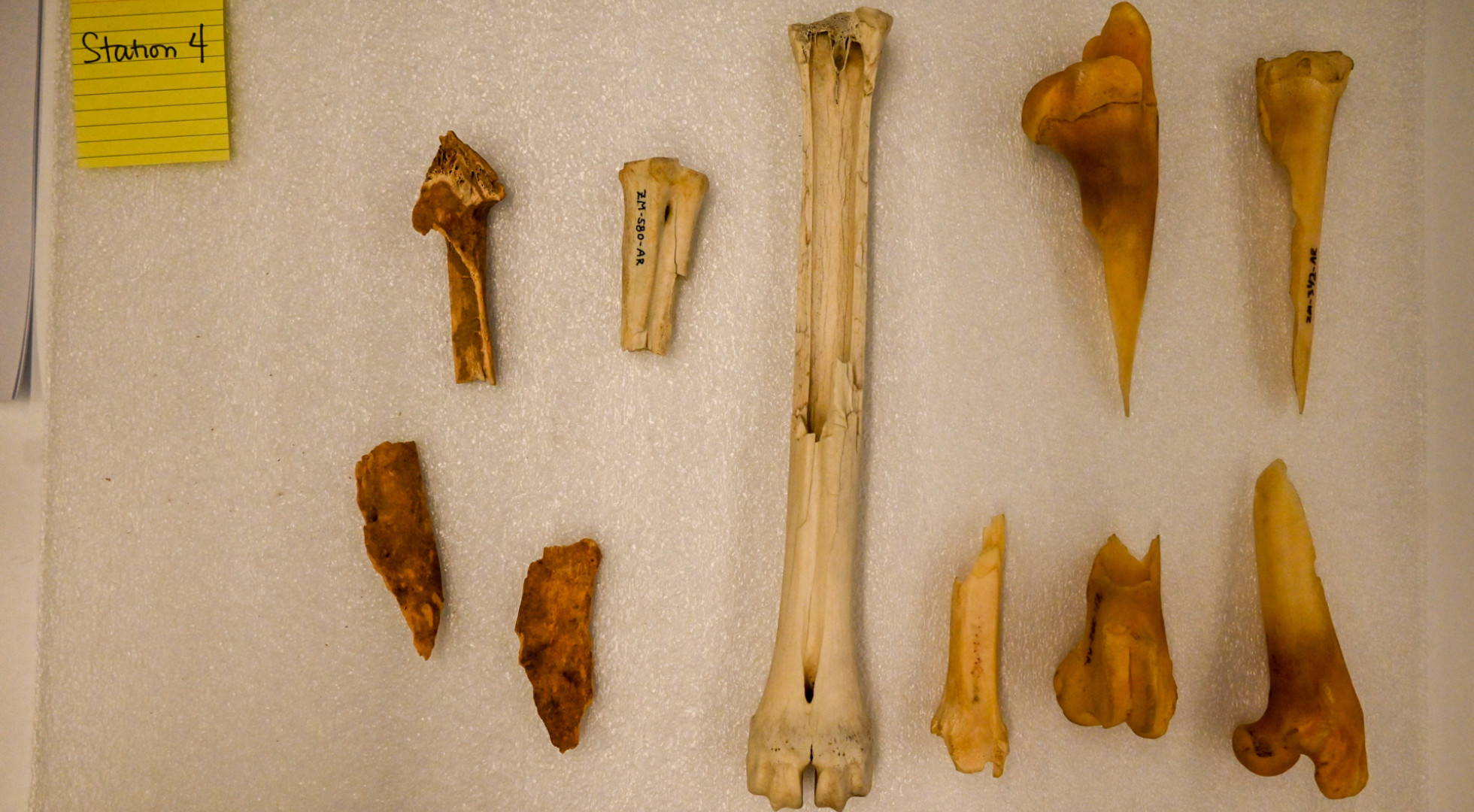
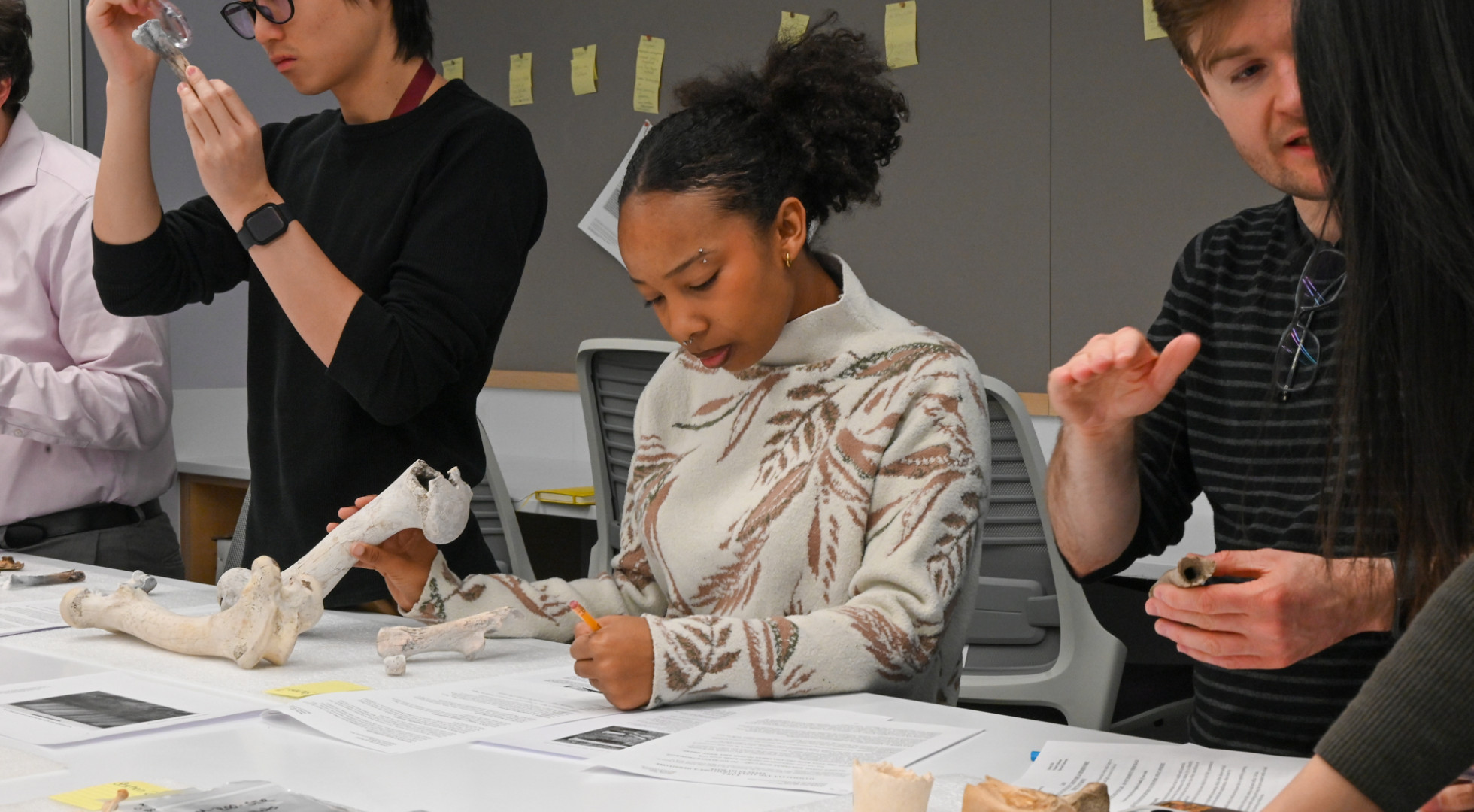
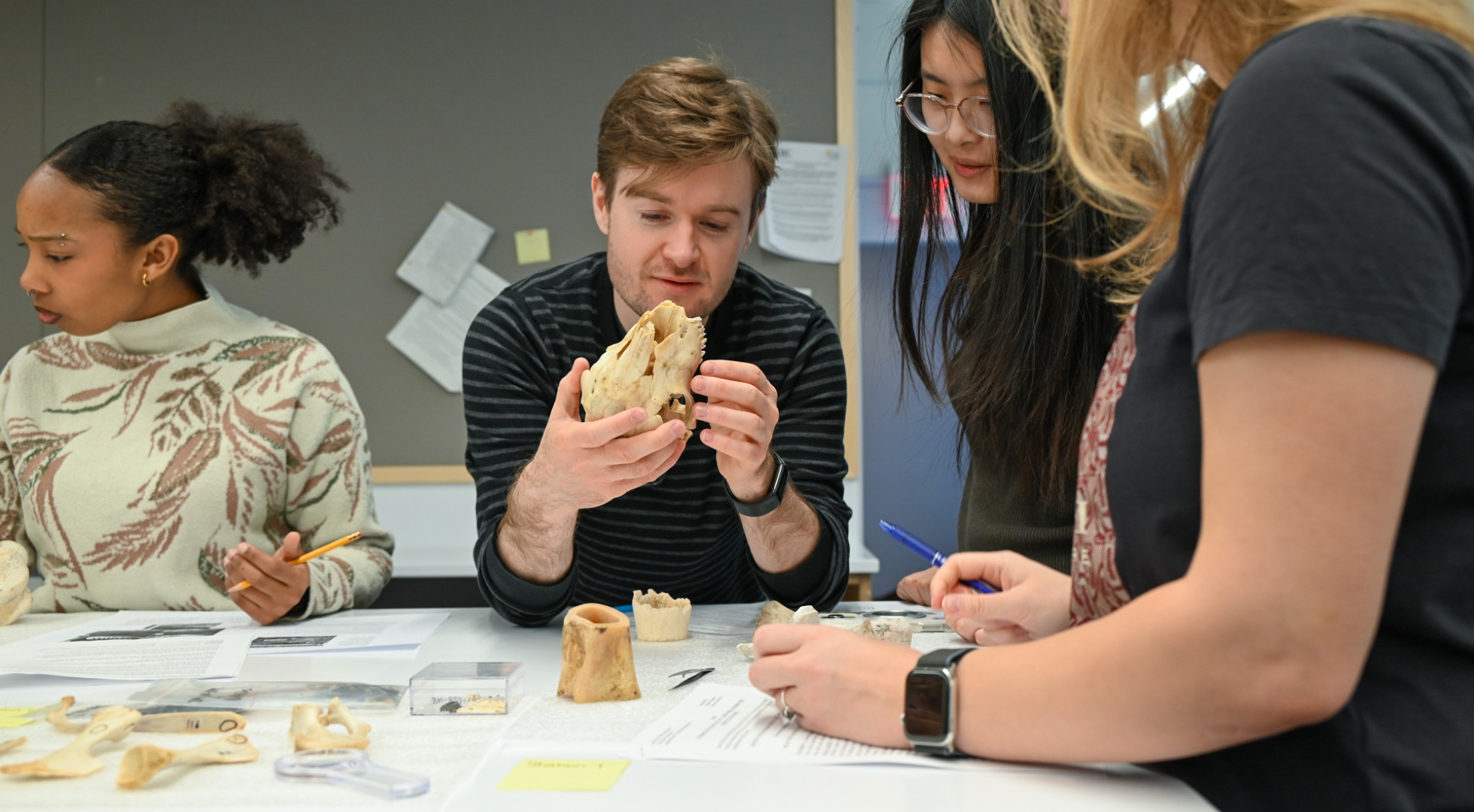
Monroe’s faunal expertise and passion for teaching young adults are perfectly matched to her zooarchaeology lab course, set for the first time in the refurbished space this spring. At a recent session, varieties of animal bone were arrayed around a worktable by lab manager Jesse Wolfhagen, an accomplished zooarchaeologist in his own right.
Students were charged with inspecting the specimens for “modifications,” including signs of decomposition or trauma inflicted by other creatures. “This one was chewed up,” Monroe observed as she rotated a dainty limb on her fingertips.
Also assisting was teaching fellow Jack Bishop, a Ph.D. student in the Harvard Kenneth C. Griffin Graduate School of Arts and Sciences. The Wednesday morning lab found the professor and her team laughing easily with students while trading jokey references to ulna and humerus bones.
“Zooarchaeology is such a difficult specialty,” Monroe said. “You have to learn the anatomy of so many mammals, and it takes a long time to get to the point where someone can bring you a bone and you can tell what species it is.
“For those who choose this specialty, like I did during my doctoral program, they’re going to spend a lot of time in this lab,” she continued. “I wanted a lovely, beautiful, comfortable space for that kind of sustained attention.”

Harvard geoscientists reported that organic matter harvested from certain meteorites bears chemical traces of “primitive oxygen reservoirs” that have changed little since the birth of our solar system. The findings help trace the origins of organic matter that meteorites may have delivered to a young Earth, supplying the planet with ingredients essential for life.

Singer Mavis Staples, actress Angela Bassett, and soccer star Didier Drogba were among the honorees presented with W.E.B. Du Bois Medals Thursday at Sanders Theatre. The annual ceremony, hosted by the Hutchins Center for African & African American Research, recognizes outstanding contributions to Black history and culture.

“We will keep working at it until we get it right,” the FAS dean said.