Eileen O’Grady
Harvard Staff Writer
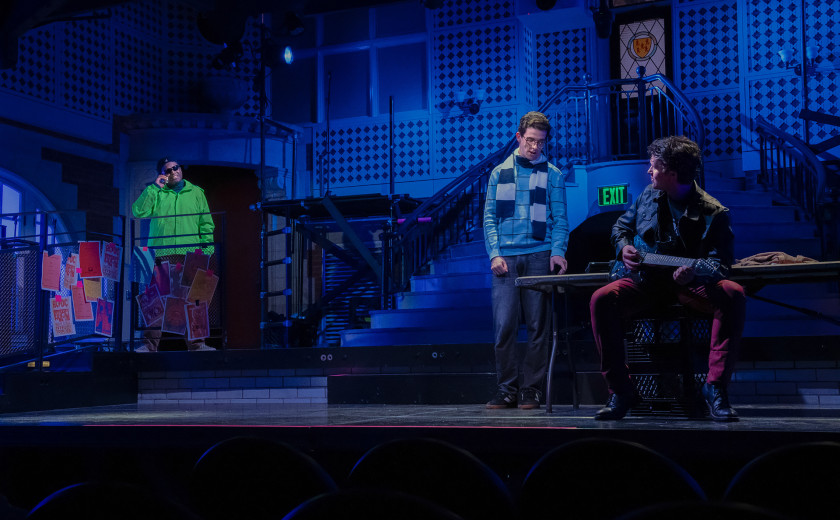
A student production of the 1994 musical showcases the Adams House venue’s best features
/ Read time: 4 minutes
Harvard Staff Writer
Stepping into the Adams House Pool Theater this week was like time-traveling back to 1989 Manhattan.
A student production of Jonathan Larson’s musical “Rent,” which runs through April 5, is the first to be staged in the reopened venue after a two-and-a-half-year renewal project.
“It's such a perfect space for the show,” said director Riley Jackson ’27, an Art, Film, and Visual Studies concentrator with a Secondary in Theater, Dance, and Media. “Not only do you have the beauty of the marble stairs and fireplaces that are reminiscent of the original pool, but the theater is stripped down in a way which really aligns with the show. The elements in the room such as the brick or scaffolding structures beneath the [seating] platforms really evoke the New York City landscape in an organic way.”
Formerly a basement swimming pool for Adams House residents from 1902 to 1990, the venue was transformed into a theater in 1992. It has since become a popular space for plays, musicals, lectures, film screenings, readings, and more.
The goals of the renovations, undertaken by the Harvard Undergraduate House Renewal Program between 2023 and 2025 as part of Phase 3 of the Adams House renewal project, were to improve the theater’s function and accessibility, while safeguarding the architectural character that remains from its days as a swimming pool. The space’s historic finishes and fixtures were fully restored, including the skylights, white tile, and fountain surrounds.
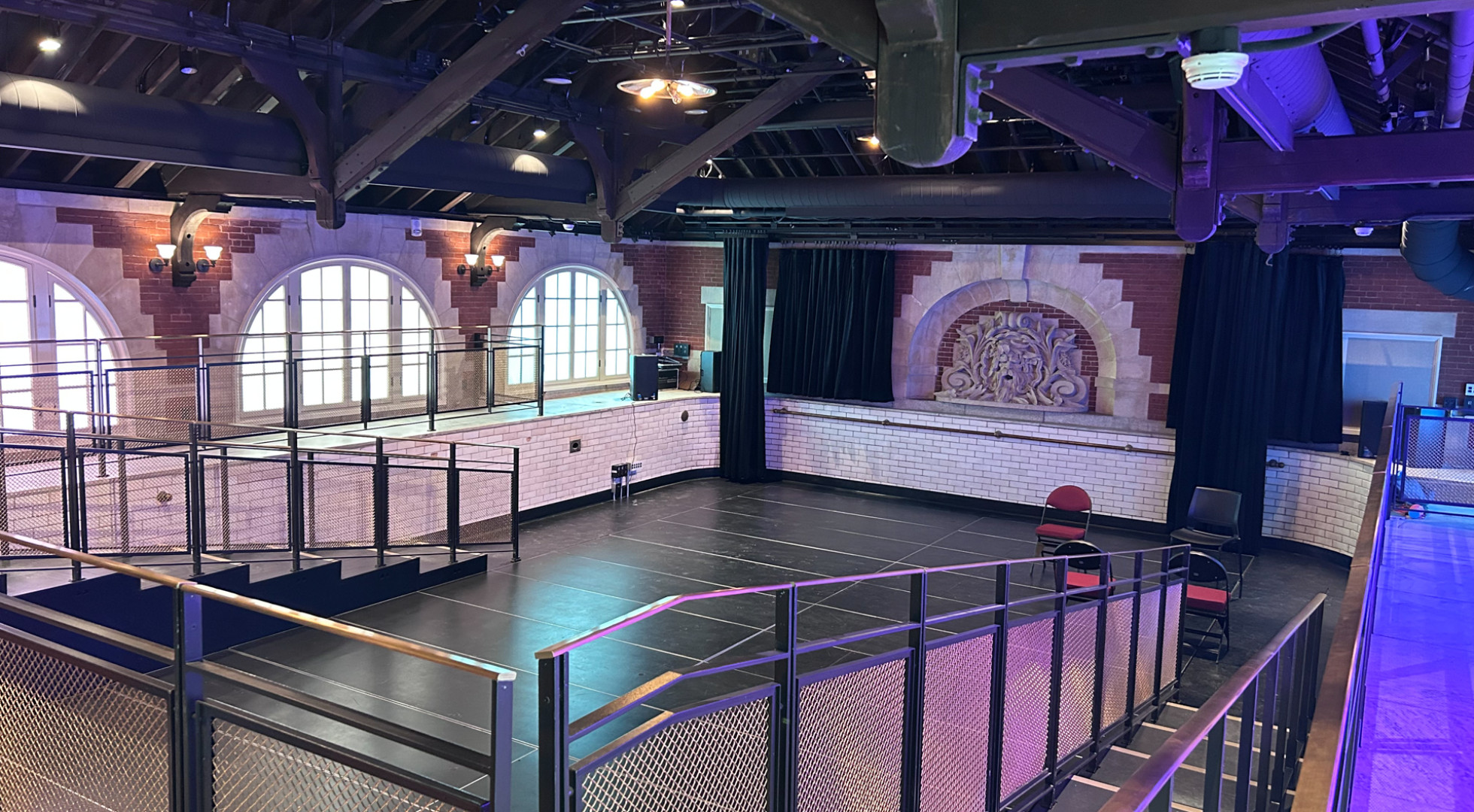
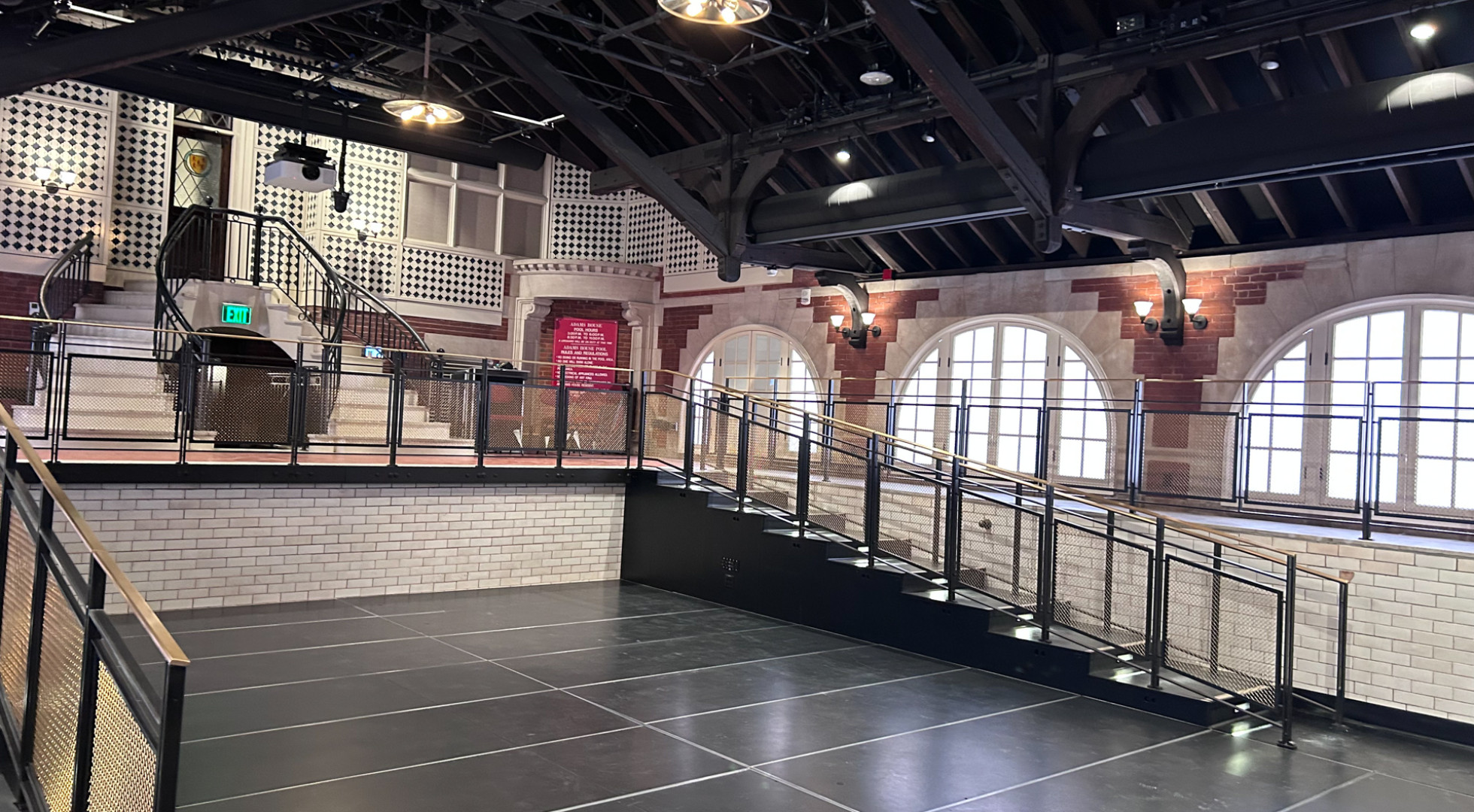
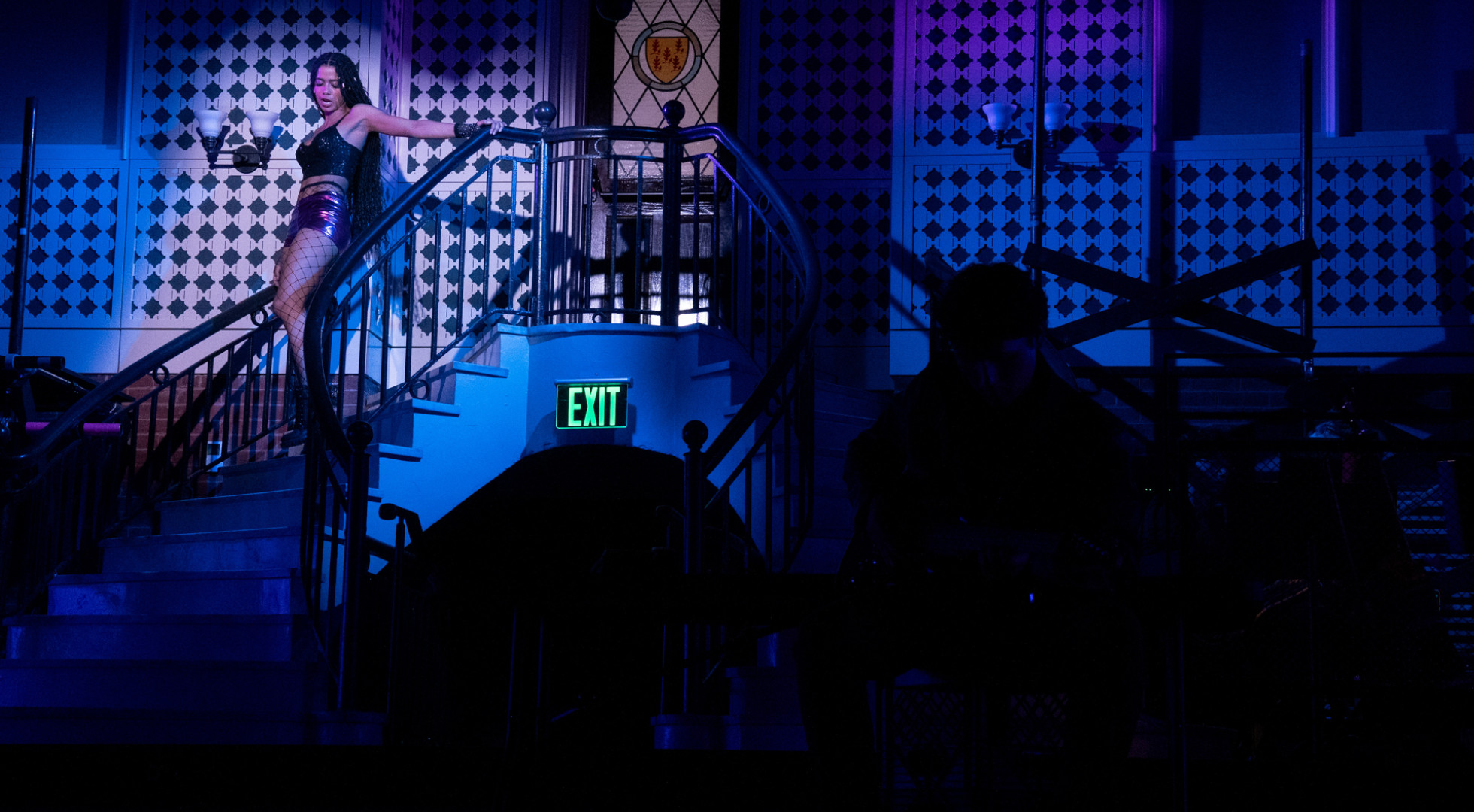
Fixed seating was replaced with a movable riser system, allowing for raising and lowering for different configurations. All levels were made fully accessible with the additions of sloped walkways and a lift. Other updates were made to the entry foyer, public restrooms, and backstage area. Mechanical, lighting, and AV systems were also upgraded.
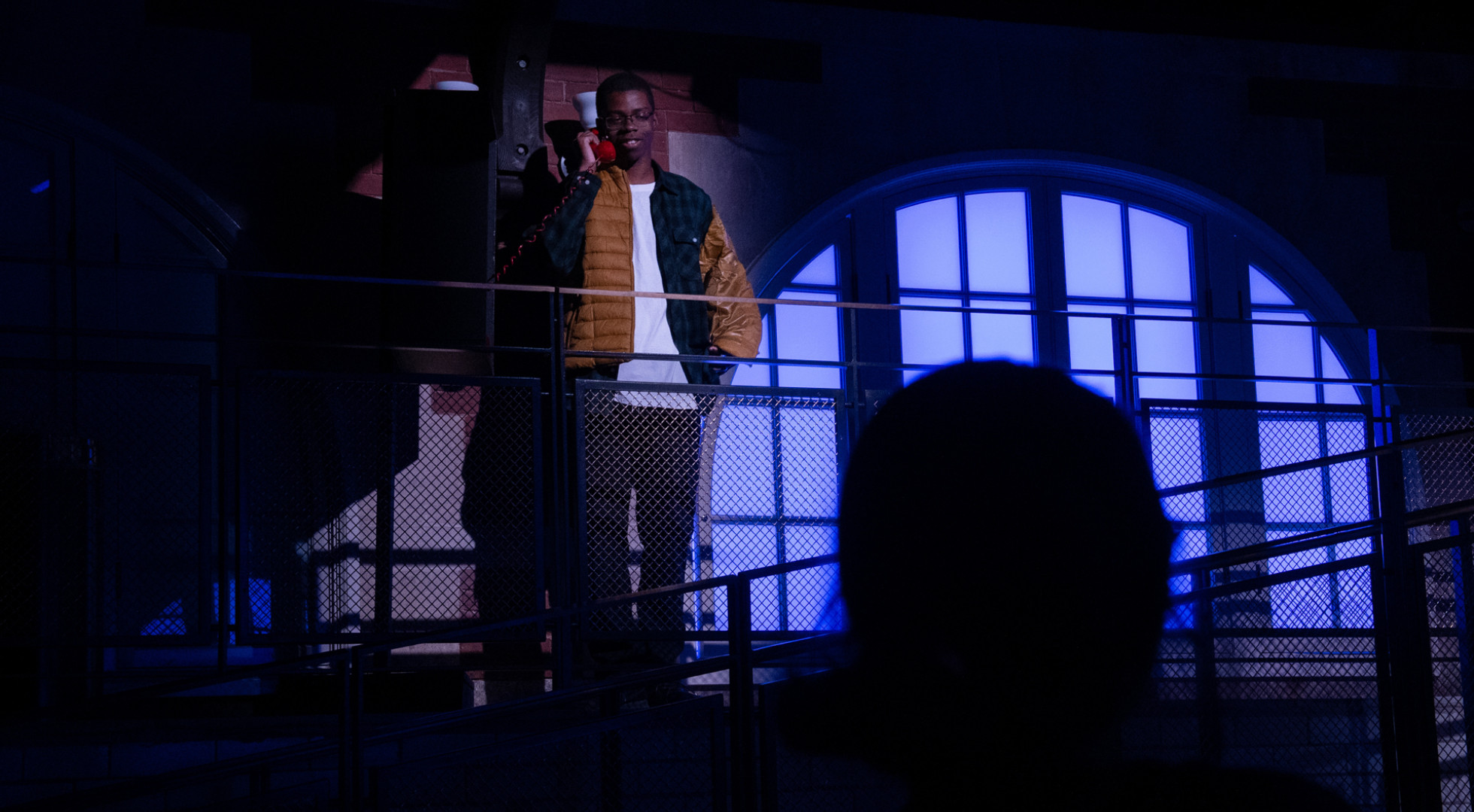
Jackson said the new seating system, in particular, opened up more opportunities for creativity with staging. In this Office for the Arts-supported production, actors perform in what is typically the back of the theater — the entry staircase, pool deck, walkways, and seating platforms — while the audience is seated in the central pool basin.
Mimi, played by Isabella Lashley ’26, dances on the grand staircase and walks among the audience during some of her iconic numbers. Joanne, played by Anaya Bindal ’29, takes a frustrating phone call from Maureen, played by Nell Ranalli ’29, on the upper right pool deck. Tom Collins, played by Olukayode Ekundare ’29, and Angel, played by Boston Conservatory student Diego Lopez, have their post-robbery meet-cute on the upper-left pool deck.
“It's allowing the room itself to become part of the storytelling, which has been super incredible to work with,” Jackson said. “It totally opened up how I could direct the actors in the space. The audience is going to be right there in the loft with Mark and Roger and on the street with all of these different characters.”
Adams House has a long history of being a space for both artists and LGBTQ+ students to gather, socialize, and be creative. For Riley, staging a musical that centers the stories of LGBTQ+ young people finding empathy, connection, and chosen family during the AIDS epidemic is a fitting way to honor that legacy.
“This production is really raw and joyful and messy and human, and we're leaning into the intimacy of the Adams Pool Theater,” Jackson said, “for audiences to feel like they're right there in the room with these characters as they navigate love and loss and this story of survival.”

The topping-off ceremony, a construction rite rooted in ancient Scandinavian rituals, took place August 27 at the site of the future Pritzker Hall, which will house the Department of Economics. The building project was set in motion five years ago.

Two Harvard scientists describe a way to engineer the evolutionary landscape that viruses experience, pushing them away from dangerous variants and into evolutionary dead ends.

Amid the rhythms of the back-to-campus bustle, new faculty find themselves experiencing the same first-day excitement — and jitters. We dropped in on three, on the first day of their first classes.