Eileen O’Grady
Harvard Staff Writer
Leaders advised first-years on charting paths through ‘the constellation of Harvard’
Harvard Staff Writer
When President Alan Garber arrived at Harvard College in 1973, he was convinced he wanted to be a physician, and declared a biochemistry concentration accordingly.
But after enjoying an intro-level economics class and receiving encouragement — over dining hall meals with the Dunster House resident tutor in economics — Garber realized his path might be broader than anticipated.
“First bit of advice: You should doubt your gut feelings,” he told an audience of first-years at Sanders Theatre Tuesday afternoon. “Second bit of advice: Don’t forget to eat, and don’t eat alone."
Garber's third and final piece of advice: "If you get a sense that someone sees something in you — talent, capacity, or passion — that you haven’t recognized, listen to them carefully and take their suggestions seriously, "he said. “They may identify an unexpected spot for you in the constellation of Harvard, and you may find yourself shining more brightly than you ever imagined you could.”
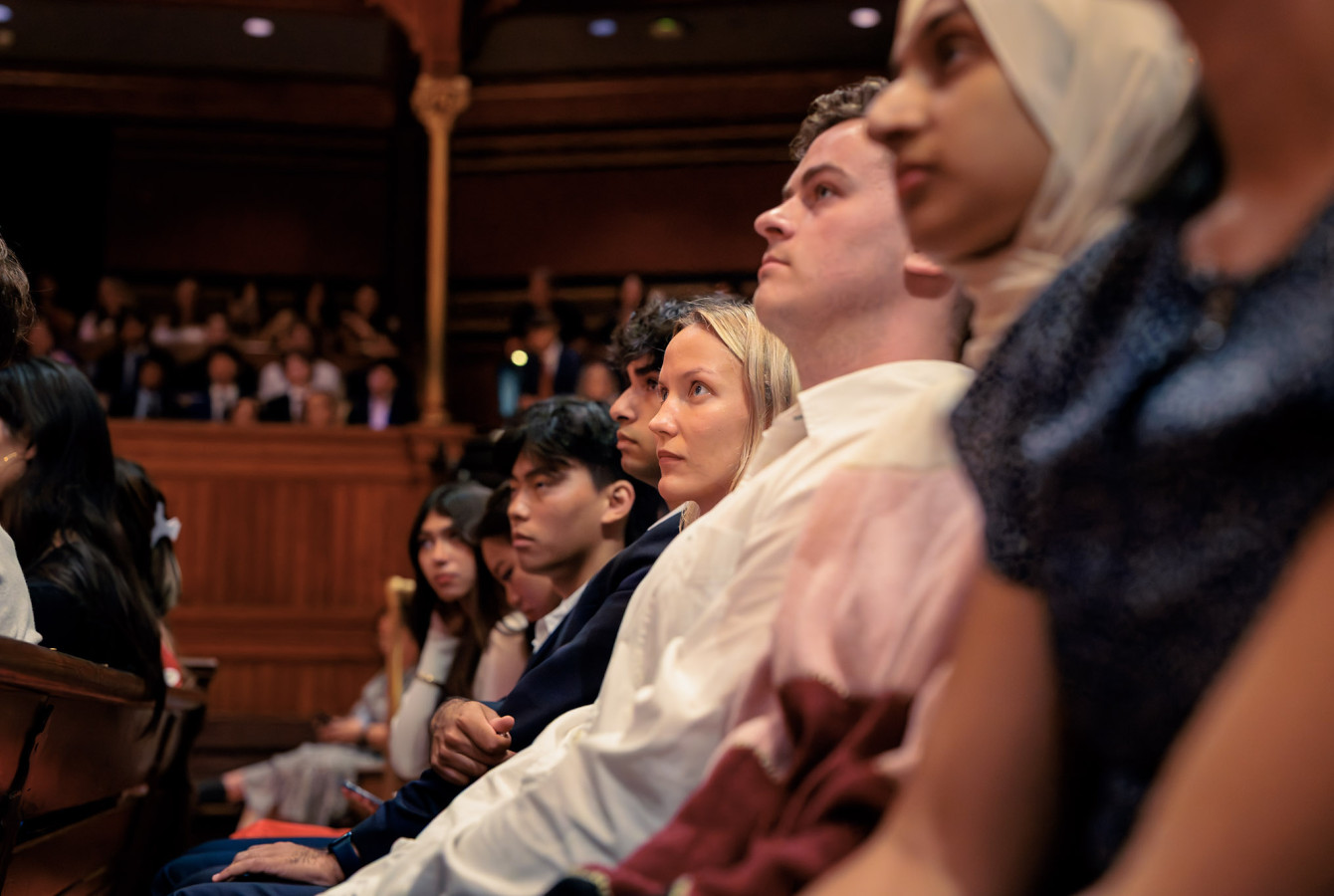
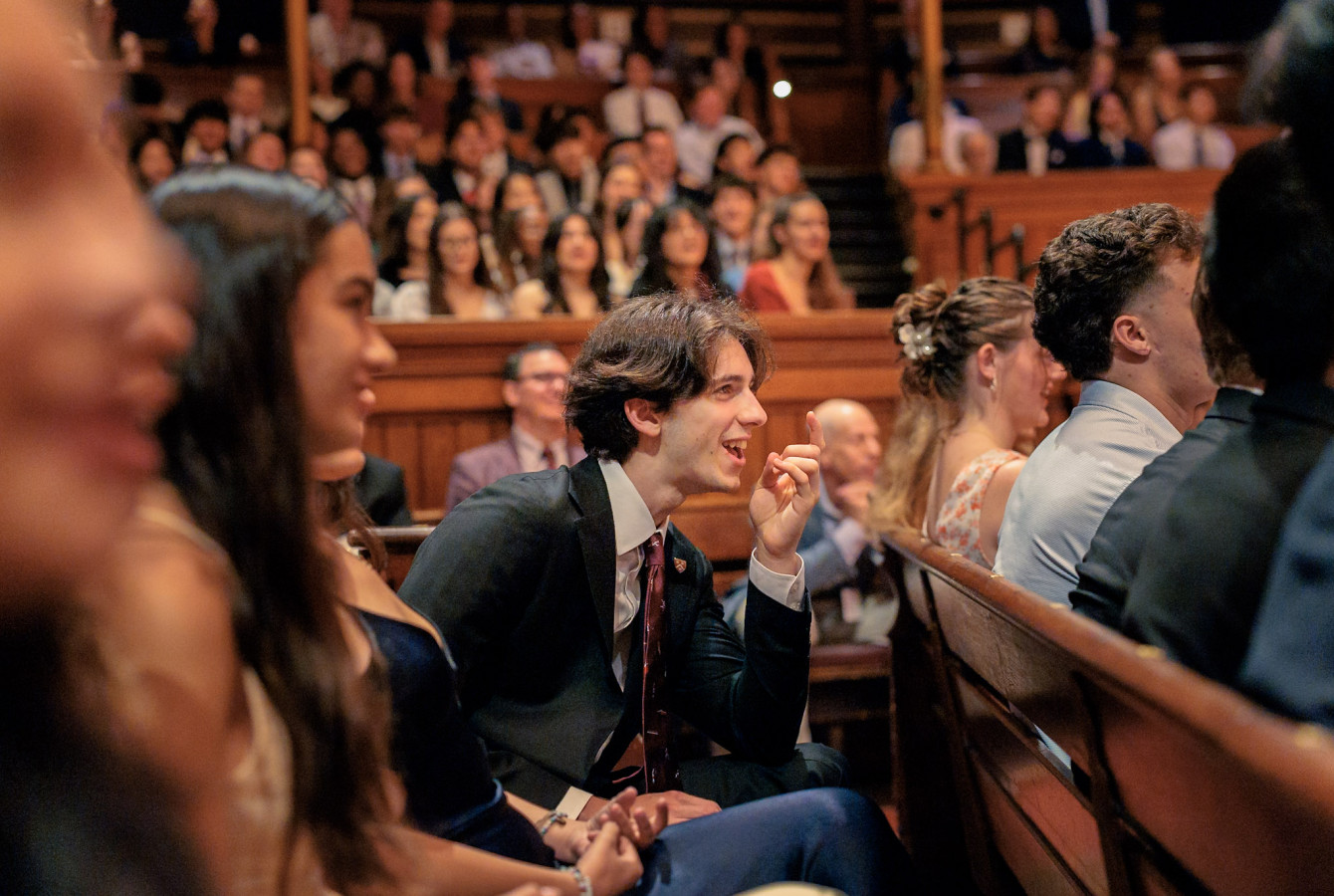
Garber dispensed this advice to the Class of 2030 at Convocation, the University’s official welcome to first-year students on the day before the start of classes. At a pair of events, which were moved indoors due to rain, dressed up students sat in rows and applauded at every mention of their graduation year. Leaders from the College took turns speaking about the value of a liberal arts education and offered hacks on finding community.

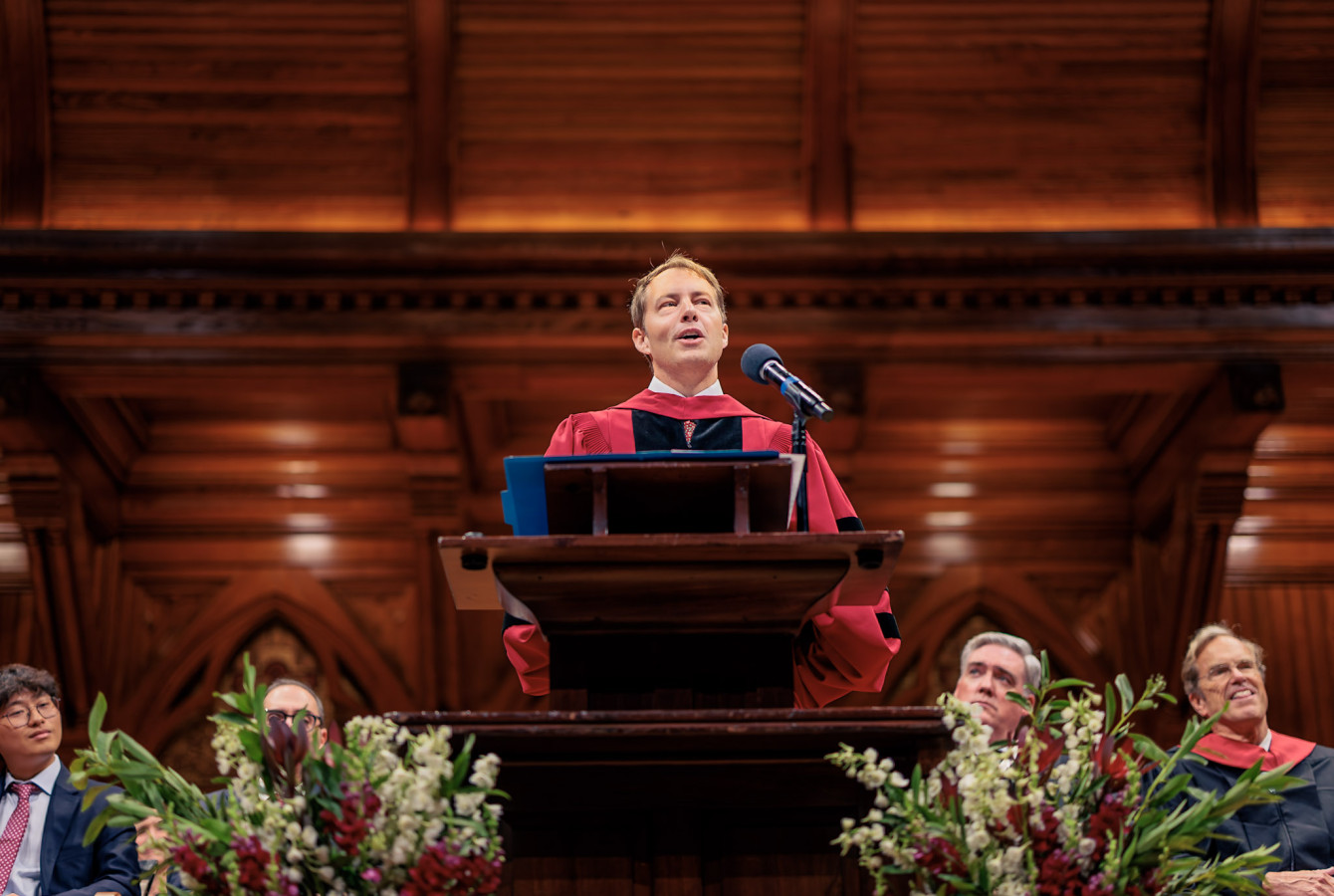
David Deming, Danoff Dean of Harvard College, told students he believes higher education is entering a new era, one which requires becoming “radically more communal.” While Deming said previous eras in Harvard’s 390-year history were focused on safeguarding scarce knowledge, and then cultivating deep expertise, our modern time, when knowledge and expertise has become widely available on the internet, is one in which students should lean into honing the types of skills that can only be built in community.
“The ability to explain a concept so that other people can understand it, to inhabit the mind of another person so you can understand their motivations and work alongside them, to persuade others of your point of view, to negotiate over resources and navigate conflict, to lead and be led, to give and receive criticism and to earn another person’s trust — these skills are central to a college education,” Deming said.
Likewise, developing an understanding of moral values like justice, fairness, honesty, integrity, and trustworthiness happens best in communities like a college campus, full of diverse individuals and perspectives, he added.
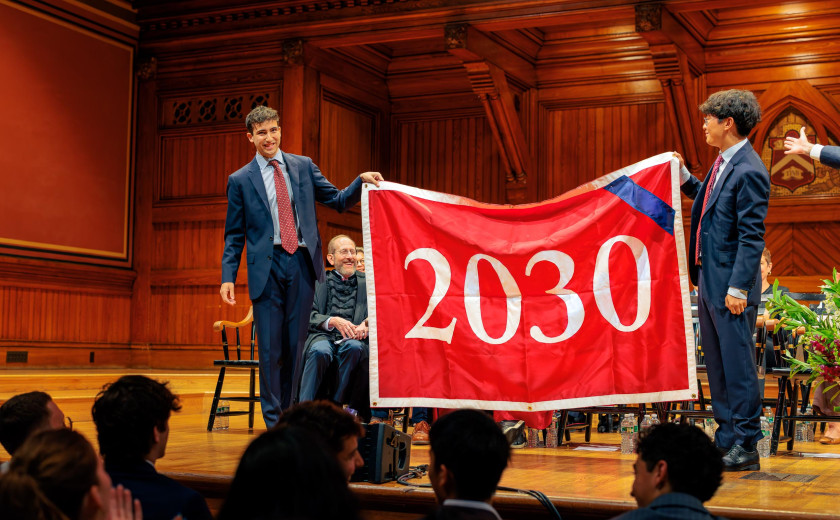
Juniors Zach Berg and Daniel Zhao, co-presidents of the Harvard Undergraduate Association, recalled becoming unlikely friends during their first week as first-years when Zhao got lost in Straus Hall and stumbled into Berg’s room. The two quickly realized they disagreed on several key political issues, with their introductory conversation turning into a debate. But instead of becoming divided, the two turned their differences into an opportunity to connect and learn more about each other’s viewpoints.
“At random times you will be put in positions to stretch yourself intellectually,” Berg said. “You will be put in positions that are challenging. Make the most of these moments, because for all of you in the audience, there is someone who will change the way you see the world. There is someone who will make you more empathetic. There is someone who will make me a better citizen leader when you graduate.”
Berg and Zhao then worked together on unfurling the Harvard Alumni Association’s 2030 banner, to great applause from the audience.
As the event came to a close, voices of the Class of 2030 echoed off the historic building's wood paneled walls as Interim Dean of Freshmen Thomas Dingman led the crowd in a chant of “2030.”
“When I say ‘Crimson,’ you say, ‘Let’s go!’” Dingman said. “Crimson!”
“Let’s go! Let’s go!” the first-years shouted.

Harvard geoscientists reported that organic matter harvested from certain meteorites bears chemical traces of “primitive oxygen reservoirs” that have changed little since the birth of our solar system. The findings help trace the origins of organic matter that meteorites may have delivered to a young Earth, supplying the planet with ingredients essential for life.

Singer Mavis Staples, actress Angela Bassett, and soccer star Didier Drogba were among the honorees presented with W.E.B. Du Bois Medals Thursday at Sanders Theatre. The annual ceremony, hosted by the Hutchins Center for African & African American Research, recognizes outstanding contributions to Black history and culture.

“We will keep working at it until we get it right,” the FAS dean said.