Christy DeSmith
Harvard Staff Writer

Highlights found singer Mavis Staples, soccer legend Didier Drogba reflecting upon their contributions to Black history and culture
/ Read time: 4 minutes
Harvard Staff Writer
Singer Mavis Staples, actress Angela Bassett, and soccer star Didier Drogba were among the honorees presented with W.E.B. Du Bois Medals Thursday at Sanders Theatre. The annual ceremony, hosted by the Hutchins Center for African & African American Research, recognizes outstanding contributions to Black history and culture.
Also presented with medals Thursday evening were artist and urban planner Theaster Gates, Netflix co-founder and philanthropist Reed Hastings, Google-Alphabet senior vice president James Manyika, and Lena Waithe, the actress and television and film writer known for the Showtime drama “The Chi” (2018–2026) as well as her work on an Emmy Award-winning episode of “Master of None” (2017). Boston attorney and business leader Fletcher “Flash” Wiley was honored posthumously.
The celebrity-studded Hutchins Center Honors, a tradition since 2013, doubled as a showcase for Harvard intellect and talent. The ceremony opened with a rendition of “Lift Every Voice and Sing” by the Kuumba Singers of Harvard College. Divinity School Dean Marla F. Frederick offered a prayer and a reading of the Langston Hughes poem “I Dream a World” (1941). Diane Paulus, Terrie & Bradley Bloom Artistic Director of the American Repertory Theater, testified to the versatility of Bassett, whose roles include Tina Turner in “What’s Love Got to Do with It” (1993) and Queen Ramonda in the “Black Panther” movies.
Harvard University President Alan M. Garber and Henry Louis Gates Jr., Alphonse Fletcher University Professor and director of the Hutchins Center, shared the stage with awardees. But the task of clasping golden medals around each honoree’s neck was left to Glenn H. Hutchins, the philanthropist who chairs the center’s national advisory board.
W.E.B. Du Bois “refused to stay in one lane,” Hutchins noted at the top of the ceremony. “He was a sociologist, a historian, a novelist, an editor, a playwright, a Pan-Africanist, and a pioneer of data analytics,” Hutchins said of the first Black person to earn a Harvard Ph.D., someone who once addressed his Harvard College classmates on the same Sanders Theatre stage in 1890.
“Look at this stage here today, and you will find divided among our medalists Du Bois’ full range of accomplishments,” Hutchins said of the 2026 honorees.


Some of the evening’s sweetest interludes found medalists thanking forebears and family. Theaster Gates, the youngest of nine children raised on Chicago’s West Side, delivered individualized odes to his three sisters in attendance. He choked up at mentions of his late mother and a nephew who was also present Thursday.
“You’re my future,” Gates told the young man, as the theater burst with applause.
“In 1949, I was just a little girl who was always running outside to play hopscotch and jumping rope to avoid rehearsal,” remembered Staples, the five-time Grammy winner known for the Civil Rights-era anthem “Freedom Highway” as well as the 1972 hit “I’ll Take You There.”
That changed with an intervention from the late Pops Staples, famous patriarch of The Staple Singers. He explained to young Mavis that her voice was a gift from God, one that might be given to another little girl if she didn’t commit herself to the rigors of practice.
“I tell you, the next rehearsal I was there; I was there every rehearsal from then on before everyone else,” Staples said with a smile. “And look where it got me. It got me all the way to Harvard!”
But the evening’s most poignant moment concerned a singular act of courage. Twenty-one years ago, Didier Drogba was the captain of Côte D’Ivoire’s national soccer team, at a time when the West African country was being ravaged by civil war. The players had just notched a 3-1 victory over Sudan, qualifying for their first-ever World Cup, when Drogba led his teammates in kneeling before a swarm of TV cameras.
A grainy video of his locker-room speech was played at Sanders Theatre, and the Chelsea Football Club powerhouse-turned-philanthropist dabbed his eyes. “Today, we beg you on our knees,” the striker, just 27 years old at the time, pleaded in French. “Forgive. Forgive. Forgive. The one country in Africa with so many riches must not descend into war. Please lay down your weapons and hold elections.”
Samantha Power, Anna Lindh Professor of the Practice of Global Leadership and Public Policy at Harvard Kennedy School and William D. Zabel ’61 Professor of Practice in Human Rights at Harvard Law School, called it the most powerful speech she heard that year. At the time, she heard “a lot of speeches” while serving as U.S. Ambassador to the United Nations. “His 2005 locker-room speech helped usher in a rare cease-fire, offering civilians much-needed relief,” she recalled.
Drogba’s efforts united pro-government and rebel fighters in rooting for the same national team, Power said. “In reminding the combatants what they had in common,” she summarized, “this was widely seen as paving the way for the Ouagadougou Peace Agreement of 2007, which ended the more than four-year civil war.”
At these words, Sanders Theatre was engulfed by applause.

“We will keep working at it until we get it right,” the FAS dean said.
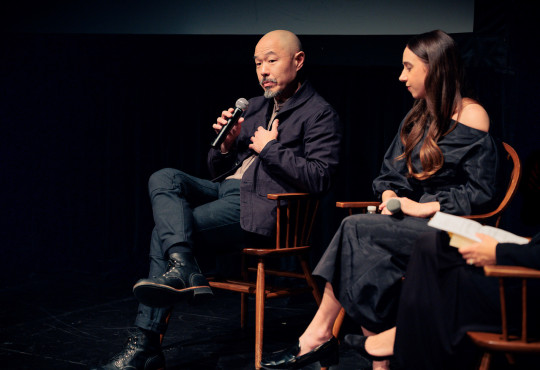
When Hoon Lee ’94 received the script for the role of Lee in Zoe Kazan’s Netflix adaptation of “East of Eden,” he was prepared to be skeptical. Decades in the industry had left the Massachusetts-born actor wary of roles that perpetuate Asian stereotypes.
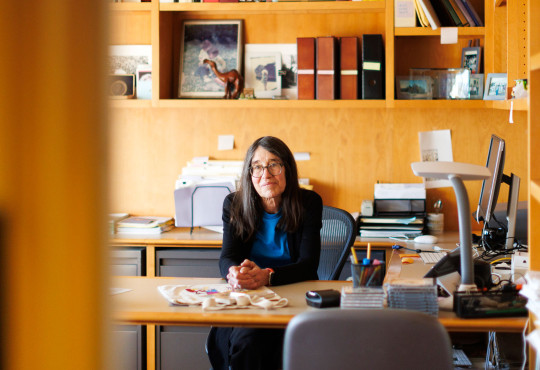
A recent study from the Harvard Laboratory for Developmental Studies describes how games aimed at improving social skills, played in preschool settings, boost social-cognitive development for Brazilian children living near or below the poverty line.