Eileen O’Grady
Harvard Staff Writer
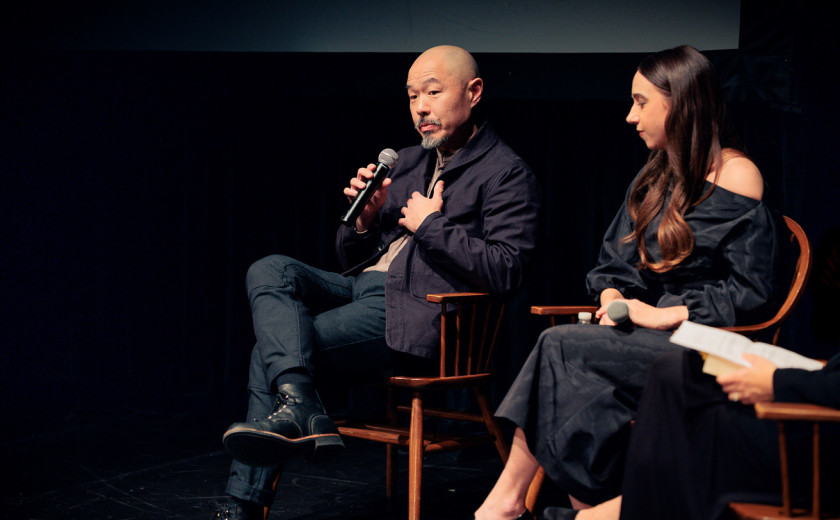
Actor Hoon Lee and co-showrunner Zoe Kazan discussed their approach to Asian American representation in new Netflix adaptation
/ Read time: 5 minutes
Harvard Staff Writer
When Hoon Lee ’94 received the script for the role of Lee in Zoe Kazan’s Netflix adaptation of “East of Eden,” he was prepared to be skeptical. Decades in the industry had left the Massachusetts-born actor wary of roles that perpetuate Asian stereotypes.
But one scene — where the Trask family’s Chinese American servant casts off his feigned accent and explains code-switching to an Irish American neighbor — felt different.
“I read the pidgin English at the beginning, and I fully rolled my eyes. I was like, ‘Here we go,’” Lee recalled. “Then, when I got to the point where he drops the act, I was hooked. I couldn’t believe it. I downloaded the book and I cross-referenced it with that scene, and I was stunned to find that it was so true to the novel.”
As Lee told a Farkas Hall audience of students and Harvard community members, he sped through the 1952 John Steinbeck novel that weekend, auditioned on Monday, and quickly landed the role.
“It became a part of me,” the onetime Eliot House resident said. “I felt like there was such a connection to this character that if I just got a shot at it, I knew it would take every part of me, and I would put every part to it. And I wanted that chance very badly.”
Lee and Kazan, the show’s co-showrunner, writer, and executive producer, appeared at an October 6 event celebrating the release of the miniseries adaptation. Their conversation, hosted by the Harvard Foundation and the Office for the Arts, focused on Asian and Asian American representation in film and television. Ju Yon Kim, Patsy Takemoto Mink Professor of English, moderated.
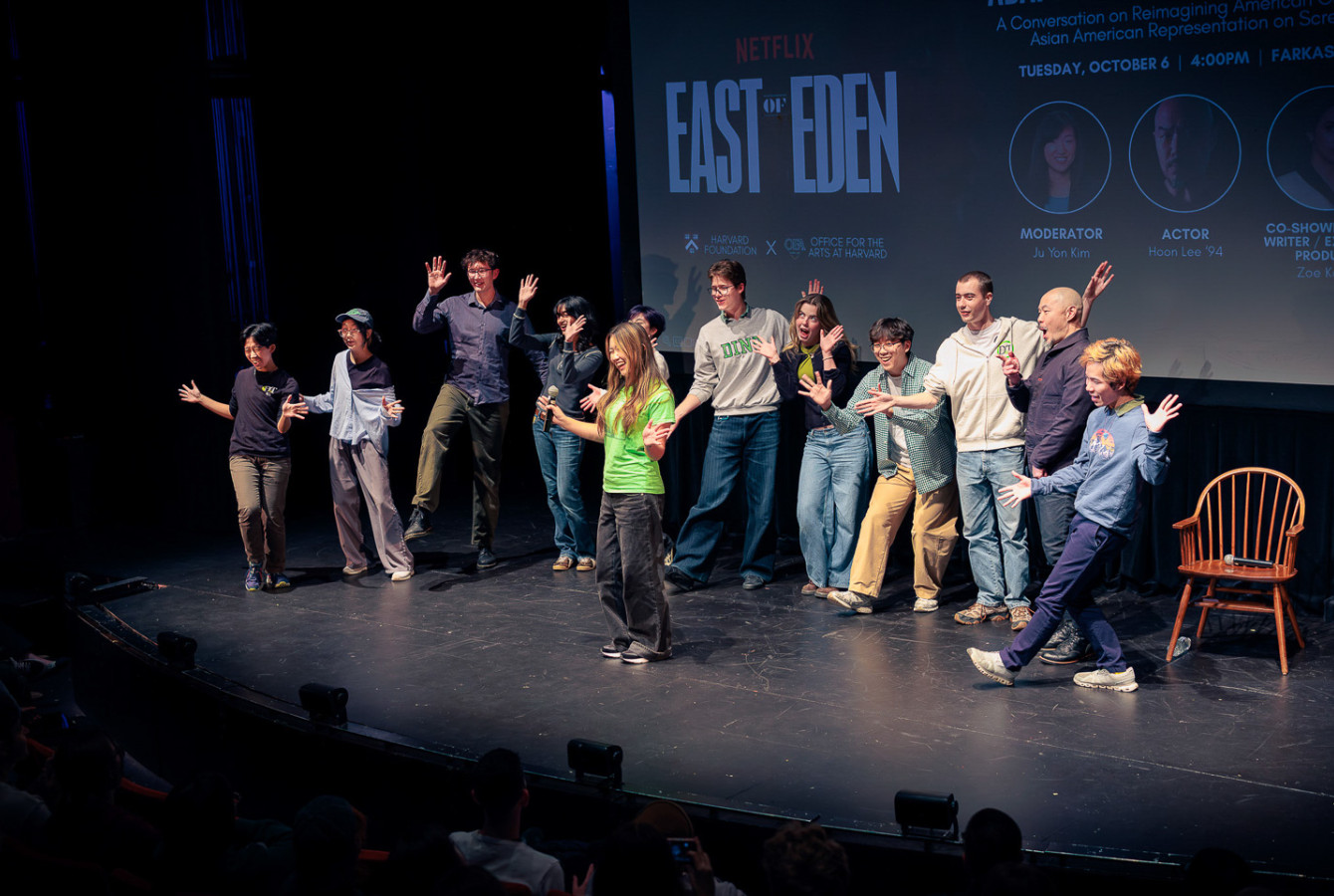
Lee, who studied English and visual and environmental studies (now art, film and visual studies), was also treated to a surprise serenade by the Harvard Din & Tonics, the jazz a cappella group he sang with during his time at the College. Lee even joined the group for a rendition of their alumni song, “Sh’Boom.”
Kim asked Kazan about her approach to adapting Steinbeck’s weighty family saga, which examines questions of human nature, free will, and generational trauma.
“When I hear that some work of literature that I love is going to be adapted, I sort of prepare myself to dislike it,” Kim shared. “But I really loved it — I say this genuinely. I was struck by how faithful the adaptation was.”
Kazan, known for “The Big Sick” (2017), “Ruby Sparks” (2012), and “She Said” (2022), said she strove to understand Steinbeck’s intentions, which she gleaned from reading letters he wrote to his editor.
One thing Kazan tried to capture was Steinbeck’s complex feelings about the character Cathy, the mother who abandons the Trask family in a violent burst. Steinbeck started out describing her as a “terrible monster,” then later “my dear Cathy,” before finally declaring: “They will hate her because while she is a monster, she is a little piece of the monster in all of us.”
“I want to be faithful, but I can also be faithful to his intention and not to the letter of the word always,” explained Kazan, who read “East of Eden” for the first time at age 15.
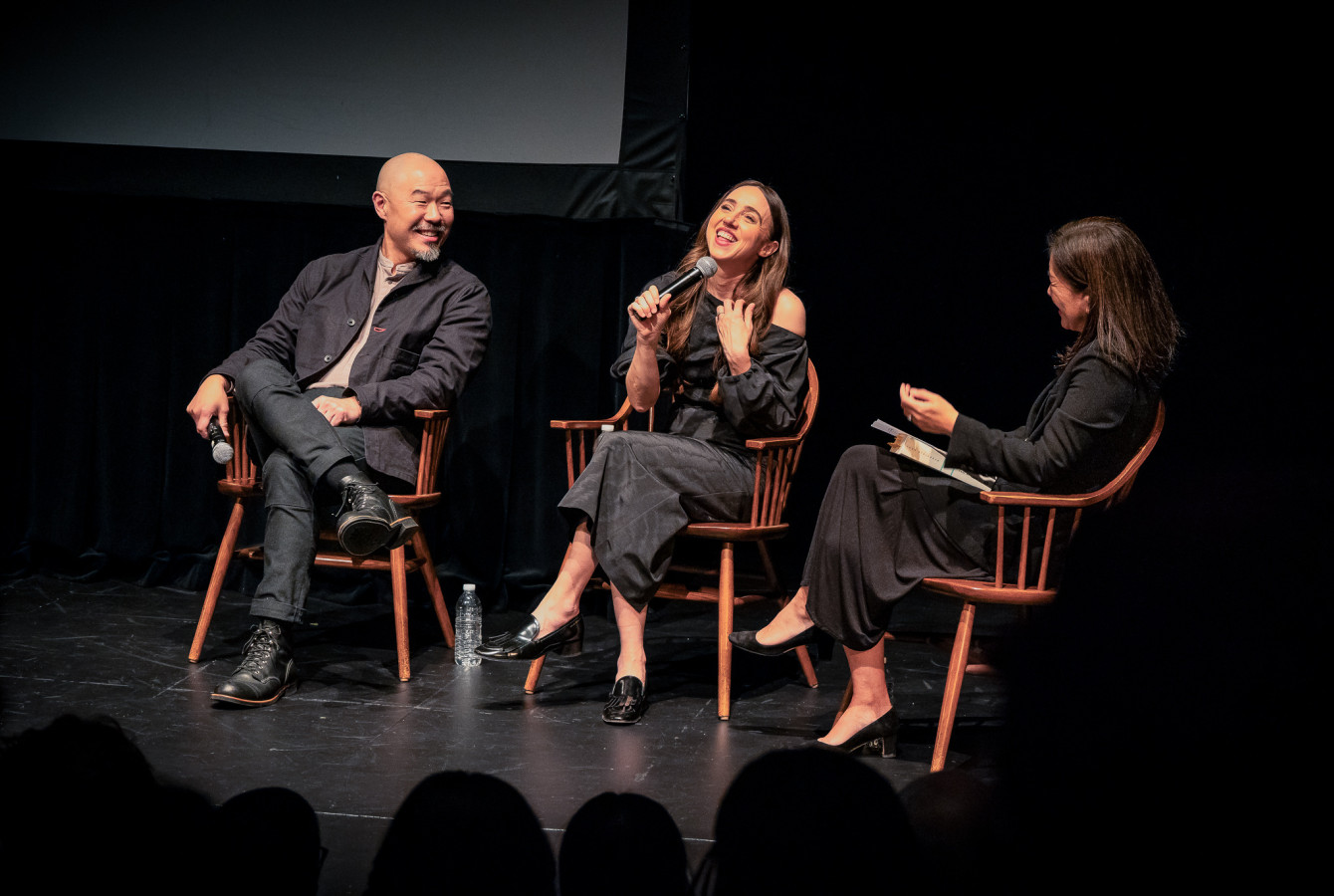
Kazan also wanted her adaptation to expand Steinbeck’s Lee, who raises the Trask boys with little help from their emotionally absent father. In particular, she knew she wanted to flesh out the scene where the character travels to San Francisco, a part that is skimmed over in the novel. She hired Asian American writer Alexander Chee to work on the episode.
“I think about those opportunities in the book sort of like a doorway,” Kazan said. “The door is left a little bit open, and I can look through.”
In some instances, Kazan said, adapting Lee to the screen meant cutting some of his iconic sage lines, which ended up feeling trite onscreen (like a “fortune cookie” caricature, Kim added).
One line that ended up on the cutting room floor: “Now that you don’t have to be perfect, you can be good.”
“It’s the kind of thing that gets put on magnets and tote bags, and it’s not in our show,” Kazan explained. “Once you’re putting language in actors’ bodies and mouths, you start to have a sense of what is too much, too poetic, too wise.”
Lee, the actor, said he thinks of screen adaptations more as “distillations” of core ideas presented in books, and said viewers would benefit from being less defensive of their favorite source material.
“It is odd for me that people will get stuck on the idea that an adaptation has any chance at all of being a one-to-one match to a canon they’ve established in their own imagination,” he said. “If someone had made an orchestral score inspired by the book, how would you react to that? It’s similar. They’re radically different mediums.”
Kim said that Kazan and Lee’s careful adaptation of the Chinese American character reminded her that conversations about diversity and representation are important and productive, and usually lead to better art.
“Awareness or sensitivity or openness around questions of racial representation and the history of racial representation — I always feel that this enriches the final product,” Kim said. “Steinbeck’s awareness that he couldn’t just put a stereotype in his pages led to an incredible character who runs through this entire book.”
A recent study from the Harvard Laboratory for Developmental Studies describes how games aimed at improving social skills, played in preschool settings, boost social-cognitive development for Brazilian children living near or below the poverty line.

Luiselli, an incoming professor of English, was nominated for her novel “Beginning Middle End.” It tells the story of a mother and 12-year-old daughter starting over in Sicily after the elder’s divorce, as they figure out how to rebuild amid encounters with the island’s daily life and its winds, waters, and volcanoes.

“We have never before shown an entire exhibition from the French and Creole-speaking Caribbean,” said Cécile Fromont, M.A. ’04, Ph.D. ’08, faculty director of the Hutchins Center’s Alain Locke Gallery of African & African American Art.