Eileen O’Grady
Harvard Staff Writer
Her 2026 title “Beginning Middle End” is among five novels in consideration for fiction prize

Valeria Luiselli is a finalist for the 2026 National Book Award in Fiction, the National Book Foundation announced Tuesday.
Luiselli, an incoming professor of English, was nominated for her novel “Beginning Middle End.”It tells the story of a mother and 12-year-old daughter starting over in Sicily after the elder’s divorce, as they figure out how to rebuild amid encounters with the island’s daily life and its winds, waters, and volcanoes.
“For me, ‘Beginning Middle End’ was, from the start, primarily a deep dive into mother-daughter relationships across generations,” Luiselli said in an August interview with The FAS Current. “It’s a book about motherhood, but also about daughterhood and the role that memory and imagination play in intergenerational storytelling, in the way that we configure our identities as women within a family.”
The novel began to take shape during Luiselli’s time at Harvard from 2022 to 2024 as a visiting professor of ethnicity, indigeneity, and migration and then as a visiting professor of English.
“I feel like my writing process with this novel was very much like building a mosaic piece,” Luiselli continued. “When I have enough subject matter, enough little pieces, I can start playing with textures and colors and internal architectures, and I can start seeing shapes.”
Winners of the National Book Award will be announced November 18 at a ceremony in New York City.
Other 2026 finalists with Harvard connections include Stephen J. Epstein ’84, in the translated literature category, for translating Intan Paramaditha’s “Night of a Thousand Hells” from the original Indonesian in collaboration with Tiffany Tsao. Victoria Chang, M.A. ’94 is a finalist in the poetry category for her book “Tree of Knowledge.”

“We have never before shown an entire exhibition from the French and Creole-speaking Caribbean,” said Cécile Fromont, M.A. ’04, Ph.D. ’08, faculty director of the Hutchins Center’s Alain Locke Gallery of African & African American Art.
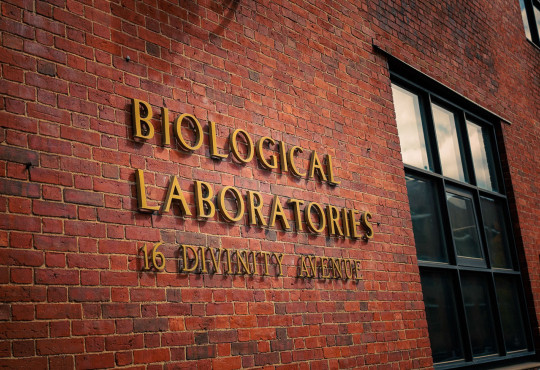
The Biological Laboratories at 16 Divinity Avenue first opened in 1931. In the 95 years of its existence, the storied building has been home to the pioneering evolutionary biologist E.O. Wilson, a dozen eventual Nobel laureates, and even a self-described “zombiologist” or two.
Menstrual tracking apps have become all the rage, leading the growing field of “femtech” that claims to help women understand — and regulate — their bodies. But these apps may promise more than they deliver — and even be harmful to women.