Eileen O’Grady
Harvard Staff Writer
Writing the new release “Beginning Middle End” was like “building a mosaic piece,” the incoming professor of English said
| 5 minutes

One of the central ideas in Valeria Luiselli’s latest novel came from reading Greek myths to her daughter at bedtime. The child, who was then about 10, had some pressing questions for her mother: Why do creation myths always start with things being “torn asunder”? And what does “torn asunder” even mean?
Luiselli, an incoming professor of English, was able to answer the latter question. Torn asunder is about something being divided, broken, separated, she explained.
“I wasn’t able to answer the big, important question about why beginnings are defined by rupture,” recalled Luiselli, author of “Lost Children Archive” (2020), “The Story of My Teeth” (2015), and “Faces in the Crowd” (2014). “The novel became an investigation about that. What happens when things end — when we lose a family, we lose a structure, we lose a life we had, we lose people? How are beginnings born from this state of brokenness, or being sundered?”
Her resulting fourth novel, “Beginning Middle End,” follows a mother and her 12-year-old daughter as they travel to Sicily, where the mother’s grandmother once worked on an archaeological dig. The narrator’s marriage has recently ended, and the mother-daughter duo is figuring out how to reconstruct their lives amid their encounters with the island’s daily life, its winds, waters, and volcanoes.
While readers may notice similarities with the mother and daughter in “Lost Children Archive,” Luiselli emphasized that the new novel is not a sequel.
“There was something in the characters from ‘Lost Children Archive’ that I wanted to think about developing further. This little girl who had a 5-year-old consciousness back then — what might she be like at 12 years old?” Luiselli said. “But it really doesn’t matter whether one book is read before the other. The seed for ‘Beginning Middle End’ is not in ‘Lost Children Archive.’”
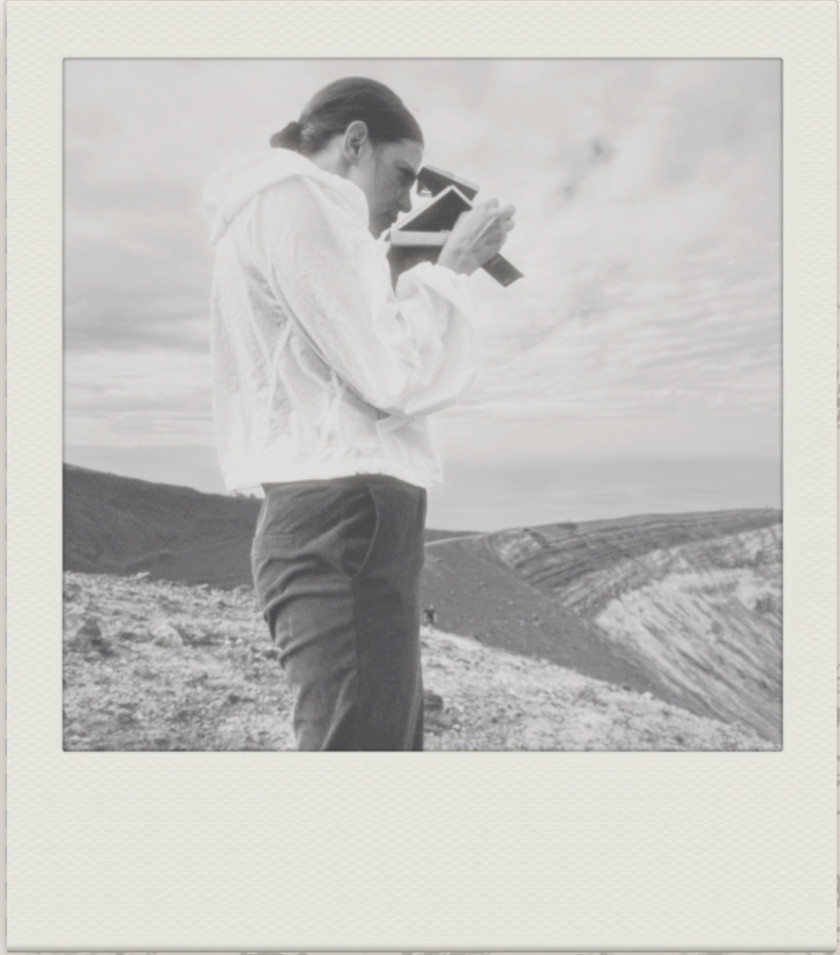
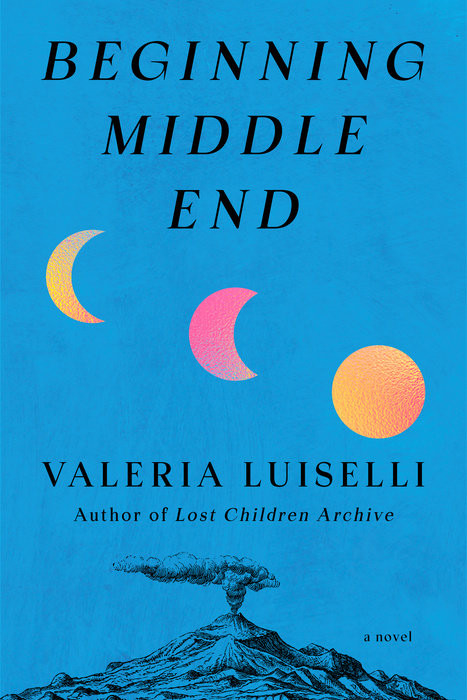
In an interview with the FAS Current, edited for length and clarity, Luiselli discussed her note-taking habits, the art of attentive listening, and how to make ancient philosophers fun for students today.
You’ve just touched on the theme of endings and new beginnings. What other questions did you want to explore as you set out to write the latest book?
For me, “Beginning Middle End” was, from the start, primarily a deep dive into mother-daughter relationships across generations. It's a book about motherhood, but also about daughterhood and the role that memory and imagination play in intergenerational storytelling, in the way that we configure our identities as women within a family. I write very much without knowing what a novel is going to be about in terms of plot.
Can you say more about your creative process?
I accumulate little notes for years sometimes. And in the case of “Beginning Middle End,” it was at least four years of just taking little notes and not knowing at any point what was going to happen in this novel. Note-taking, for me, is really just moments of noticing things, like a conversation between two people, or what's happening on the other side of a window.
It was during my very profoundly happy two years teaching at Harvard [first as visiting professor of Ethnicity, Indigeneity, and Migration and then visiting professor of English], reading in my little office, that I was able to start giving shape to all those notes, and finally give shape to the novel.
How did you approach the writing after accumulating all those notes?
I feel like my writing process with this novel was very much like building a mosaic piece. When I have enough subject matter, enough little pieces, I can start playing with textures and colors and internal architectures, and I can start seeing shapes. It requires patience and, sometimes, blind faith — because if one doesn’t have a blueprint and an overall plan, there’s times one loses one's way.
You can stray for months, writing about something you think is the direction you need to go in. And then it turns out it was a blind alley, and you have to turn back. For me, it’s a very exhilarating way of working, because it is in not knowing where I’m going that the journey becomes much more thrilling and interesting. For me, the discipline in writing comes from being able to maintain the flame of enthusiasm for that work, so as to always sit back down and try to figure out what it is that I’m trying to say and how can I best say it.
You’ve done a lot of work with sound, including your “Echoes from the Borderlands” project, a 24-hour work featuring recordings collected along the U.S.-Mexico border. How has working with sound influenced your writing?
It was in working on “Echoes from the Borderlands” that I learned how to listen much more attentively. I feel my paradigm shifted completely in terms of what listening was and how one is lodged in time and space so differently when one is actually listening attentively. It informed the way I thought about nature and the presence of winds and the ocean and fire when I was writing “Beginning Middle End.”
I went on several sound recording trips to the space where “Beginning Middle End” happens, which is in Sicily. We set off to record the elements there: winds, tides, fires, volcanoes. There’s a sonic translation of the book that has a narrative voice reading the story, but threaded with that voice is an ongoing Greek chorus of the sounds of the elements. We’ve put together in a web page a sonic archive of the entire novel with layers of sound components. One of those layers is only the soundscape, without human voices, so you can also just listen to that.
This spring, you’re slated to teach “Writing the Natural World: From Creation Myths to Catastrophe.” Can you talk about your plans for this course?
I’m primarily interested in inviting students to read early sources of observations of the natural world, sometimes in tandem with more contemporary sources. For example, what happens in pairing Empedocles and Audre Lorde — Audre Lorde discussing the force of the erotic, and Empedocles discussing love and strife as two forces that bring together elements and separate them and create universes? Or what happens if one pairs observations of the ocean in Pliny with Rachel Carson’s magnificent book “The Sea Around Us”?
I’m interested in opening a door for students to dive into sources like Empedocles that seem so remote and sometimes impenetrable, but are actually incredibly fun, wild, imaginative, and just a source of great learning in terms of how to become more attentive, imaginative observers.
Two Harvard scientists describe a way to engineer the evolutionary landscape that viruses experience, pushing them away from dangerous variants and into evolutionary dead ends.

Amid the rhythms of the back-to-campus bustle, new faculty find themselves experiencing the same first-day excitement — and jitters. We dropped in on three, on the first day of their first classes.

As the sun sinks below the horizon, two scientists perch quietly beside a darkening field and wait for flashes of light. They have traveled far outside the city in search of research sites, because they study a group of creatures that have been driven to the margins of human settlements: fireflies.