Christy DeSmith
Harvard Staff Writer
First-Year Arts Program folds newcomers into Harvard’s arts ecosystem
/ Read time: 8 minutes
Harvard Staff Writer
Harvard College is a place where creative thinkers can build confidence and set forth on bold career paths. For more than three decades, a pre-orientation program has served as incoming students’ first encounter with the breadth of artistic people, places, and pursuits awaiting them on campus.
The First-Year Arts Program, offered at the College since 1995, unspooled over several late-August days in studios, classrooms, and performance spaces across campus. Before classes even started, participants had staged an hour-long variety show titled “Uncharted Waters” for boisterous crowds at Farkas Hall.
Along the way, students in the program glimpsed academic offerings from departments like Theater, Dance, and Media (TDM) and Art, Film, and Visual Studies (AFVS). They received a heaping sample platter of extracurricular options — from student-run theater companies, orchestras, and choirs to weekly ceramics workshops reserved especially for undergraduates.
“FAP is one of Harvard’s six pre-orientation programs,” said longtime FAP director Dana Knox, who also serves as associate director for College Theater at Harvard’s Office for the Arts. “It uses art to build community, to acclimate students to Harvard life, and to showcase resources available to those interested in pursuing creative activities.”
Produced by the Office for the Arts with the Dean of Students Office, FAP (rhymes with map) taps into the wisdom of Harvard faculty, teaching artists, fellows, and alumni with thriving arts careers. This year, that growing community of experts led to experiences with indie filmmaking, costume design, auditioning, and more for a total of 126 first-years.
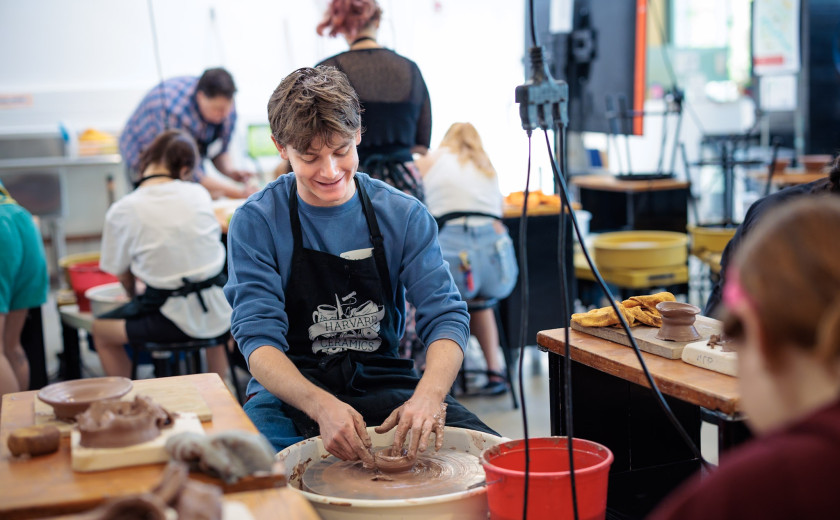
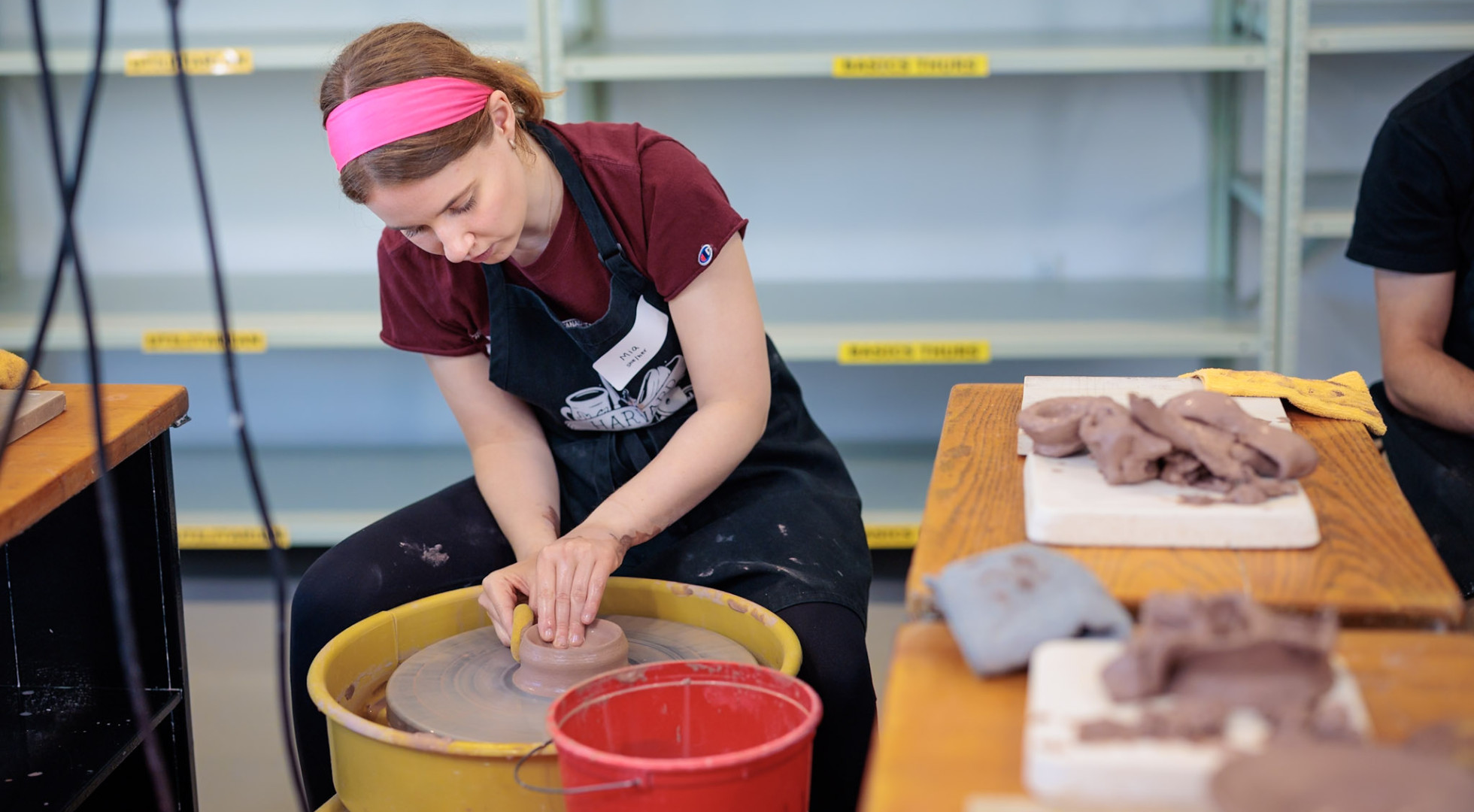
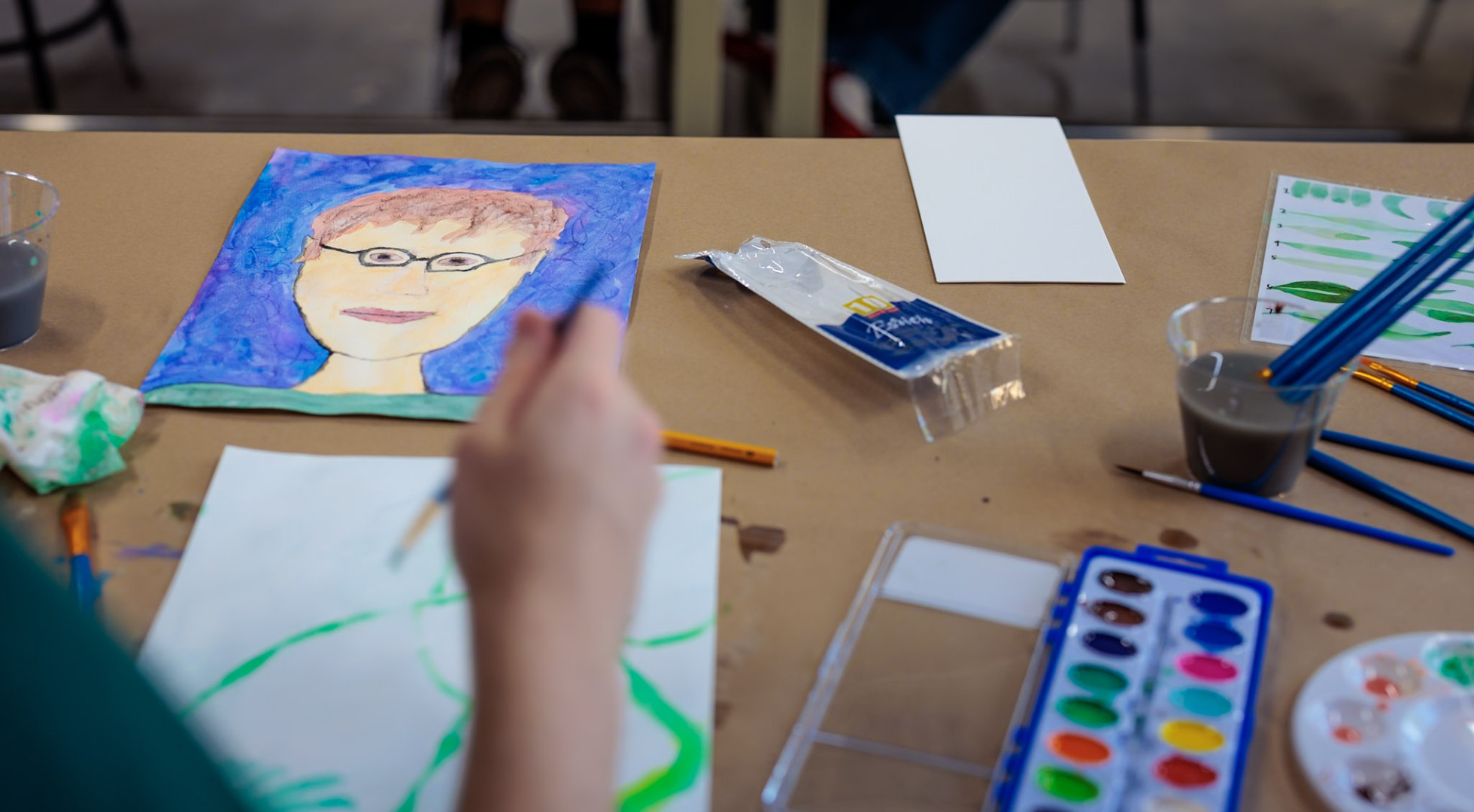
At the Harvard Ceramics Program in Allston, the airy studio echoed with laughter as students in a wheel throwing workshop pressed their fingers into wet clay. Down the hall, at a botanical watercolors class, the mood was far more hushed as paintings received total focus.
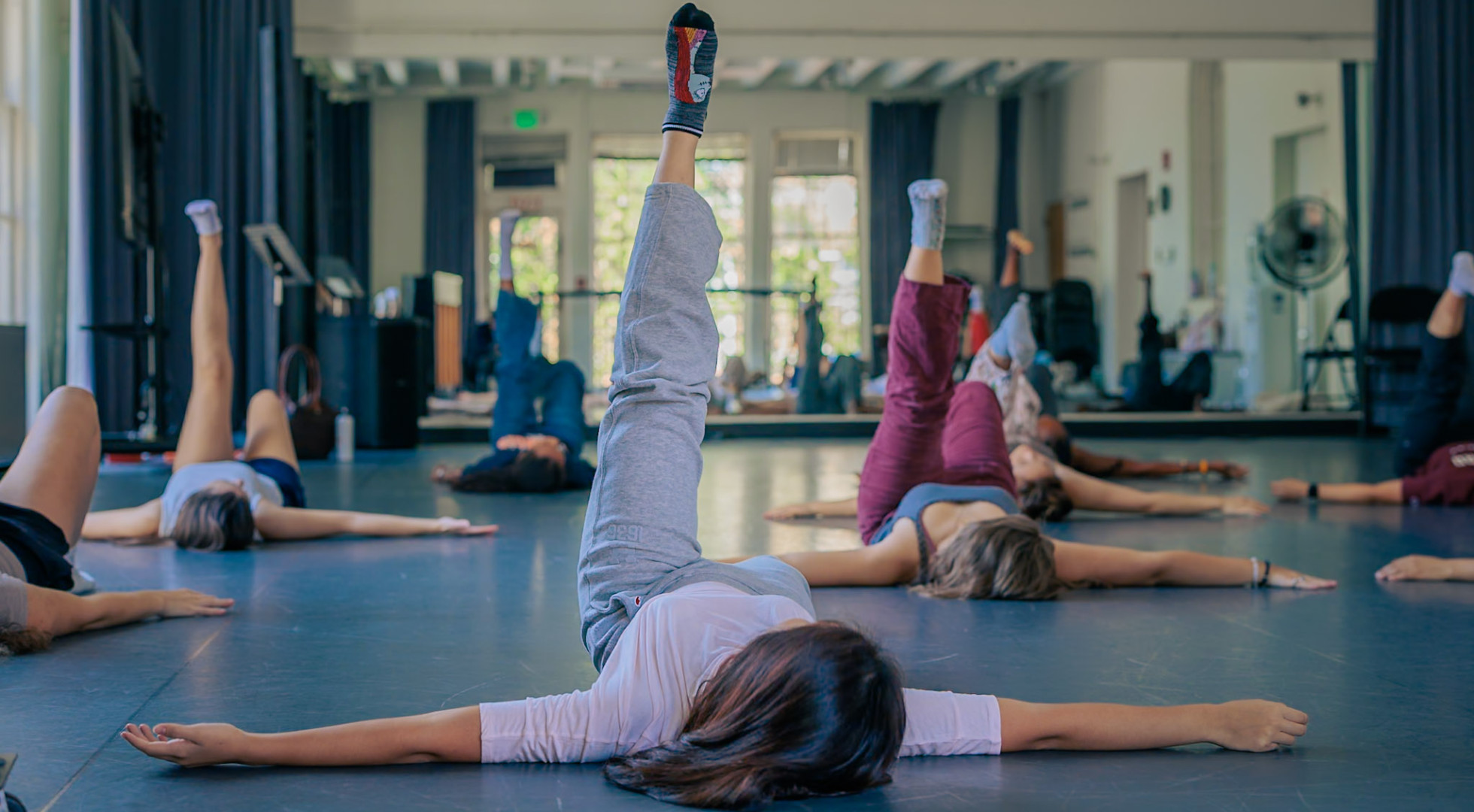
At a dance studio across the river, teaching artist Nailah Randall-Bellinger’s globally inspired playlist set off involuntary head bobs and shoulder shimmies. Attendees of her choreography workshop were counseled to let feeling drive their movements.
“The two classes that were the least comfortable for me were actually the ones I got the most out of,” said Will Radford ’30 of Syracuse, N.Y., who pushed himself into offerings on ensemble acting and writing. “It’s honestly really inspiring for what I want to do with the rest of my time here at Harvard.”
On hand to assist with FAP were 25 proctors, or upperclassmen hired as creative conduits. The group could be identified by hot-pink ribbons donned as headbands, pocket squares, and belts.
“FAP is such a wonderful way to connect with the incoming class of first-years,” said Joy An ’27, a proctor living in Leverett House. “It’s a way to get to know the people who are going to be dancing in next semester’s productions, doing tech for next year’s productions, and creating art and writing for next year’s publications.”
At FAP’s kickoff, sophomores, juniors, and seniors filed onstage at Farkas Hall. Proctors took turns giving their names, houses, concentrations, and lists of extracurriculars. An, a double concentrator in chemistry/physics and comparative literature, mentioned leading the Harvard-Radcliffe Modern Dance Company. Others cited concentrations in AFVS, government, or mechanical engineering, plus involvement with student-run theater companies, a cappella groups, bands, and even off-campus circus arts.
These biographical bullet points make for “a nice entry point,” observed FAP assistant director Dara Badon ’22, who also serves as event and production administrative coordinator for TDM. “Because the arts exist within the curriculum. They exist professionally. They exist as pure hobbies.
“We have a lot to talk about; we have a lot to share with these first-years,” continued Badon, a FAP alum and former proctor herself. “And we’re trying to find ways to make the introduction not so overwhelming.”
Participants ultimately settle into a thread, or a single medium to give their focus. At the August 28 showcase, first-years completing threads in dance, music, and theater took turns at center stage. Contributions from students completing threads in studio arts and theater design and technology included set pieces and props. Those in the creative writing thread lent the show its lyrics, playwrighting, and spoken word. The theater and music threads collaborated on a shipwreck-themed finale, sung by all.
Exiting one’s comfort zone was highly encouraged by instructors and proctors alike. “I was mainly the lighting person,” said FAP participant Anthony Kong ’30 of Fayetteville, Ark. Kong chose the film thread and helped complete a five-and-a-half-minute short titled “Parched.” “And since my background is acting in the theater,” he continued, “working behind the scenes has been a totally new experience for me.”



At the program’s keynote masterclass, Knox welcomed to Farkas Hall the musical theater lyricist/composing duo of Nell Benjamin ’93 and Laurence O’Keefe ’91. Over 75 minutes, the creators of hit musicals like “Legally Blonde” (2007) and “Mean Girls” (2017) reflected on the ups and downs of their creative lives.
The married collaborators provided something of a roadmap for attendees intent on careers in the arts. Benjamin and O’Keefe, who entered the College during a pre-FAP era, met at Agassiz Theatre during auditions for the On Thin Ice student improv group. They went on to study English and social anthropology, respectively, while working with a variety of student-run ensembles including Hasty Pudding Theatricals.
“The people that I met here and did shows with … are the people I’m still friends with,” Benjamin shared. “Many of them got me into rooms where I got jobs.”
Their testimony went beyond forging connections with peers. O’Keefe gestured to conductor Allen Feinstein ’86, seated a few rows from the stage. Feinstein, a stalwart of Harvard’s performing arts scene, served as founding resident artist for FAP’s music thread. During this year’s program, he led a workshop on film scoring.
“He was the conductor of my very first Hasty Pudding show,” recalled O’Keefe, who implored first-years to get involved with the company and learn from Feinstein. “And then I got to work with him pretty much every year thereafter as he was the arranger, the orchestrator, the music director, the music supervisor keeping that show going.”
Another throughline in Benjamin and O’Keefe’s remarks was an openness to learning from younger artists. Broadway conductor Cynthia Meng ’15, a FAP alum, partnered with O’Keefe to rework his early-’00s off-Broadway hit “Bat Boy: The Musical” for a 2014 Harvard-Radcliffe Dramatic Club production. Another FAP alum, Julia Riew ’22 — now a musical theater lyricist/composer — approached Benjamin for help attaining the rights to stage “Legally Blonde” with Asian Student Arts Project in 2021.
“You’re the future,” O’Keefe told students at the keynote. “Hopefully one day you’ll employ us.”
The leading stem cell scientist calls the $46 million award “dream-come-true opportunity.”
New research from Erin Hecht’s Evolutionary Neuroscience Laboratory analyzes how human influence has shaped the canine brain to make dogs better communicators.

How did we cede control of our democracy to the machines, and can we get it back? These are the questions Jill Lepore, David Woods Kemper ’41 Professor of American History, asks in her latest book.