Eileen O’Grady
Harvard Staff Writer
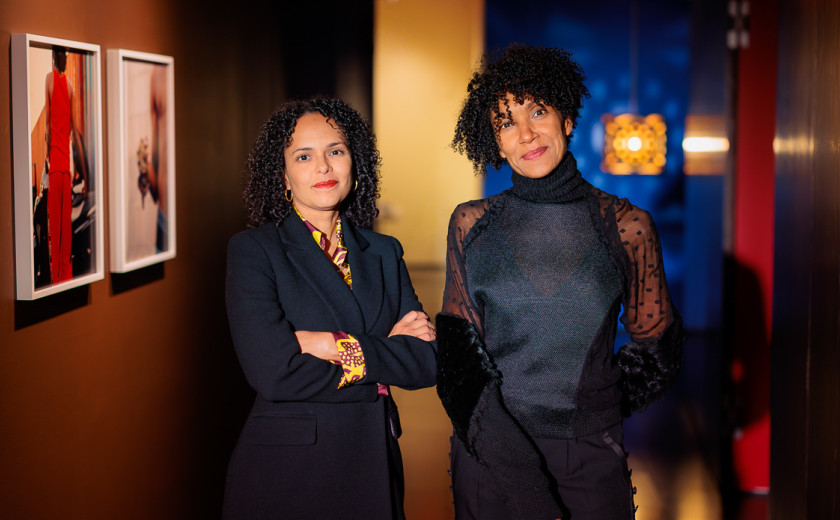
Hutchins Center gallery show unites contemporary works by French- and Creole-speaking creators
/ Read time: 4 minutes
Harvard Staff Writer
A first-of-its-kind exhibition at the Hutchins Center’s Alain Locke Gallery of African & African American Art brings together works of contemporary artists from Martinique, Guadeloupe, French Guiana, and Haiti.
“We have never before shown an entire exhibition from the French- and Creole-speaking Caribbean,” said Cécile Fromont, M.A. ’04, Ph.D. ’08, the gallery’s faculty director and a professor in the Department of History of Art and Architecture. “It was something that I thought would be important for the gallery and the center, particularly in the Boston area because we have a very large and vibrant Caribbean diasporic community.”
Fromont, an expert on transatlantic cultural interactions in the early modern period, enlisted the Guadeloupean-born scholar and curator Claire Tancons to hand-select the show’s array of contemporary art. These works, all created between 2001 and the present, explore questions of artistic autonomy, political sovereignty, and sense of place in a region still grappling with the legacy of colonialism.
“I’m really looking forward to seeing our on- and off-campus communities’ response to the exhibition,” said Fromont, who was born and raised in Martinique.
“Van Lévé,” the exhibition’s primary title, translates from French Creole as “the wind is rising.” A nod to the 1979 song “Ven en lévé,” by Martinican musician Gratien Midonet, the phrase is a metaphor for political tensions in the French Caribbean since Martinique, Guadeloupe, and French Guiana became overseas departments of the French Republic in 1946.
Tancons said the themes in the exhibition, which also include colorism, queer histories, masculinity, and the Black body, emerged organically from studio visits and the ensuing conversations about Caribbean artists’ current preoccupations.
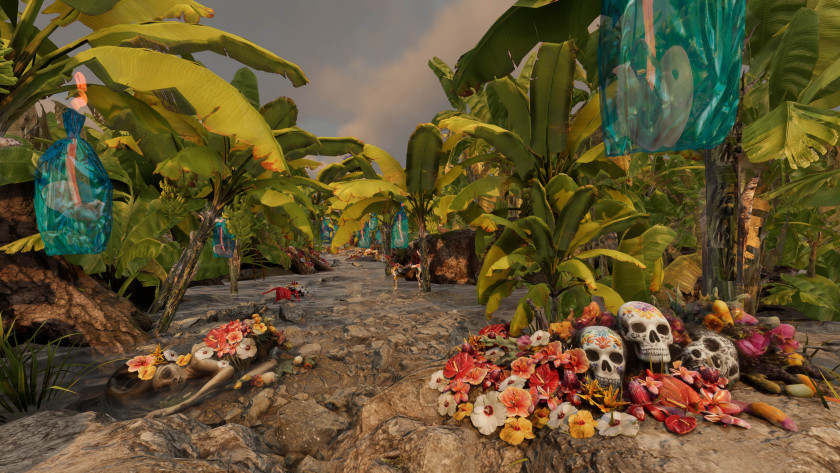
Many pieces on view speak to environmental and public health concerns, such as those caused by sargassum algae, and by extensive use of chlordecone on banana plantations. Fine line drawings by Martinique artists Jean-Marc Bullet and Gwladys Gambie represent the impact of toxins on the earth and the female body. In a virtual reality installation by Martinique-based David Gumbs, viewers can don a headset and walk through a banana plantation rendered dystopian by the pesticide.
Interspersed throughout the gallery are historical artworks representing the French colonial perspective. Among them are 18th-century depictions of women from the Caribbean islands by Italian painter Agostino Brunias from the Harvard Art Museums collections, as well as 19th-century maps of the territories decorated with drawings of lush palm trees and exports like coffee, cotton, and cacao.
“What really triggered my interest in these historical works is to think about visuality within these territories,” Tancons said. “To think that, centuries apart, men and women of different condition are still looking at the same landscape and pose themselves the same questions you would when you’re trying to depict your surroundings. I find it fascinating to think of the way in which a palm tree is still a palm tree and how differently it is being represented by this white French man, or by an Afro-descendant Caribbean man a few centuries apart.”
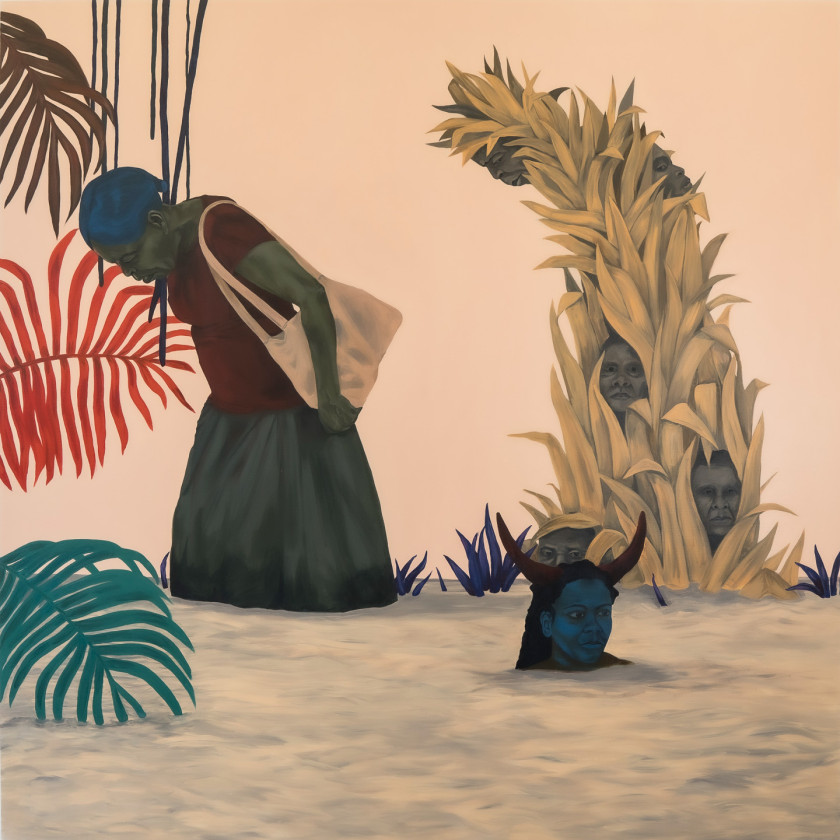
It was important to Tancons that the show be intergenerational. It represents artists ranging in age from 31-year-old Guadeloupean filmmaker Clémence Lollia Hilaire to the octogenarian Martinican Ernest Breleur, an artist working across visual media who has also served as a mentor to Gambie.
“I wanted this to be wholesome and to be a tribute as much to contemporary art historical research as to contemporary art itself,” Tancons said.
The exhibition will run until June 5, 2027, giving faculty and students, community groups, and members of the general public plenty of time to visit.
“It is such a privilege to be able to present this work within such a context, with Cécile at the helm,” Tancons said. “It’s been a wonderful sorority, to be able to mutualize our shared experiences and knowledge and interest in making this show possible.”
Sovereign Visions from the Creole and Maroon Caribbean and Amazonia: Guadeloupe, Martinique, Guyane & and Haiti: 2001–Now.
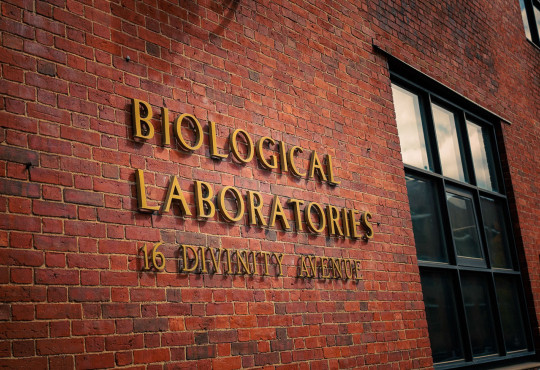
The Biological Laboratories at 16 Divinity Avenue first opened in 1931. In the 95 years of its existence, the storied building has been home to the pioneering evolutionary biologist E.O. Wilson, a dozen eventual Nobel laureates, and even a self-described “zombiologist” or two.
Menstrual tracking apps have become all the rage, leading the growing field of “femtech” that claims to help women understand — and regulate — their bodies. But these apps may promise more than they deliver — and even be harmful to women.
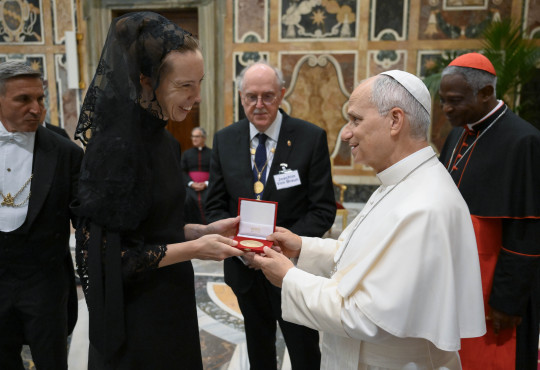
The astrochemist traveled to Vatican City to accept the award in a September 24 ceremony.