Eric Moskowitz
Harvard Staff Writer
English professor recognized for her work on narrative fiction, literary canons, and the practice of reading
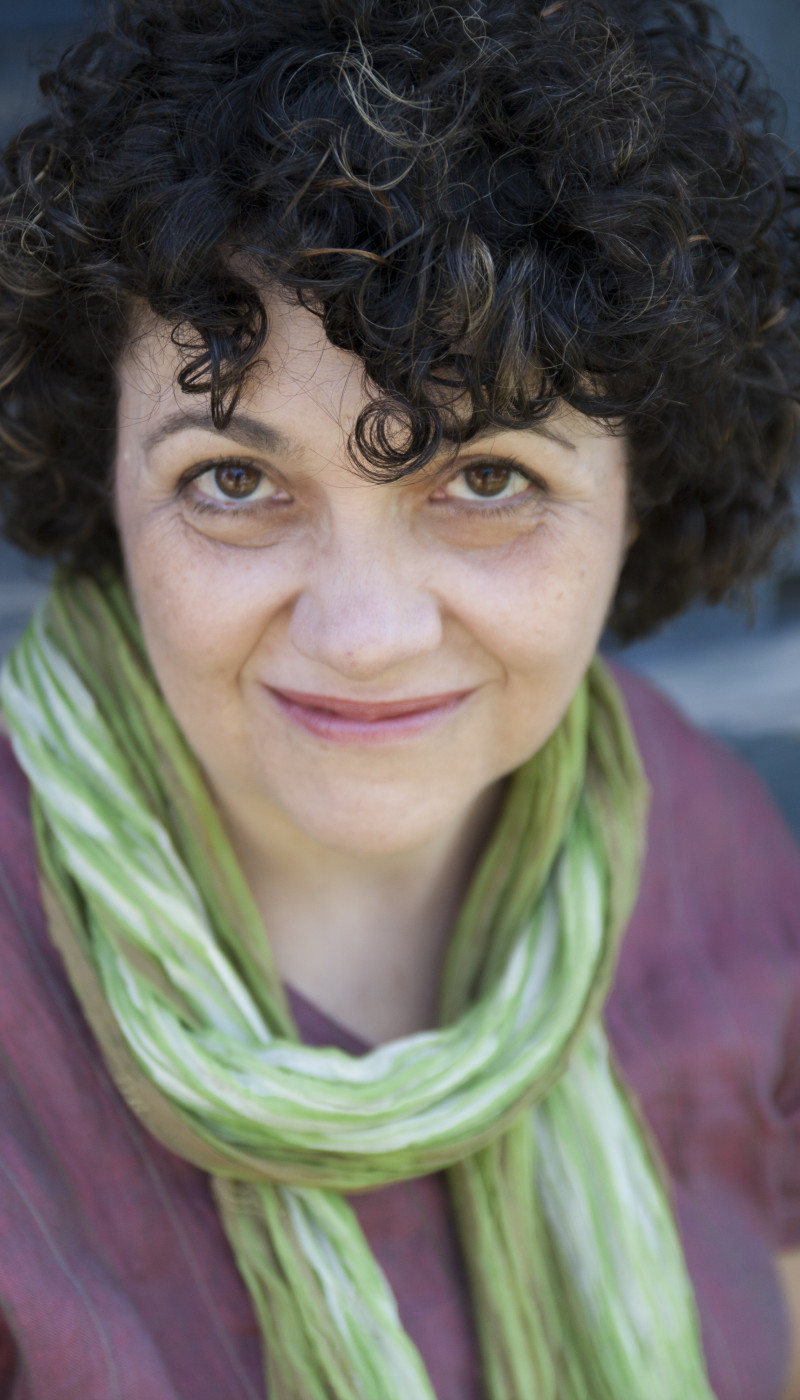
When English literature professor Deidre Lynch learned she was being inducted as a Fellow of the Royal Society of Canada, she felt a swirl of emotions: shock, pride, joy, a smidge of embarrassment (“the ‘royal’ part is a little weird in 2026”), and a flicker of imposter syndrome, as a first-generation college student who has now risen to Canada’s highest recognition for achievement in the arts, humanities, social sciences, and sciences.
And she immediately thought of her 89-year-old mom, Barbara.
One of eight children, Lynch’s mother grew up on a farm in Northern Alberta, part of a wave of British immigrants drawn in the early 20th century by the blustery promotion of “ready-made farms,” only to encounter harsh winters and hardships during the Depression. By the 1950s, Lynch’s grandparents had attained some stability, but only their boys were allowed to pursue higher education.
“I feel like I have this generational weight on my shoulders, because my mother is completely brilliant and would have loved to have gone to university,” said Lynch, Harvard College Professor and Ernest Bernbaum Professor of Literature in the Department of English. She will be joined by her mother and several other family members at the induction ceremony on Friday, November 13 in Ottawa.
The 144-year-old Royal Society has recognized Lynch as “a literary scholar of exceptional range and distinction. She is one of the world’s leading authorities on Romanticism, Jane Austen and her contemporaries, the history and theory of the novel, and the history of reading, textuality, and the book. Her work has decisively shaped how we understand narrative fiction, literary canons, material texts, and the practice of reading in both popular and academic cultures,” her entry in a guide to the 2026 Fellows reads.
Lynch was born in Saskatchewan but grew up in the Vancouver area, where her parents settled after her father, Bob, found a career as an Air Canada pilot following his service with the Royal Canadian Air Force.
A self-described “very sickly kid,” Lynch spent considerable time in bed with severe asthma, embracing reading as a diversion. Though her dad wasn’t much of a reader, whenever he flew to London, he would visit book shops and seek recommendations, bringing back books for Deidre and toys for her younger sister.
After studying English at the University of British Columbia, Lynch entered graduate school “by accident” on a Mellon Fellowship of Scholars in the Humanities to pursue a Ph.D. at Stanford University. She fell in love with every aspect of academia — reading, thinking, writing, teaching.
At Harvard, she has become known for her acclaimed “Jane Austen’s Fiction and Fans” course, which she has had to pause periodically due to its popularity, with the primary sources that students examine — the scrapbooks, personal notebooks (“commonplace books”), and hand-illustrated texts kept by ordinary readers in the 19th century — becoming worn from excessive handling.
This semester she is teaching “When Novels Were New” — about the experience of reading novels when they were still novel in the 17th and 18th centuries — and “Literacy Stories,” under the auspices of the Mindich Program for Engaged Scholarship.
Literacy Stories engages with a range of texts (recent fiction and memoir by Elena Ferrante and Ocean Vuong, African American slave narratives, historical children’s books) to explore the ways literature itself has depicted the literacy needed to consume it. Community components include a visit to Lovestruck Books in Harvard Square, to explore the culture of browsing, and the Prison Book Program in Quincy, to ship books requested by incarcerated people.
Beyond the classroom, Lynch is working on a history of scrapbooks as a democratized account of the relationship between regular people and the literary arts. The project grew out of her previous book, “Loving Literature.”

Seeking to adapt to the rapidly changing landscape, Harvard faculty convened a two-day summit this fall on revamping doctoral math education for the age of AI. The two dozen prominent mathematicians in attendance produced a report recommending urgent changes.
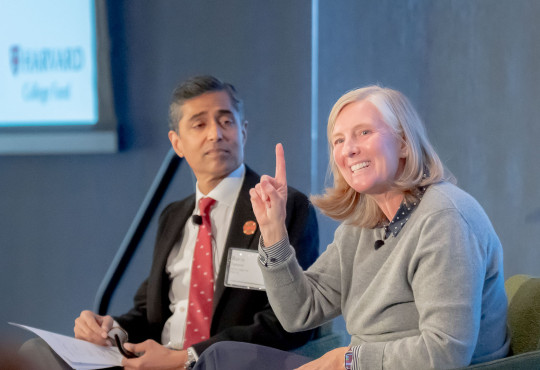
At the annual Volunteer Assembly, the FAS Dean tied a recent rise in applications and the caliber of the class to changes in campus culture.
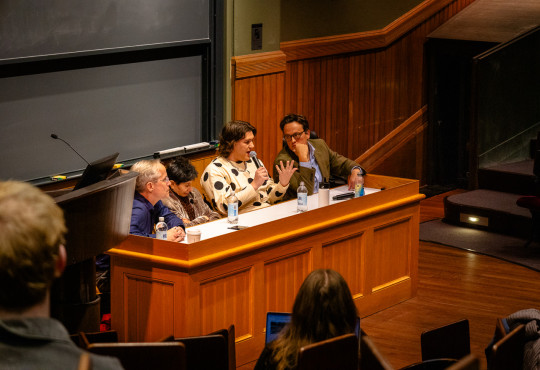
“If we play this attention economy game, we're going to lose,” Madeline Baker, College Fellow in the Department of the History of Science, said at a recent talk on the future of humanities education.