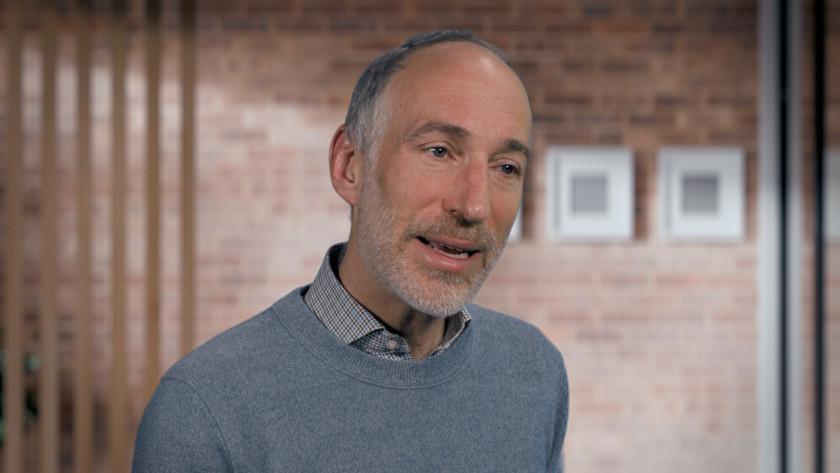

Haim Sompolinsky wins top physics prize
The Harvard theoretical physicist and neuroscientist has won the Dirac Medal and Prize, one of the highest honors in physics.

David Reich, professor of genetics at Harvard Medical School and of human evolutionary biology in Harvard’s Faculty of Arts and Sciences, explains how ancient DNA is rewriting what we thought we knew about human history. Drawing on more than 50,000 ancient and modern genomes his lab has studied, Reich shows that the people living in a place today are almost never the direct descendants of the people who lived there before — migration, mixture, and population turnover — are the rule across human history, not the exception. Reich argues that sweeping population mixtures — phenomena we typically associate with the last 500 years (as in the Americas) have deep parallels across Europe, South Asia, and Africa, uncovering connections between peoples that history and archaeology alone could never have revealed.
The Harvard theoretical physicist and neuroscientist has won the Dirac Medal and Prize, one of the highest honors in physics.
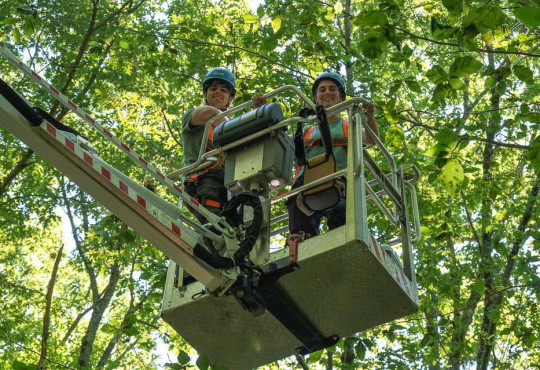
Deep in the woods of Petersham, Mass., the Harvard Forest Summer Research Program in Ecology is cultivating a renewable resource — future generations of scientists.

Forget about the ancient Greek myth of Icarus. For the last 10 years, Jenna Samra, Ph.D. ’18, and her colleagues have been pushing technology to fly closer to the hottest part of the sun. Samra, an astrophysicist at the Center for Astrophysics, an institution jointly run by Harvard and the Smithsonian, leads a scientific quest to study the solar corona.