Clea Simon
Harvard Correspondent

Organismic and Evolutionary Biology Professor Jeannine Cavender-Bares investigates how biodiversity furthers forest resilience.
/ Read time: 5 minutes
Harvard Correspondent
This April, one thousand red oaks will be planted at Harvard Farm. The species, native to New England’s northern temperate climate zone, is increasingly threatened by drought and heat.
A team will measure these Quercus rubra as they grow over the next several years, conducting several experiments along the way. Called the Adaptation to Change and Environment Study, it represents the latest initiative in the Forest and Biodiversity (FAB) project at Harvard Farm, a research facility just southeast of the sprawling Harvard Forest, located in Petersham, Mass., 70 miles west of Harvard’s main campus in Cambridge. This long-running series of studies is looking into how different tree species interact with each other and with the environment — and what that can mean for forests and for people.
“Forests are critical life support systems for humans,” said principal investigator Jeannine Cavender-Bares, Climate Action Acceleration Professor of Organismic and Evolutionary Biology and director of the Harvard University Herbaria. “We depend on the clean air they provide by air pollution removal and by oxygen production. We rely on the climate regulation from carbon sequestration and on the nutrient cycling and biogeochemical cycling that moves elements through soil and enriches soil.
“We depend on plants as the productive basis of all ecosystems,” she added, “and healthy forests support our health and well-being.”

The distributed red oaks experiment complements the inaugural entry in the FAB family of studies, launched just last year. Sixteen native tree species, including red maple, white birch, and American beech, were planted from the southern and northern edges of the northern temperate climate zone in different groupings. Some stands contained only one species, while others featured various mixes.
Both experiments are concerned with the effects of climate change on tree populations and forest communities. The goal is determining how interactions between species affect the productivity of ecosystems and how well the trees respond to invasive pests.
“This is about understanding the mechanisms that underlie resilience of forests and adaptive capacity of populations of trees,” said Cavender-Bares.
For the larger FAB study, which Cavender-Bares began designing before arriving at Harvard in 2024, her team planted more than 250 plots in the 4,000-acre Harvard Farm in varying numbers and combinations of species. Such diversity, she explained, is already known to benefit forests.
“Different species do things in different ways,” said the researcher. “They acquire resources at different times and in different amounts at different rates. They deploy their foliage and their architecture differently, with close relatives often functioning more similarly than distant relatives.”
When tree species are mixed, she explained, “they photosynthesize more, they capture more total light, carbon, nutrients, and water, moving them through the ecosystem more quickly and increasing their productivity.”

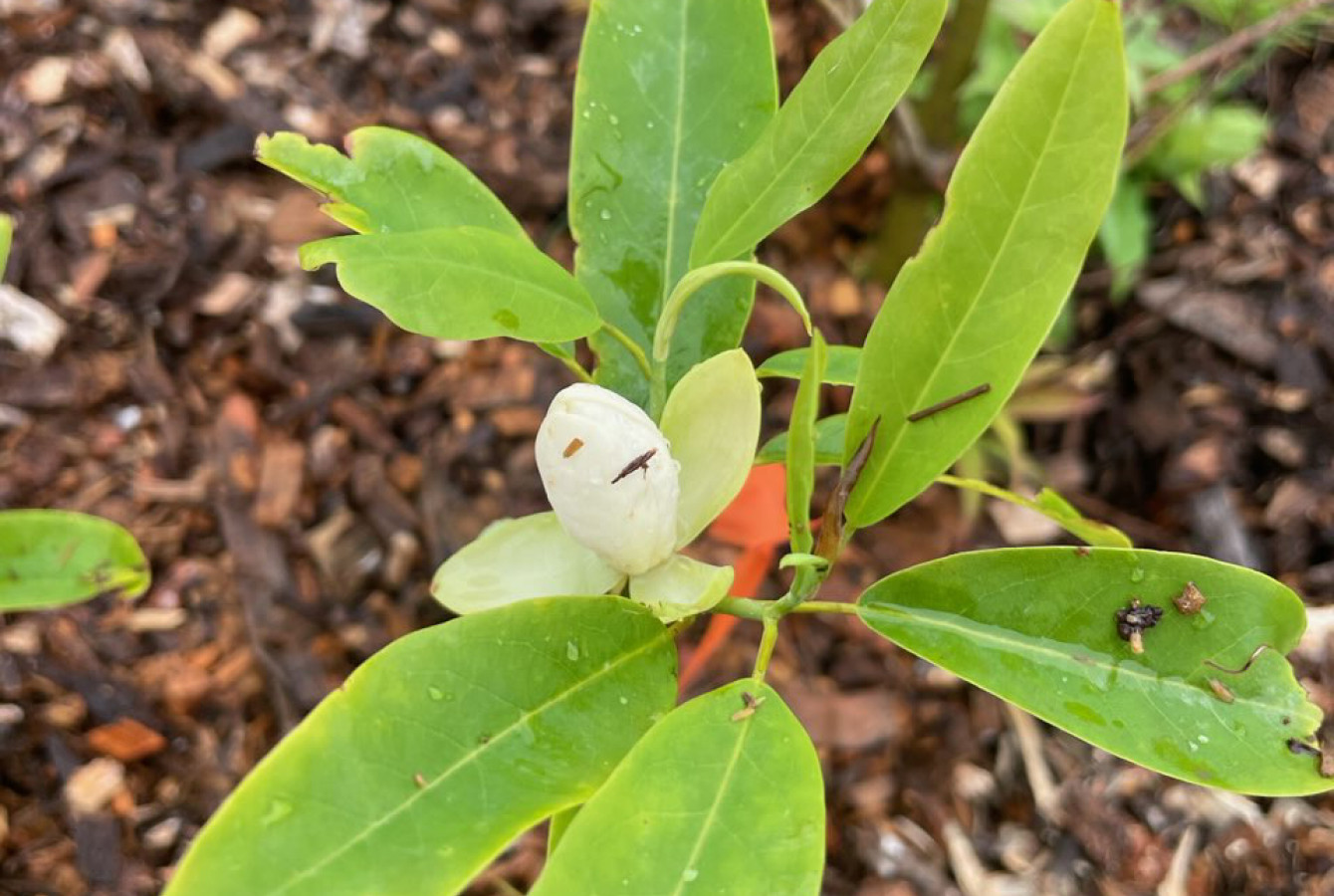
Tree diversity also offers protection from pests and pathogens, with Cavender-Bares citing the invasive nematode worm that is devastating beech trees.
“If there’s a mixture of species, it may dilute the pathogen, and it also means that at least some individual trees will survive in that stand,” she explained. “Increasing diversity tends to increase the stability of forests by reducing what we call ‘density-dependent mortality.’”
By comparing growth, canopy size, and shape, as well as collecting soil and leaf samples from plots with various levels of biodiversity, said Cavender-Bares, “we're trying to understand the mechanisms of how that works, and why it works.”
One of the team’s prior experiments is already providing information about the benefits of greater canopy cover in a plot. Maria Park, a former graduate student in Cavender-Bares’ lab, found that forests with more total canopy cover reduce the vapor pressure deficit where hot, dry air pulls water out of leaves.
“The higher canopy cover in mixtures also seems to prevent extreme cold temperatures or really extreme hot temperatures,” explained Cavender-Bares. “Trees provide shade and reduce movement of the air, creating an environment where other trees can more easily grow.”
Cavender-Bares began conducting this kind of research back in 2013, when she was based at the University of Minnesota. Her methods were inspired by the work of ecologist G. David Tilman, whose studies on grassland biodiversity won him the 2025 National Medal of Science.
Tilman’s work has been “groundbreaking,” said Cavender-Bares. “But he never tested these ideas in trees. So I set up an experiment with my collaborators at the Cedar Creek Ecosystem Science Reserve [at the University of Minnesota] with different numbers of species, different phylogenetic and functional diversity. And we also found that greater diversity, greater phylogenetic diversity, greater functional diversity, greater species richness, all lead to greater productivity.”
The structure of FAB studies is already proving key to their success.
“These kinds of experiments are crucial for remote sensing and the upscaling of information,” explained J. Antonio Guzmán, a research scientist in the OEB Department, “because they provide controlled biodiversity gradients that enable causal testing of how species richness and composition influence forest structure and canopy spectral signals — something that is particularly difficult to isolate in natural forest stands.”
FAB, with its various branches, also enjoys a broad reach with younger researchers.
“This sort of long-term planting experiment allows for so many hypotheses to be tested,” said Beatrice Youd, a Ph.D. student at the Harvard Kenneth C. Griffin Graduate School of Arts and Sciences, who has just started working with Cavender-Bares. “FAB is a framework that can help us better understand invasive pests and pathogens, warming temperatures, forest succession, and biodiversity’s impacts on tree health. So much collaborative science will come out of FAB.”
“As I refine topics and hypotheses for my dissertation,” Youd added, “I can look to FAB for inspiration.”
Being born a few days on either side of the school-enrollment cutoff date might seem like an arbitrary difference. But new research finds boys born just after the cutoff, who start kindergarten relatively old for their grade, enjoy far more advantages than previously known.
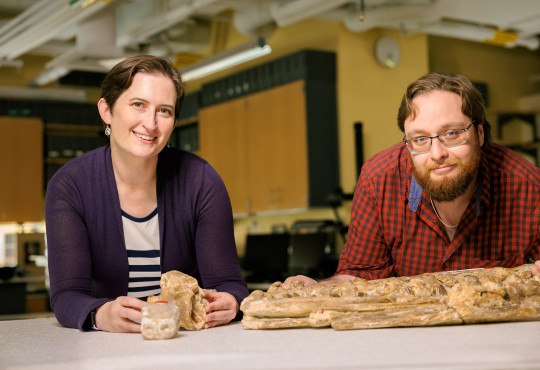
After 80 million years, a giant fossil jaw has quite a story to tell. Back in the age of the dinosaurs, Tylosaurus proriger was a fearsome predator — a bus-sized aquatic reptile with a crushing snout, daggerlike teeth, and knack for swallowing prey whole. How its bones wound up at Harvard is a tangled yarn involving a Wild West stagecoach station, the early western railroads, the infamous “Bone Wars” between rival fossil hunters, and a founding scholar of natural history.

New research by economist Rebecca Diamond found an increase in marriage among single women and an increase in employment rates among unemployed women after they started taking GLP-1 drugs for weight loss. Diamond says the pattern suggests that at least part of the female obesity penalty — the social and financial costs women bear due to their body size — is linked to first impressions.