Eileen O’Grady
Harvard Staff Writer
College students landed internships, and even roles, in Diane Paulus’ complex staging of “Phantom of the Opera”
/ Read time: 6 minutes
Harvard Staff Writer

This past summer, three Harvard students helped transport Manhattan audiences to Parisian rooftops, to opera house dressing rooms, and to a subterranean labyrinth.
Tanner Quirk ’29, Alicia Chu ’28, and recent graduate Saman de Silva ’26, spent more than two months working on “Masquerade,” an immersive adaptation of Andrew Lloyd Webber’s “The Phantom of the Opera” directed by Harvard theater luminary Diane Paulus. The Off-Broadway show is performed for 360 people a night, in six separate performances that unfold simultaneously throughout a single building.
“It’s so important to show this next generation of artists entering the field that they can be innovative; they can think broadly,” said Paulus, a professor of the practice in Theater, Dance, and Media and the Terrie and Bradley Bloom Artistic Director of Harvard’s American Repertory Theater. “So often you feel there’s only one way of presenting work or having a career in theater. There couldn’t be anything more outside the box than ‘Masquerade.’”
Quirk joined the production as a vacation swing, covering two ensemble parts and the role of Young Phantom. Upon arrival, much of his training involved shadowing the other actors to learn their movements. By summer’s end, the Adams House resident was performing as Young Phantom in eight shows a week.
“It’s a very challenging show for an actor, in the best way possible,” said Quirk, a trained dancer who has performed on Broadway and choreographs on campus for the Harvard Ballet Company.
Each “Masquerade” performance (known as a “pulse”) begins 15 minutes apart, with the cast featuring a total of six Phantoms, six Christines (Phantom’s love interest), and three Raouls (Christine’s childhood sweetheart). Each scene is timed out perfectly, and each actor’s movements are choreographed down to the second to ensure performances never crash into one another.
“As Young Phantom, I’ll go do one scene for one pulse, and then go back and do that same scene again for the next pulse,” Quirk explained. “Navigating a building like that is not as straightforward as a proscenium show. It’s like, ‘How am I going to navigate through the building without running into an audience [group] while still making my next entrance on time?’”
As a directing intern, Chu helped resident artistic director Hunter Bird train and rehearse new actors while putting together the show’s “bible” (or documentation of the complex staging and protocols). Chu, who is concentrating in economics and government and is enrolled in the Harvard-New England Conservatory dual-degree program, often attended evening performances, moving between pulses to observe different actors and taking notes the director could use to improve the show.
“It was the greatest thing in the world for my directing brain; I love seeing how different directors direct and absorbing it all,” the Cabot House resident said. “There were a few weeks where we trained three Phantoms, two Christines, and a Raoul all at the same time, and we would rotate them in and out [of scenes] like the original cast did when they were first creating the show. It was so special to see the actors learning from each other while also creating their own unique interpretations.”
De Silva played Raoul, the show’s romantic lead, for 12 weeks as a vacation swing, though some nights he also played an opera manager. The average performance found him schmoozing with the audience during opening scenes, climbing four flights of stairs just in time to perform the love duet “All I Ask of You,” and returning downstairs to do some comedic scenes with the opera managers. Then he would use a backstage exit to access a lair within the six-story building and perform a scene in the Phantom’s torture chamber while restrained by ropes. And he does all this twice.
“For immersive theater, you need to be so confident in how you perform and how you are present in the space, because you can read the reactions of audience members as soon as you deliver a line or sing a song,” de Silva said. “I developed a confidence in my ability regardless of whether we had a very engaged or disengaged audience because I learned I could perform unfazed by audiences’ reactions.”
Quirk also remarked upon the interaction between audience and actors. When performing Young Phantom while locked in a cage, he saw fans come over to comfort him.
“There are people who just sat with me the entire time and held my hand and said, ‘You’re not alone,’ ‘Everything is going to be okay,’ ‘It's okay to be different,’” Quirk said. “I found that really touching to see that level of empathy coming from people. Even though it is all make-believe, it still felt like a very real connection. It was cool to see how much they wanted to be a part of the action as well and how much they clearly loved the story.”
During their time on the show, the students also got to work with Assistant Dance Captain Milena J. Comeau ’13, who taught Quirk and de Silva much of their choreography. Both students cited the Harvard College alum as a valuable resource and mentor figure during their time in the show.
“Mel is just living the life and doing it, and it was so affirming to have her in the space,” de Silva said. “I had this sense of ‘I’ve been in your shoes and not known what’s going to come next,’ but it’s going to be okay as long as you trust in your artistic philosophy and you keep on exploring what’s generative.”
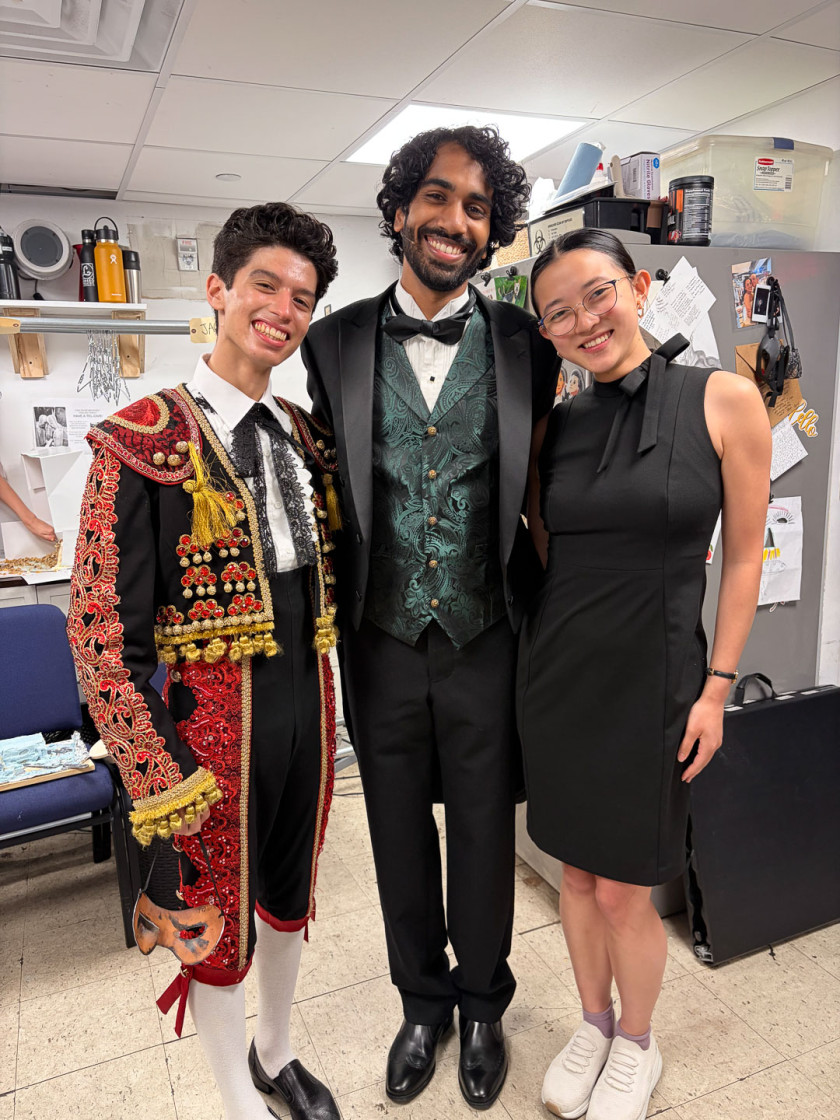
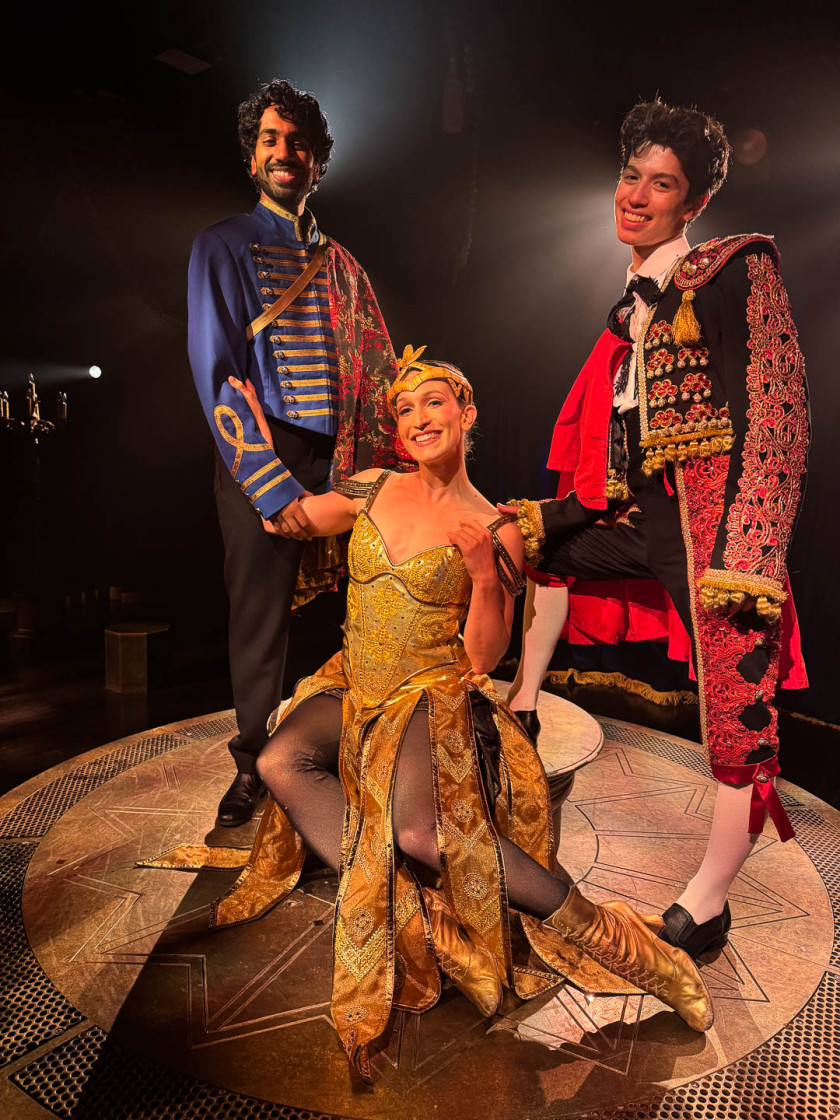
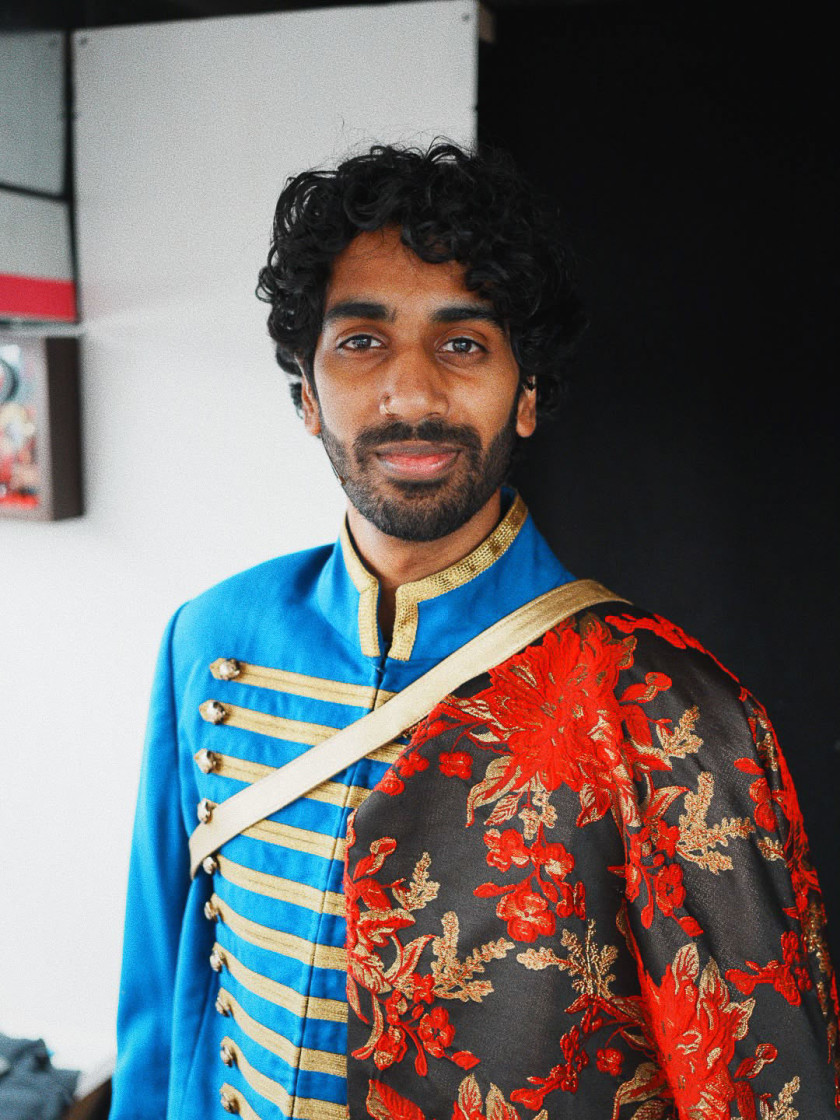
Now that they’re back on campus, Chu and Quirk are already thinking about their next performances. Chu will play Rapunzel in the Harvard-Radcliffe Dramatic Club’s October production of Stephen Sondheim’s “Into the Woods” and will direct the staging of Lowell House Opera’s April production of “The Barber of Seville.” Quirk will serve as assistant choreographer for “Into the Woods” and will also perform and choreograph with the Harvard Ballet Company.
De Silva, who is also passionate about law and is currently working for a civil rights firm, said his run on the show inspired him to pursue more work in theater.
“This gave me a sense of nerve and gusto to be like, ‘Yes, I can open these doors and I can show up to these professional spaces,’” he said. “In spite of not having a conservatory background and in spite of being 10 years younger than my scene partners, I could still show up to work and give a performance as good as everybody else and leave audiences in awe and wonderment.
“Proving that to myself,” he added, “has inspired me to keep this avenue of theater open.”
As Paulus pointed out, creative careers rarely play out in linear fashion.
“My dream for ‘Masquerade’ is that artists and audience get an appetite for what is possible in the theater, and what can be different in the theater,” she said. “What better than for young Harvard students to have that firsthand experience in a way that might impact how they will contribute to the next wave of theater-making ahead.”

Say political engagement could be increased in a certain society by the introduction of effective artificial intelligence tools — but those living there would have fewer in-person interactions. Should such tools be adopted?

The assistant professor in the Department of Art, Film, and Visual Studies has been named this year’s winner of a distinguished annual honor for artists with strong ties to New England.

For most of his life, Daniel Lieberman has dedicated his mind to studying the evolution of the human body. In his latest project, he also devoted his body — specifically his digestive tract — to science.