The Inflation Reduction Act (IRA), signed into law by President Joe Biden, represented the largest clean energy investment in U.S. history.
IRA’s goal was building a long-term, bipartisan constituency for climate policy and decarbonization of the national economy. A team of political scientists, including Harvard’s Dustin Tingley, set out to study whether that strategy paid off.
Results showed voters, including those who noticed new clean energy projects benefitting their own communities, more likely to credit governors than President Biden.
More than $198 billion in green investments were enacted under former U.S. President Joe Biden.
But who reaped the political rewards from a set of policies that advanced renewable energy projects and green jobs across all 50 states? According to a new paper, published this month in in the Proceedings of the National Academy of Science, voters were most likely to credit their governors.
“Politicians need to get credit for the benefits they provide to voters in order to be more competitive in elections,” said co-author Dustin Tingley, Thomas D. Cabot Professor of Public Policy with joint appointments at the FAS and Harvard Kennedy School. “This does not mean credit can’t be shared, but standing behind the curtain comes with risks.”
The Inflation Reduction Act (IRA), signed into law in 2022, included $161 billion in incentives for private firms that produce renewable energy or manufacture key components including wind turbines and solar cells. Additional support was available via the Bipartisan Infrastructure Law of 2021 as well as state and local policies.
By design, the IRA delivered economic benefit to all corners of the country. The goal was building a long-term, bipartisan constituency for climate policy and decarbonization of the U.S. economy.
“The IRA’s investments weren’t random but concentrated in red and purple swing states where they were supposed to matter most,” noted co-author and University of Michigan political scientist Alexander Gazmararian.
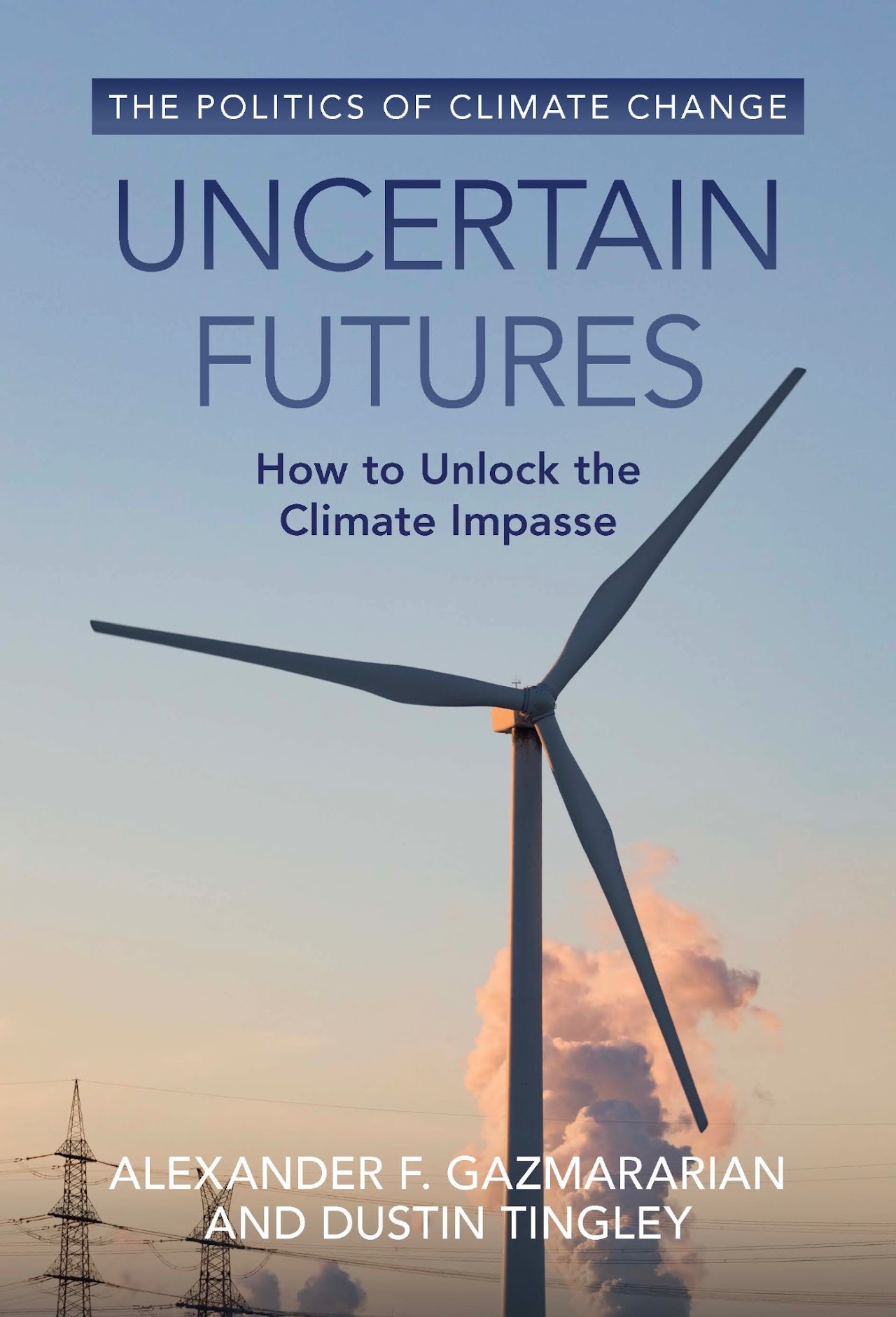
That investment logic may have been politically savvy, but the wisdom of its approach to voter communication looks less clear, said Tingley, an expert on energy transitions and author of “Uncertain Futures: How to Unlock the Climate Impasse” (2023). The paper’s three co-authors, including Nathan Jensen of the University of Texas at Austin, wanted to know whether the policy had swayed public opinion in meaningful ways.
Building new and supportive constituencies is hard, but if you can do it you create future allies and co-benefits across party lines.
Dustin Tingley
Thomas D. Cabot Professor of Public Policy
That meant investigating whether U.S. residents had even noticed new clean energy projects in their own communities. It also meant tracking whether voters connected local benefits to the federal policymakers responsible. In political science, the process by which a particular law creates supportive constituencies is called “policy feedback.”
“Building new and supportive constituencies is hard, but if you can do it you create future allies and co-benefits across party lines,” Tingley said. “Positive policy feedback is one way to reduce partisan barriers, but it can also be electorally rewarding for those that provide early benefits to communities.”
The study, supported by Harvard’s Salata Institute and the University of Michigan, used a methodology involving three geolocated nationally representative surveys, all administered in 2024 with a cumulative total of more than 5,000 respondents. The researchers confirmed that awareness increases with proximity to clean energy projects. They found that trend held with Democrats, Republicans, and independents alike.
But those living near a project proved no more likely to credit Biden. In fact, 49 percent of all respondents viewed their governor as at least partly responsible, while just 41 percent gave some credit to Biden. Self-identified Democrats were more likely than Republicans to credit their governor (55 percent vs. 46 percent). Dems were also more likely to reserve a little praise for Biden (53 percent vs. 31 percent).
Next, the co-authors set out to analyze the role of political messaging in driving these results. They constructed a database of public statements, made between 2022 and 2024, concerning more than 300 clean energy projects nationwide.
The most persistent messengers were businesspeople, who issued statements on nearly every project to benefit from public investment. Governors, especially Democrats but also Republicans, were the elected officials to speak most frequently over the period studied, with their remarks arriving at a steady clip from a project’s beginning to completion.
But both businesspeople and governors of both parties credited state and local actors more frequently than the Biden administration. According to the co-authors, possible explanations include the importance of permitting that is controlled by local officials, as well as the business community’s incentives to manage political risk across longer timespans, as the fortunes of political parties rise and fall.
Biden spoke frequently immediately following passage of the IRA in August 2022, but his number of statements tapered from there. Perhaps the president didn’t want to risk projects situated in red or purple districts. Because when Biden did speak, the co-authors noted, he was more likely to credit the Bipartisan Infrastructure Law than the IRA, which had passed Congress on a party-line vote.
“Voters are not always attentive,” Tingley observed. “But even if they are attentive, such a mixed bag of messages and credit attribution becomes hard to sift through.”
Getting credit for these green investments could have mattered electorally. Because the study also revealed bipartisan support for public investments in clean energy, with half of Republicans and 81 percent of Democrats viewing green projects as economically beneficial to their communities.
Results show the IRA, the largest clean energy investment in U.S. history, falling short of generating policy feedback effects. As the co-authors noted, the law’s partial repeal, through the One Big Beautiful Bill Act of 2025, operated completely outside the realm of public opinion. It, too, passed with one-party support — this time from the other side of the political aisle.
Key Publications
Why Biden-era clean energy investment policies had limited political returns
Alexander F. Gazmararian, Nathan M. Jensen, and Dustin Tingley, Proceedings of the National Academy of Science 123, no. 9 (2026): e2526802123.
Women more likely to marry, land jobs after taking GLP-1s
New research by economist Rebecca Diamond found an increase in marriage among single women and an increase in employment rates among unemployed women after they started taking GLP-1 drugs for weight loss. Diamond says the pattern suggests that at least part of the female obesity penalty — the social and financial costs women bear due to their body size — is linked to first impressions.
At age 101, alum gifts ‘big, geometric, colorful’ artwork to the FAS
When David Bakalar first set foot at Harvard, he was a 17-year-old child of immigrants commuting by bus from Lynn, his $500 “nonresident scholarship” covering tuition and a study space at Leverett House but not room and board.