Christy DeSmith
Harvard Staff Writer

A first-of-its-kind Rurality Forum will address small-town America’s most urgent issues, while confronting the urban-rural divide.
/ Read time: 5 minutes
Harvard Staff Writer
“Where are you from?”
It’s a common question for Harvard College first-years. But for those from rural America, there’s no straightforward answer.
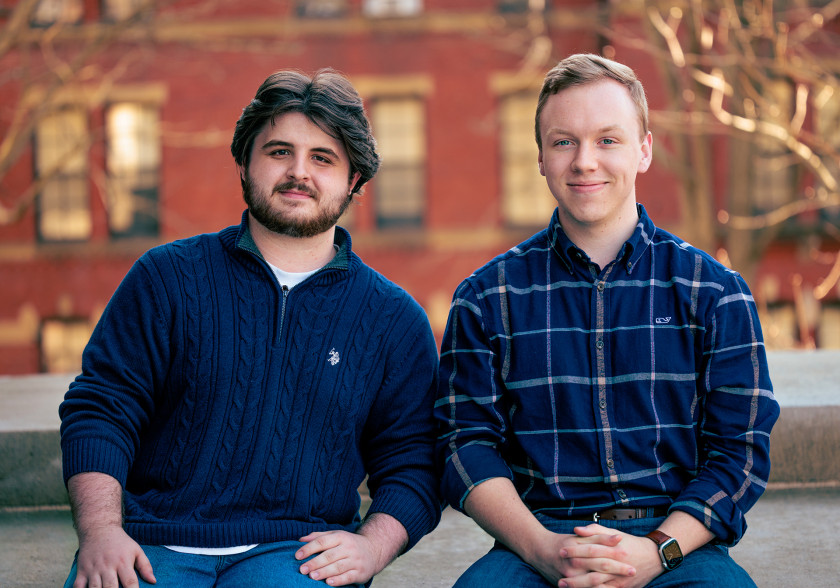
“We often have to describe where we’re from as between two places,” said Kevin Scanlan ’27, an economics concentrator from Grass Valley, Calif., a town of about 14,000 residents. People who’ve heard of his hometown, he explained, are generally Bay Area residents “who pass through on their way to ski up in Tahoe.”
Likewise, Justin Black ’27, a government concentrator from Bloomsbury, N.J. (population: around 800), situates his birthplace on the border between New Jersey and Pennsylvania. “My high school mascot was called the Stateliners,” he said.
These experiences, which Scanlan described as “alienating,” moved the students to help launch the Harvard Undergraduate Rural League (HURL) in 2024. The initial goal was providing a sense of belonging to students from areas few of their classmates had heard of, let alone visited.
The organization’s mission quickly expanded as members sought to address rural America’s most pressing concerns, and the inaugural Rurality Forum, slated for Saturday [April 11] at Fong Auditorium, represents the group’s most ambitious effort to date. The event was the sole undergraduate-organized initiative to receive financial backing from the 2025–26 President’s Building Bridges Fund. Additional support was provided by the Harvard College Dean of Students’ Office of Culture and Community.
“This is about using Harvard skills and Harvard resources to solve problems related to rural communities and the urban-rural divide,” said Black, who now serves as the group’s co-president with Scanlan.
“It’s also about changing attitudes,” Black later added. “Rural areas provide a positive good to the country. They’re not something to be fixed; they’re something to be celebrated.”
Harvard College is home to student clubs for those from specific regions and states. As new arrivals, Scanlan and Black, along with co-founder Avani Rai ’27, who grew up in Normal, Ill., craved community that spoke directly to their roots.
“There isn’t any single definition of rural,” observed HURL faculty advisor Christopher Norio Avery, Roy E. Larsen Professor of Public Policy at Harvard Kennedy School. “A wide range of students may associate themselves with the term, or some other related term, and not know how to connect with other people who think about themselves the same way.”
HURL members from small towns on opposite U.S. coasts — and the vast country in between — have since discovered commonalities over pizza and football parties. “There’s a lot that connects rural students, even if they’re not from the same place geographically,” Scanlan said.
In addition to social gatherings, HURL leadership has organized project teams to work on urgent rural issues. An early effort sought to research and raise awareness about pathways into careers in rural medicine. Mentoring rural high-school students interested in applying to highly selective schools is another priority.
“We want any trailblazing that we do to become a well-established path for rural students, including students from our hometowns, who arrive here after us,” said Scanlan, who, like Black, was the first from his high school to attend Harvard.
The Rurality Forum will unite academics, rural advocates, and members of the Harvard community with rural roots. “There might also be people who don’t come from rural areas but are interested in remedying some of the polarization we see between rural and urban areas and learning that we’re not as far apart as we think,” Black said.
The event’s keynote speaker will be Dreama Gentry, founder and CEO of Partners for Rural Impact and a senior fellow with the Harvard Graduate School for Education’s EdRedesign Lab. The lifelong Appalachian and first-generation college graduate is a leader in driving economic mobility for rural youth nationwide.
Programming also features panels of experts who will center rural impacts in three critical policy areas: education, medicine, and economic development.
Avery, who has researched how to help top students from rural high schools apply to selective colleges, will participate in a panel on educational opportunities. Joining him will be former Virginia Secretary of Education Aimee Rogstad Guidera and Assistant Director for Recruitment at Harvard College Admissions & Financial Aid Ian W. McLean.
“Many elements of the college application process are idiosyncratic and hard to understand without some kind of connection to people with prior knowledge,” said Avery, noting how many families assume they can’t afford the cost of attending a school like Harvard. “And rural high schools tend to be relatively small, so there are fewer connections to selective colleges.”
A panel on rural medicine will feature Matthew Tobey, director of the rural medicine program at Massachusetts General Hospital. Panelists covering economic development include Jacob Hannah of the West Virginia-based Coalfield Development Corporation and Nathan Ohle, president and CEO of the International Economic Development Council and a long-time rural advocate who served in the Obama White House.
Closing out the day will be a networking hour, where organizers hope attendees will spark new partnerships and projects.
“A lot of research and policy professionals have rural issues as a part of the repertoire,” Black observed. “But maybe seeing how much people care about these issues will convince them to make it a bigger part of their academic mission.”
An earthquake alert system mines data from billions of Android phones, the most common smartphone in the world, and easily the most popular in less wealthy nations.
Grantees cross the sciences, range from work in quantum to ‘smart skins’

Julie Joncas will begin her role in the FAS on August 24.