David Trilling
Harvard Staff Writer
Salata Institute for Climate and Sustainability

A Harvard survey of coastal communities in West Africa reveals high rates of distress, prompting researchers to see mental health care as a form of climate adaptation
/ Read time: 7 minutes
Harvard Staff Writer
Salata Institute for Climate and Sustainability
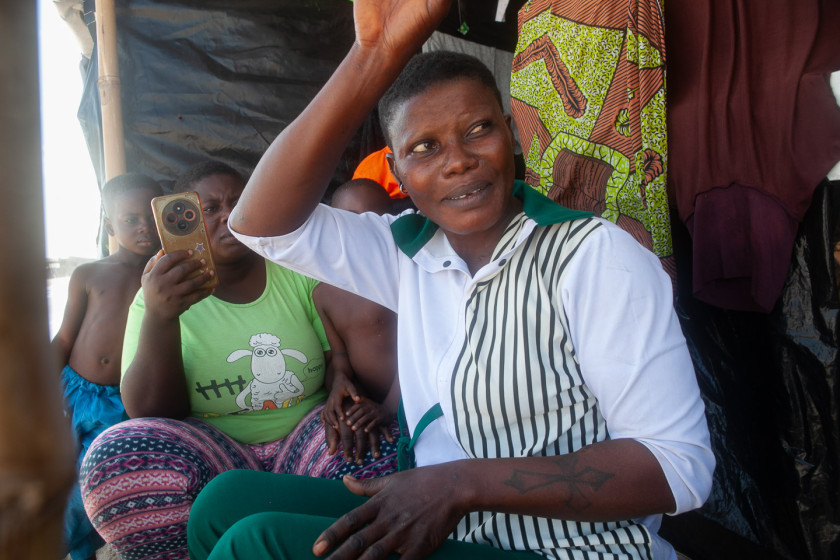
Titilayo Ashabi holds her toddler close and calls the sea her enemy.
Waves heave foam a few feet from where she lives with her five children in Okun Alfa, a crowded strip in the city of Lagos caught between the Atlantic Ocean and swampy developments inland. Three years ago, the sea destroyed their old home. Ashabi moved a short distance up the sand and built again, fastening bamboo and plastic sheets against a slab of concrete left from another ruined building.
“My kids don’t sleep because they fear the water,” she says.
They are not alone. New Harvard research finds sea-level rise taking a steep mental toll on the West African coast. In Okun Alfa alone, 40 percent of parents said their children are afraid of the sea; among all adults, 42 percent report regular nightmares about the ocean, and 38 percent report persistent suicidal thoughts.
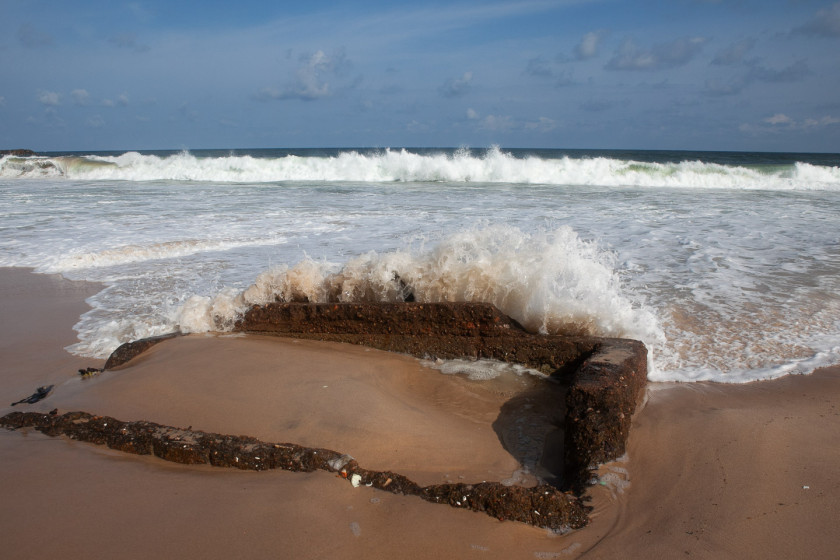
Ashabi’s family — like so many others — has nowhere else to go. In Okun Alfa, the sea has advanced about a a half-mile inland since the 1990s, displacing thousands on the edge of a teeming megacity. So she stays awake, watching the ocean.
“It’s getting closer. In a few years, the water will have come and taken this,” she says, pointing to her shelter.
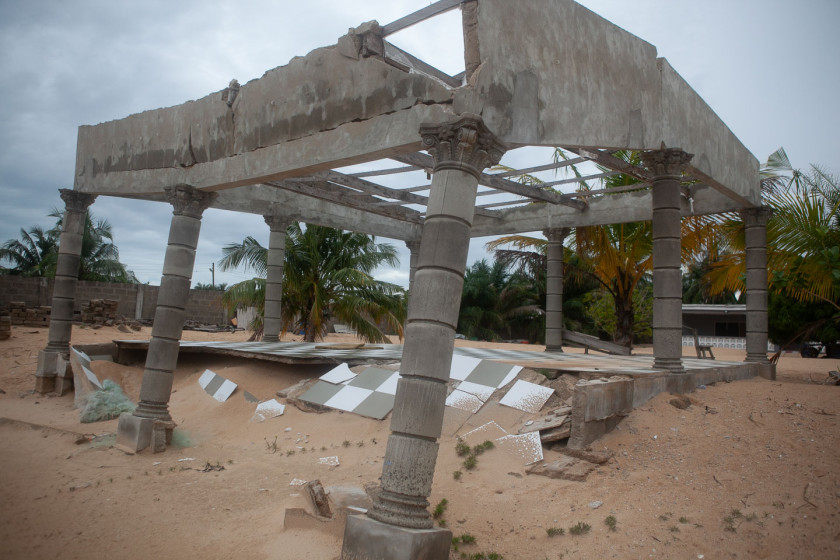
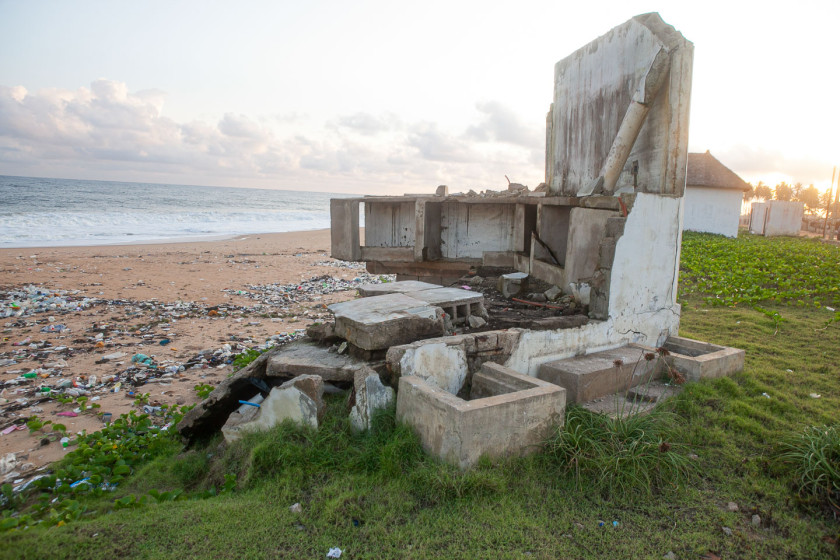
In the Gulf of Guinea, coastal erosion worsened by climate change is consuming homes, roads, and communities, leaving residents fearful of what the sea will take next. Last winter, a team led by Emmanuel Akyeampong, Ellen Gurney Professor of History and leader of a Salata Institute climate adaptation research cluster, surveyed 450 people in nine coastal districts in Côte d’Ivoire, Ghana, and Nigeria. The cluster had begun two years earlier as a cross-disciplinary study of climate adaptation on vulnerable African coasts, but the team found trauma everywhere they went — including high rates of anxiety and other symptoms associated with post-traumatic stress disorder.
Mental health soon became central to the project, and the team’s survey opened a window onto a problem researchers had never measured. Across the three countries, 56 percent of adults reported nightmares about flooding, and 63 percent reported suicidal thoughts. In Keta, a shrinking ribbon of sand in Ghana, 88 percent of parents said their children had nightmares about the water.
“These figures show that we’re facing a clinical emergency,” says Akyeampong, who has taught the history and practice of psychiatry to Harvard undergraduates for more than two decades.
In all three countries, more than 70 percent of respondents have experienced more than five flood or erosion events in their lifetimes; in Nigeria, the figure rises to 94 percent.
Akyeampong, who is also a professor of African and African American Studies, compares the resulting allostatic load — the emotional “wear and tear” that builds up from repeated disasters — to the experience of war.
“The people are not hypervigilant necessarily because of past trauma — they remain hypervigilant because the threat is ongoing,” he says.
Mawutok Apevieku, 63, sells anchovies at a bus stop beside the Keta Lagoon in eastern Ghana. Three years ago, the sea took her home.
“I lost everything: my earrings, my necklace, even my clothes,” she says.
Now living with relatives, imagining the future is “too much of a struggle” for Apevieku.
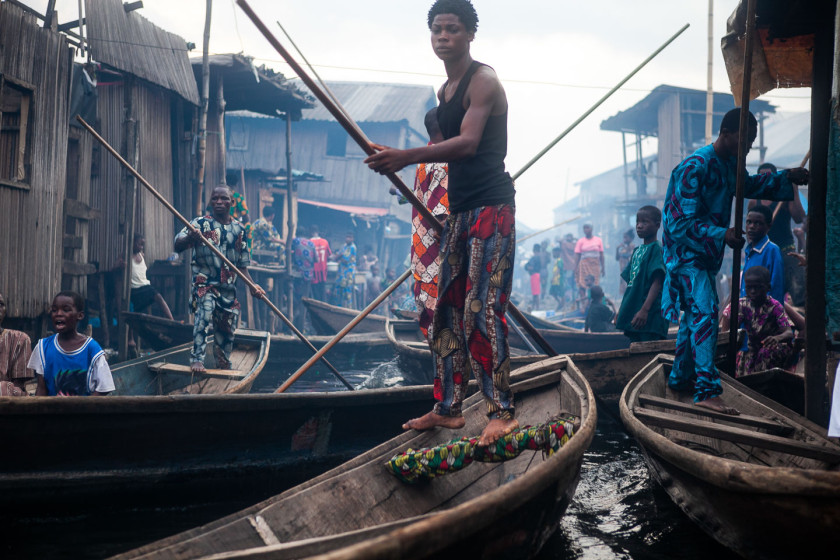
This type of “provisional” existence stretches across thousands of miles of the Gulf of Guinea coast, says Daniel Agbiboa, John and Ruth Hazel Associate Professor of the Social Sciences in the Department of African and African American Studies. “Climate change alters not only where people live, but how they wait, how they sleep, how they remember, how they imagine a future. It’s haunting. It brings a slow attrition to psychic life.”
Agbiboa, a co-investigator on the project, argues that mental health should be treated as a central part of climate adaptation, not an afterthought.
“For many of the people we met, the future cuts as a knife,” he says.

The countries in the study have few mental health specialists. Ghana, with its 33 million people, has roughly 80 psychiatrists. For its population of 29 million, Côte d’Ivoire has 30.
Akyeampong’s team has met with health ministries in all three countries to discuss how local clinics, community health workers, churches, and mosques can address the problem. With basic training, local health workers and religious leaders could provide psychosocial support and recognize when someone needs specialist care.
But Akyeampong sees a limit to what counseling can accomplish. When the root cause of the anxiety remains, he says, such treatment “turns into a gesture.”
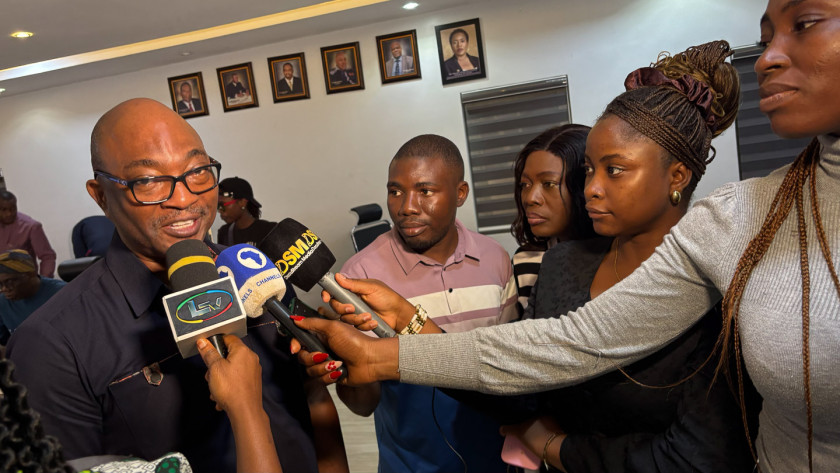
And coastal protection itself turns into a form of mental health care, says Tinuola Odugbemi, an associate professor of public health and community medicine at the University of Lagos who helped implement the study. Coastal interventions such as restored mangroves or seawalls could reduce anxiety.
“Climate adaptation must not only protect the coastline,” she explained during a meeting with government officials in Lagos, “but protect people’s minds.”
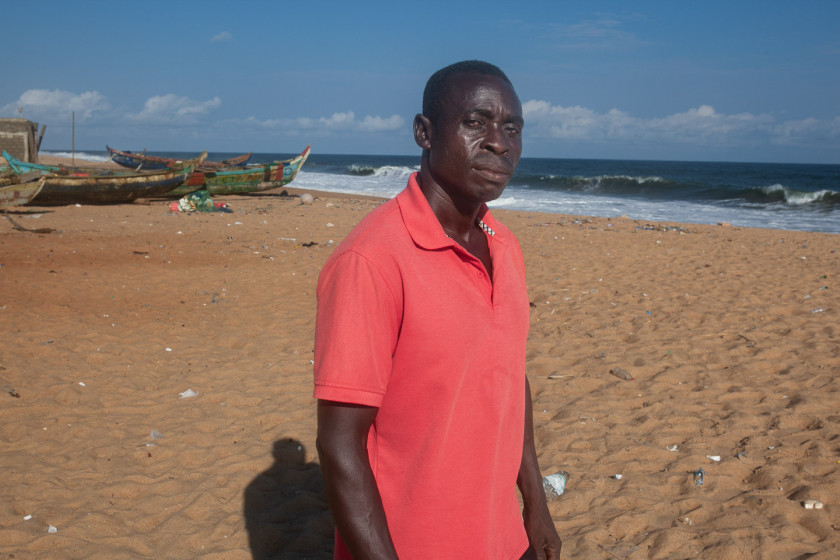
Mathieu Kouao, 68, agrees. He has fished for mackerel and sardines in Azuretti, a vanishing barrier island in Côte d’Ivoire, since he was 13. As fish stocks decline and the Atlantic devours his village, he knows what he wants: a seawall.
“The reality is that we have so many questions,” he says. “We can’t see our future because we don’t even know what we are going to do today.”

Harvard geoscientists reported that organic matter harvested from certain meteorites bears chemical traces of “primitive oxygen reservoirs” that have changed little since the birth of our solar system. The findings help trace the origins of organic matter that meteorites may have delivered to a young Earth, supplying the planet with ingredients essential for life.

Singer Mavis Staples, actress Angela Bassett, and soccer star Didier Drogba were among the honorees presented with W.E.B. Du Bois Medals Thursday at Sanders Theatre. The annual ceremony, hosted by the Hutchins Center for African & African American Research, recognizes outstanding contributions to Black history and culture.

“We will keep working at it until we get it right,” the FAS dean said.