Research

Search
  • Filter by School
    School
    School (field_school)
  • Filter by Topic
    Topic
    Topics (field_topics)
  • Filter by People
    People
    Audience (field_audience)
Top mathematicians grade AI’s ability to solve toughest problems
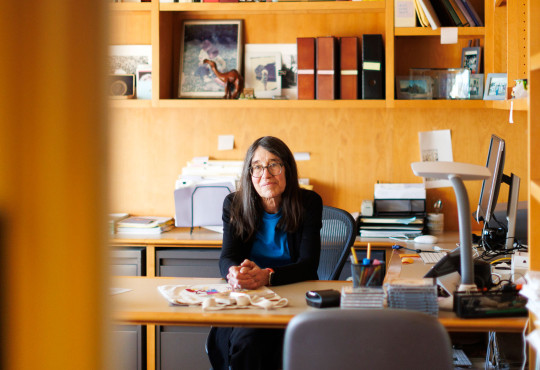
Mathematics professor Lauren Williams

Top mathematicians grade AI’s ability to solve toughest problems

The First Proof consortium has repeatedly challenged AI systems to crack 10 tough research math problems. In the latest round of results, AI systems collectively solved all 10 but still lagged in the ability to clearly communicate and document their results.

Happy accident yields a self-assembling quantum marvel
Graduate student Thao Dinh peering into a microscope while professor Suyang Xu looks on

Happy accident yields a self-assembling quantum marvel

The findings unlock a path to harnessing ultra-fast magnetic materials and cleaner computer memory and hardware — enabling performance gains that could solve major energy bottlenecks facing modern data centers.

 Analyzing ‘time capsules’ from the early solar system, delivered by meteorites
interior slice of a carbonaceous chondrite meteorite

 Analyzing ‘time capsules’ from the early solar system, delivered by meteorites

Harvard geoscientists reported that organic matter harvested from certain meteorites bears chemical traces of “primitive oxygen reservoirs” that have changed little since the birth of our solar system. The findings help trace the origins of organic matter that meteorites may have delivered to a young Earth, supplying the planet with ingredients essential for life.

Evidence of board games building bedrock social skills
Elizabeth Spelke, Marshall L. Berkman Professor of Psychology, in her office at Harvard University

Evidence of board games building bedrock social skills

A recent study from the Harvard Laboratory for Developmental Studies describes how games aimed at improving social skills, played in preschool settings, boost social-cognitive development for Brazilian children living near or below the poverty line.

Alarm over menstrual tracking apps
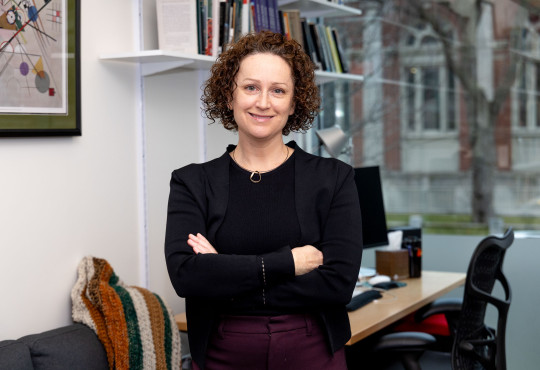
Professor Sarah Richardson in her office at Harvard University

Alarm over menstrual tracking apps

Menstrual tracking apps have become all the rage, leading the growing field of “femtech” that claims to help women understand — and regulate — their bodies. But these apps may promise more than they deliver — and even be harmful to women.

 Rediscovering Thoreau the scientist
University of Connecticut professor Robert M. Thorson speaking about his book “The Walden Experiments” at a podium beneath a slide featuring a portrait of Henry David Thoreau

 Rediscovering Thoreau the scientist

Henry David Thoreau famously went to Walden Pond to live deliberately. But for far longer, he pursued a lesser-known obsession: observing scientifically.

The optimal diet? Kitchen experiment leads scientist to answer
Professor Dan Lieberman and Tonia Prescott in their kitchen. Lieberman stirs a pot on the stove and Prescott holds a tomato.

The optimal diet? Kitchen experiment leads scientist to answer

For most of his life, Daniel Lieberman has dedicated his mind to studying the evolution of the human body. In his latest project, he also devoted his body — specifically his digestive tract — to science.

At Harvard Forest, doomed eastern hemlocks found to further future generations
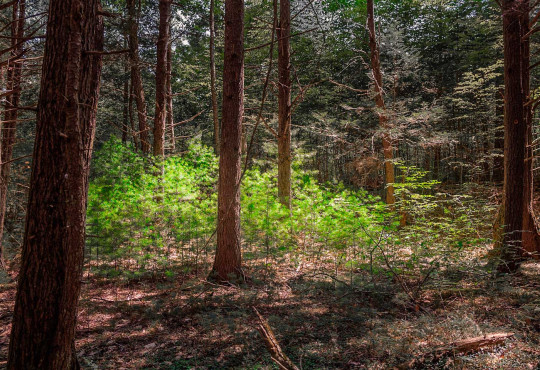
Small, newly regrown hemlock trees under larger old-growth forest

At Harvard Forest, doomed eastern hemlocks found to further future generations

Sixteen years ago, an invasive pest called the woolly adelgid arrived at Harvard Forest and slowly began to devastate its the eastern hemlocks — as they had done in forcce elsewhere. Since then, Harvard Forest scientists have begun to study how to manage the demise of its so-called foundation species.

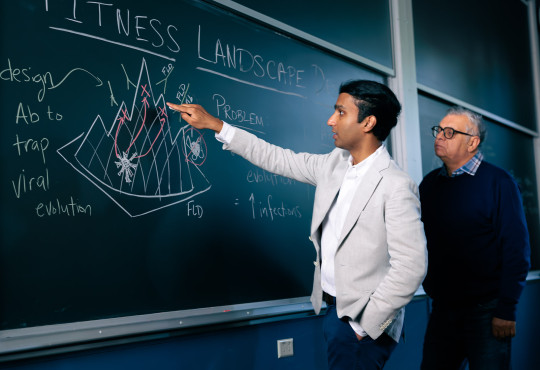
How to build an evolutionary trap for viruses
M.D./Ph.D. student Vaibhav Mohanty, at left, with Eugene Shakhnovich, Roy G. Gordon Professor of Chemistry, used a chalkboard to illustrate their fitness landscape design (FLD).

How to build an evolutionary trap for viruses

Two Harvard scientists describe a way to engineer the evolutionary landscape that viruses experience, pushing them away from dangerous variants and into evolutionary dead ends.

What sprawling light pollution does to fireflies
Fireflies in a field

What sprawling light pollution does to fireflies

As the sun sinks below the horizon, two scientists perch quietly beside a darkening field and wait for flashes of light. They have traveled far outside the city in search of research sites, because they study a group of creatures that have been driven to the margins of human settlements: fireflies.