Kermit Pattison
Harvard Staff Writer
Stem cell researcher was recognized for pioneering work on cellular communication
| 2 minutes
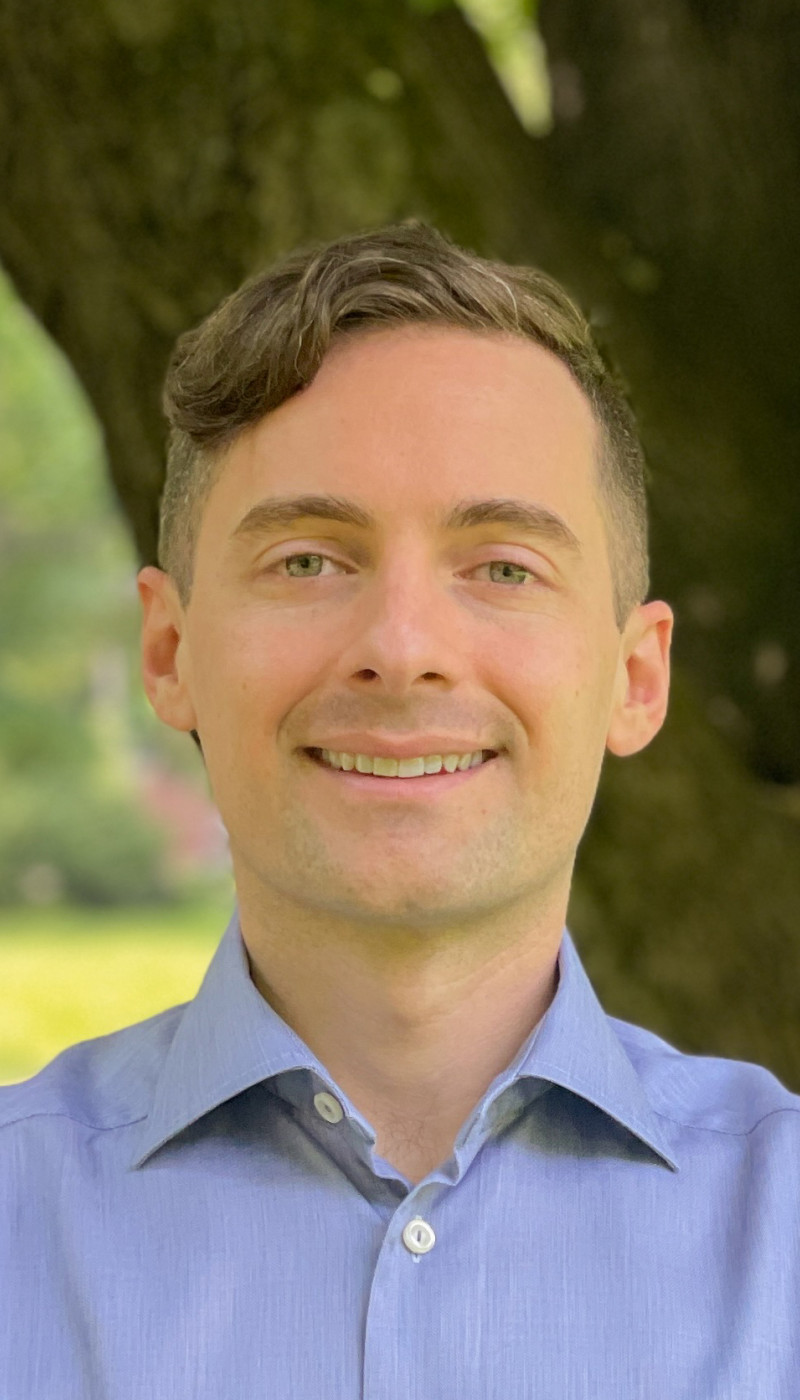
Stem cell researcher Ryan Flynn has been named a finalist for the 2026 Blavatnik National Awards for Young Scientists.
Flynn, 38, was recognized for uncovering a new class of RNA molecules on cell surfaces. He was among 18 finalists, announced Wednesday, selected from a pool of 372 nominees.
Flynn serves as an associate professor of stem cell and regenerative biology in the Harvard Faculty of Arts and Sciences, associate professor of pediatrics at Harvard Medical School, principal investigator in the Stem Cell Program of Boston Children’s Hospital, and principal faculty of the Harvard Stem Cell Institute.
He studies the relationship between RNA and glycans, which are sugar chains prevalent in cells throughout the tree of life. Flynn and his colleagues discovered that RNA — once believed to function only within cells — can be modified with sugars on cell surfaces. This work has revealed a previously unknown communication network involved in immunity and other fundamental biological processes. It holds promise for revealing underlying causes and potential treatments for cancer, autoimmune disorders, and other human diseases.
Awarded since 2014 by the Blavatnik Family Foundation and New York Academy of Sciences, the Blavatnik National Awards for Young Scientists recognize early-career researchers who have made notable discoveries and innovations in three domains: life sciences, chemical sciences, and physical sciences and engineering. This year eligibility was limited to people born no earlier than 1985.
Winners in each category will be announced October 6 during a ceremony at the American Museum of Natural History in New York City. Each of the three laureates will be awarded $250,000, and the remaining 15 finalists will receive $15,000 apiece.

The topping-off ceremony, a construction rite rooted in ancient Scandinavian rituals, took place August 27 at the site of the future Pritzker Hall, which will house the Department of Economics. The building project was set in motion five years ago.
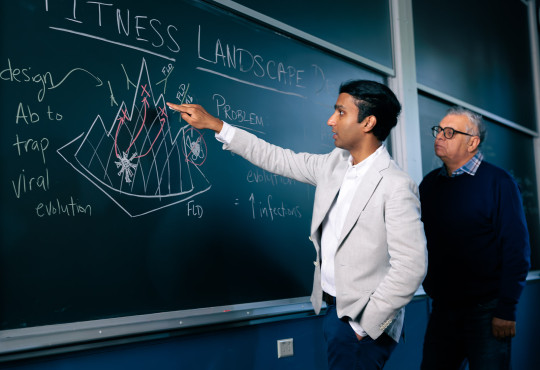
Two Harvard scientists describe a way to engineer the evolutionary landscape that viruses experience, pushing them away from dangerous variants and into evolutionary dead ends.

Amid the rhythms of the back-to-campus bustle, new faculty find themselves experiencing the same first-day excitement — and jitters. We dropped in on three, on the first day of their first classes.