Kermit Pattison
Harvard Staff Writer

Harvard geoscientists use organic-rich space rocks to reconstruct where some of the chemical ingredients for life first formed
/ Read time: 7 minutes
Harvard Staff Writer
One summer afternoon in 2020, a bright yellow fireball blazed across the sky over southern Morocco. People looked up to see the glowing mass falling toward Earth trailed by a line of white smoke. The sky echoed with a whistling sound followed by explosive booms.
It was a meteorite breaking up as it entered the Earth’s atmosphere. Within hours, hundreds of people fanned into the desert to collect fragments of rock from outer space. In all, some nine pounds were recovered from the so-called Tarda meteorite.
The episode marked a recent arrival of a type of extraterrestrial debris called carbonaceous chondrite. These ancient meteorites serve as “time capsules” of the early solar system, and Harvard scientists recently discovered new clues about how the organic matter inside them formed and spread more than 4.5 billion years ago.
In a recent paper for the Proceedings of the National Academy of Sciences (PNAS), Harvard geoscientists reported that organic matter harvested from Tarda and other carbonaceous chondrites bears chemical traces of “primitive oxygen reservoirs” that have changed little since the birth of our solar system. These findings help trace the origins of organic matter that meteorites may have delivered to a young Earth, supplying the planet with ingredients essential for life.
“The meteorites contain a chemical fingerprint for the materials that were forming and interacting in the early solar system,” said lead author Daniel Crocker, a postdoctoral fellow in the Department of Earth and Planetary Sciences.
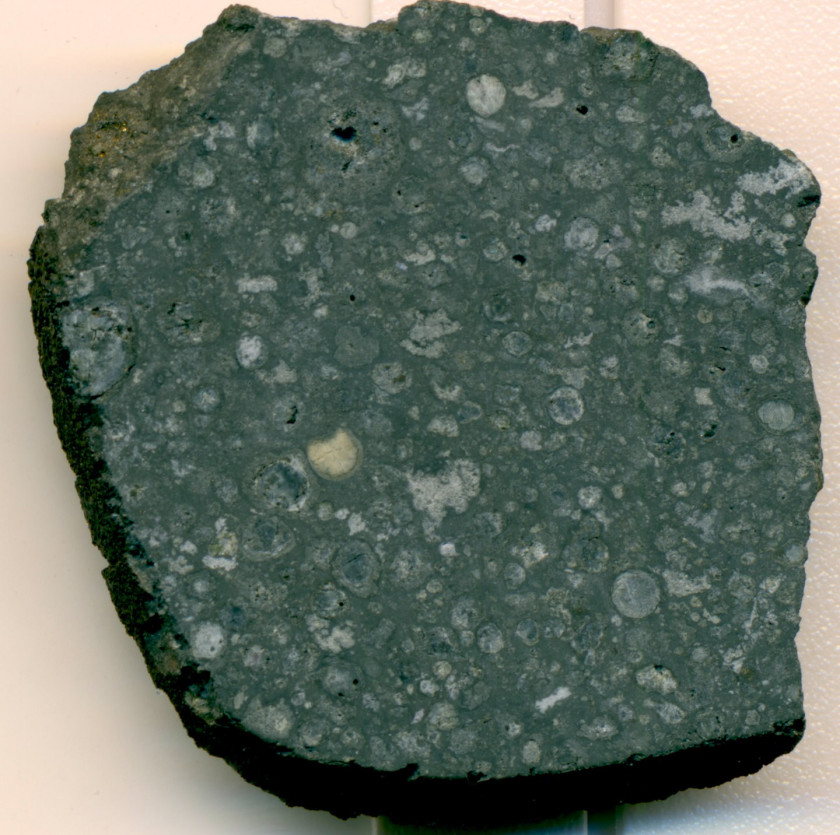
Our solar system was born about 4.6 billion years ago when a cold, dense cloud of gas and dust collapsed under its own gravity. This process produced the sun and a vast, swirling disk of leftover gas and dust, known as the “protosolar nebula,” which gave birth to planets and asteroids. Fragments of these asteroids still fall to Earth today as meteorites — and some, like Tarda, are rich in carbon, water, and organic matter.
Organic compounds are built around carbon atoms bonded with other elements, most commonly hydrogen, oxygen, or nitrogen. They encompass a huge diversity of compounds throughout nature. Early chemists labeled them as “organic compounds,” mistakenly assuming they could only be synthesized by living organisms. But today, we know they can also form without life, even in space.
Many scientists believe that meteorites delivered substantial amounts of organic matter to the early Earth, helping to supply the chemical ingredients that later became the building blocks of life. But it remains unclear how and where this extraterrestrial organic matter formed. One of the best ways to investigate this mystery is by analyzing carbonaceous chondrites, which formed near the dawn of our solar system and contain clues about its early history.
In the new paper, the co-authors focused on the oxygen in the meteorites’ organic matter. Oxygen was a major component of the gas (carbon monoxide and water) and dust of the early solar system and carries a record of the history of the materials.
The research was spearheaded by Crocker, an isotope geochemist who studies organic matter in ancient meteorites and the modern Earth. After earning his doctorate at the University of California, San Diego, he joined the research group of David Johnston, the Betty Wold Johnson Foundation Professor of Earth and Planetary Sciences and recently appointed Dean of Science in the Faculty of Arts and Sciences.
Crocker spent two years developing a new method for measuring oxygen isotopes in organic matter. He unveiled the method in a paper last year and the new study marks the first time it has been applied to meteorites.
Isotopes are different versions of the same element with variable numbers of neutrons. The new study targeted the three stable oxygen isotopes: 16O, 17O, and 18O.
Most materials on Earth have a predictable ratio between the three oxygen isotopes, because they are “mass dependent.” But in meteorites, the oxygen isotopes follow a different ratio scientists call “mass independent.”
In the PNAS study, the authors analyzed samples from 13 meteorites that landed between 1857 and 2020 in places such as Antarctica, Ukraine, Texas, Italy, France, and Morocco.
The samples were prepared and provided by second author Conel M. O’D. Alexander, a “cosmochemist” at the Carnegie Institution for Science, in Washington, D.C., who specializes in studying extraterrestrial materials.
To isolate each sample, much of the meteorite was either removed or dissolved with chemicals, leaving behind a powdery black residue of insoluble organic matter. At Harvard, the organic matter was placed in a furnace and heated to 1,350 degrees Celsius, breaking its chemical bonds. The oxygen released was then captured by bonding it with carbon to form carbon monoxide gas.
From there, the scientists guided the oxygen through a carefully controlled, multi-step process. Finally, an isotope-ratio mass spectrometer measured the relative abundance of the three oxygen isotopes, allowing scientists to calculate the ratios of the organic matter.
“I basically took a number of existing techniques and daisy-chained them together,” Crocker said. “We already had established techniques that we knew worked for analyses of certain species, and we were able to combine three techniques in a row to make them work in concert.”
The results revealed that organic matter in these meteorites contains “primitive” oxygen — as indicated by the oxygen isotope ratios — that originated in the early solar system and remained essentially unchanged for the last 4.6 billion years.
“The fact that it hasn’t been altered is some of the most interesting stuff,” Johnston said. “It just looks like it’s untouched. That just further reinforces the time capsule idea.”
The findings also suggest that a common component of organic matter formed in the molecular cloud or outer solar system and was distributed throughout the outer disk before being incorporated into the carbonaceous chondrites that continue to strike our planet.
Thus, the new study points to either a single source or common formation process of the organic matter. Crocker said that the study “provides us with information about when and where this organic matter formed and was distributed in the early solar system.”
Johnston credited Crocker for the methodological innovations that produced new insights about the chemical history of our planet and solar system.
“He was able to identify a really big, important question, the analysis that would enable us to get there, and we had the expertise to figure out how to engineer that solution,” Johnston said. “And lo and behold, there was a super cool outcome.”
Research described in this story was partially supported by federal funding from NASA (Award 80NSSC26K0433).

Singer Mavis Staples, actress Angela Bassett, and soccer star Didier Drogba were among the honorees presented with W.E.B. Du Bois Medals Thursday at Sanders Theatre. The annual ceremony, hosted by the Hutchins Center for African & African American Research, recognizes outstanding contributions to Black history and culture.

“We will keep working at it until we get it right,” the FAS dean said.

When Hoon Lee ’94 received the script for the role of Lee in Zoe Kazan’s Netflix adaptation of “East of Eden,” he was prepared to be skeptical. Decades in the industry had left the Massachusetts-born actor wary of roles that perpetuate Asian stereotypes.