Eileen O’Grady
Harvard Staff Writer
The visionary behind “Cats: The Jellicle Ball” was honored in a ceremony celebrating his contributions to the arts.
/ Read time: 5 minutes
Harvard Staff Writer
When Bill Rauch ’84 directed Chekhov’s “The Seagull” at Agassiz Theatre his junior year, he placed the audience onstage and the actors among the seats. When he directed Shakespeare’s “Romeo and Juliet” at the Loeb Drama Center, he inverted the famous balcony scene, with Juliet lying on a mattress and Romeo standing above. And when he directed Mayakovsky's “Mystery-Bouffe,” the performance traveled around campus, down JFK Street to the Barker Center, the Widener Library steps, and the Science Center.
Rauch, acclaimed theater director and the recipient of the 2026 Harvard Arts Medal, said his career can be attributed to those early days of collaboration and experimentation with fellow College students.
"We took a lot of risks together,” Rauch told a Farkas Hall audience Sunday afternoon. “We learned by doing plays — so many plays — from so many cultural traditions and eras. We followed improbable impulses. We made clumsy, sometimes hurtful mistakes over dining hall tables and in rehearsal rooms. We posed and we argued and we laughed, and through it all we learned how to collaborate.”
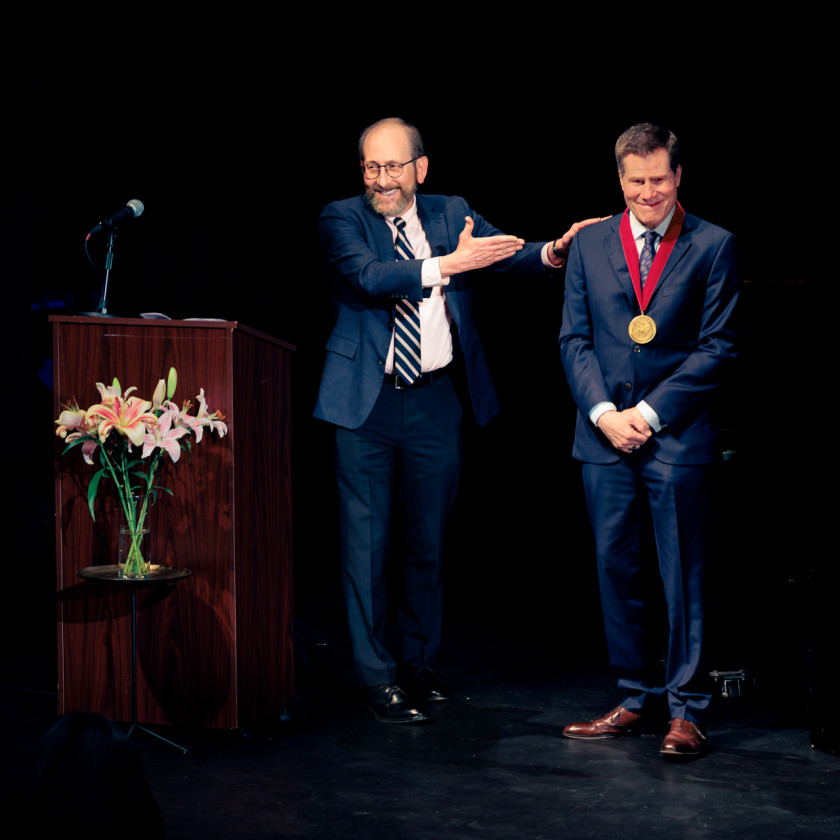
Harvard President Alan Garber awarded Rauch the Arts Medal in a ceremony featuring student performances and conversations with three alumni: actor and producer Amy Brenneman ’87; James Bundy ’81, dean of Yale University’s David Geffen School of Drama and artistic director of Yale Repertory Theatre; and documentary filmmaker R.J. Cutler ’83-’84. The event marked the culmination of Harvard Arts Festival, an annual four-day celebration of campus creativity produced by the Office for the Arts.

“Rauch is a visionary creative and a creative visionary who demonstrates the ways in which generosity, humility and openness can shape and strengthen cultural institutions,” Garber said. “He embodies excellence, appreciates and identifies excellence, concentrates, nurtures, and amplifies excellence. We are so proud that he got his start here at Harvard, that this is where he began to take risks and to make strides toward a career that has moved and will continue to move countless audiences.”
Rauch, artistic director of Perelman Performing Arts Center (PAC NYC), continued to invert audience expectations throughout his decorated theater career, which included the founding of Cornerstone Theater Company with Alison Carey ’82 and leading the Oregon Shakespeare Festival from 2007 to 2019.
At PAC NYC last season, he co-directed “Cats: The Jellicle Ball,” a reimagining of Andrew Lloyd Webber’s “Cats” set in the queer underground ballroom scene, featuring runway walk-offs and voguing dance battles. The show, starring André De Shields as Old Deuteronomy, has since opened on Broadway to great acclaim.
“I am sure that Harvard shapes the lives of all of its students, but I’ve got to believe that I am the most extreme example that can be found,” Rauch said. “Every chapter of my career, as well as my deepest friendships and even my marriage, all trace back to my four years at this College.”
In attendance at the Arts Medal ceremony were Rauch’s husband, actor Christopher Liam Moore ’86, and their children, Liam and Xava Rauch-Moore.
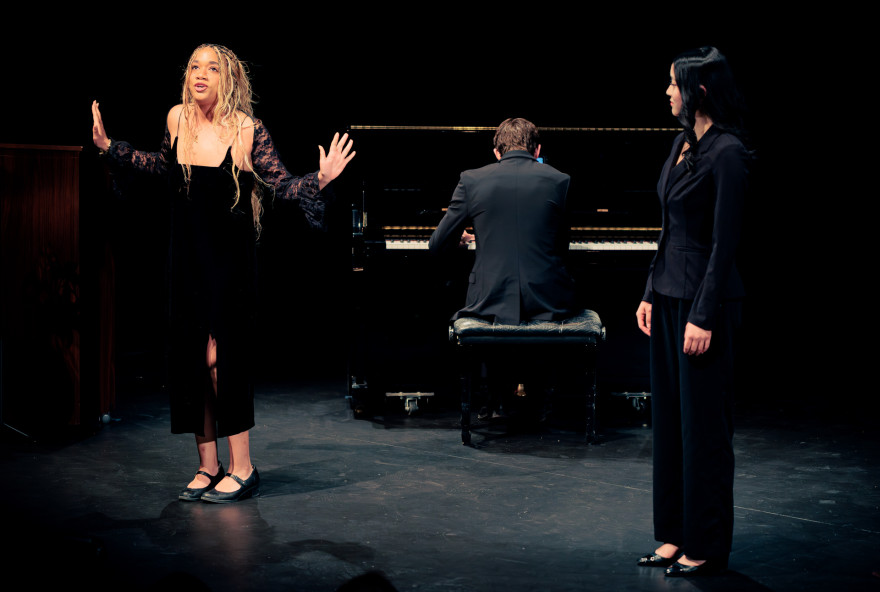
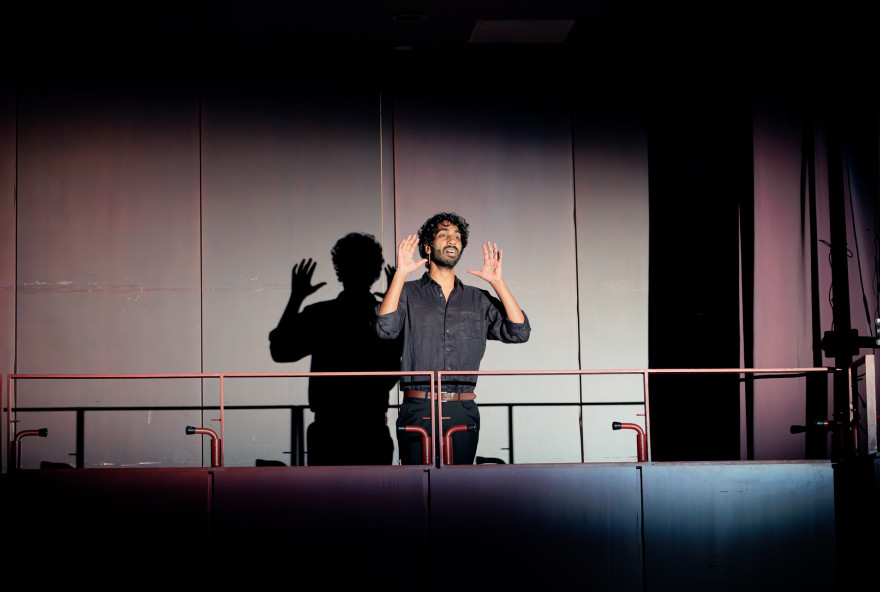
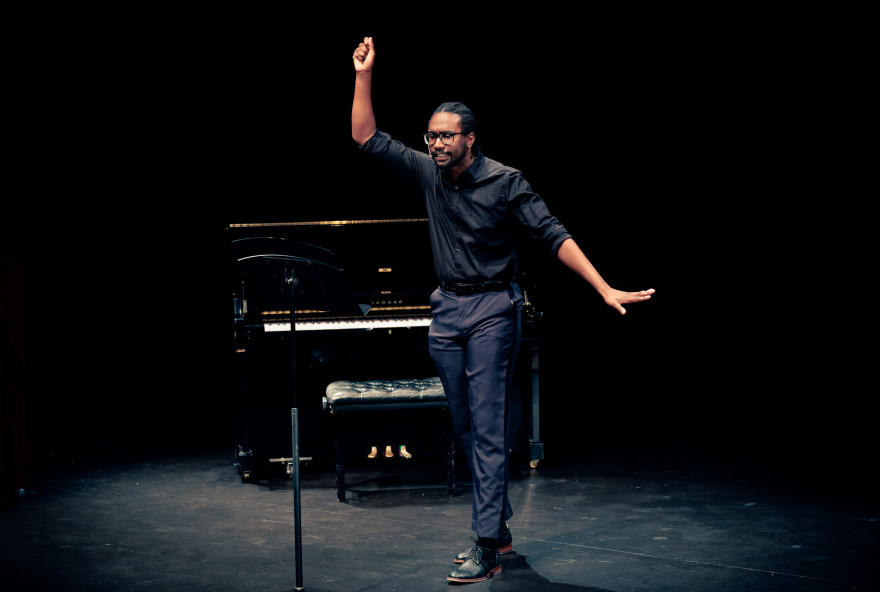
The audience was treated to student performances of musical works significant to Rauch’s career. Saman de Silva ’26 performed “Oh, What a Beautiful Mornin’” while Alicia Chu ’27 and Gabby Medina ’26 performed “People Will Say We’re in Love” as nods to the queer reenvisioning of Rodgers and Hammerstein’s “Oklahoma!” that Rauch directed in 2018. Maranatha Paul ’26 performed a version of Mercutio’s “Romeo and Juliet” monologue from a 1989 Cornerstone production that substituted Freddy Krueger for Queen Mab.
Brenneman, an M.R.P.L. candidate at Harvard Divinity School, who spoke with Rauch onstage, recalled she “didn’t nail” her first role in a Rauch-directed student play. But she soon realized that wasn’t the point.
“He really was the one to work with, and he had already begun imagining classic plays in ways that brought it to life with contemporary audiences,” Brenneman recalled. “I explored the material, and Billy supported me, and that was my first Bill Rauch lesson: Interacting with material is not about nailing it; it’s about interacting honestly with material, creating a sacred relationship of artist and material and audience.”
Bundy recalled Rauch keeping a huge sign behind his desk at Oregon Shakespeare Festival that read: “yes.”
“I think that spirit marks you as a leader, and I’m so grateful for it,” Bundy told Rauch.
It was a “yes” moment that led Rauch to move from Oregon to New York City in 2019 to take the helm of PAC NYC. The theater, situated on the site of the former World Trade Center, was part of former mayor Michael Bloomberg’s plan to rebuild following the 9/11 terrorist attacks.
“The more I learned, I was so moved that Mike Bloomberg and others believed that the ultimate way to heal from civic tragedy was through performing arts, and that the ultimate response to hatred is love, the ultimate response to destruction is creativity and creation,” Rauch said.
He added that participation in the arts gives people the ability to communicate and build bridges across differences, something he learned while working with fellow College students on plays.
“It’s no coincidence that an increasing lack of support for the arts is completely parallel to and leading to a world that prioritizes blame and polarization,” Rauch said. “Yet it is our artists who are going to make sense and meaning and even beauty out of the chaos and the horror of the times that we’re living in.
“Support artists now,” he continued, “because they'll show us the truth later.”
Being born a few days on either side of the school-enrollment cutoff date might seem like an arbitrary difference. But new research finds boys born just after the cutoff, who start kindergarten relatively old for their grade, enjoy far more advantages than previously known.
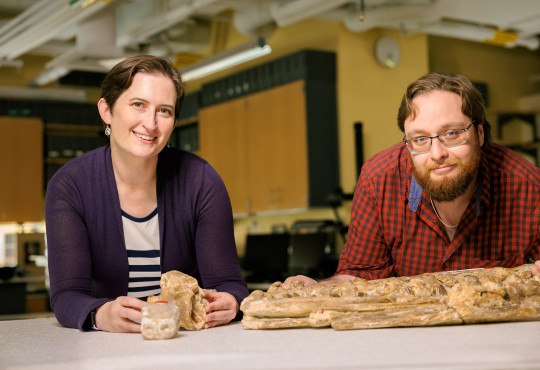
After 80 million years, a giant fossil jaw has quite a story to tell. Back in the age of the dinosaurs, Tylosaurus proriger was a fearsome predator — a bus-sized aquatic reptile with a crushing snout, daggerlike teeth, and knack for swallowing prey whole. How its bones wound up at Harvard is a tangled yarn involving a Wild West stagecoach station, the early western railroads, the infamous “Bone Wars” between rival fossil hunters, and a founding scholar of natural history.

New research by economist Rebecca Diamond found an increase in marriage among single women and an increase in employment rates among unemployed women after they started taking GLP-1 drugs for weight loss. Diamond says the pattern suggests that at least part of the female obesity penalty — the social and financial costs women bear due to their body size — is linked to first impressions.