
FAS CFO presents financial picture at Meeting of Faculty after ‘challenging’ year
Also on the November meeting’s agenda was proposing a new name for the Division of Continuing Education and celebrating newly tenured faculty.

Momentum leads to second phase to raise an additional $100 million to fuel research
/ Read time: 3 minutes
Rallied by the urgent need to support graduate students and research at Harvard, donors contributed $100 million for endowed Ph.D. fellowships. The match challenge launched in February by the Faculty of Arts and Sciences (FAS), in collaboration with the Harvard Kenneth C. Griffin Graduate School of Arts and Sciences (GSAS) and Harvard John A. Paulson School of Engineering and Applied Sciences (SEAS), was completed June 30. Thanks to the swift response of alumni, parents, and friends, the Research Accelerator Challenge will support 50 GSAS students across SEAS and the divisions of Arts and Humanities, Social Science, and Science.
“Completing this challenge in just four months is remarkable. Alumni and friends responded quickly and with exceptional generosity,” said Hopi Hoekstra, Edgerley Family Dean of the FAS. “These funds not only support Ph.D. students but also strengthen our broader academic community; graduate students work closely with faculty on research and play an essential role in teaching and mentoring our undergraduates.”
The match challenge was made possible by an initial $50 million commitment from a group of dedicated donors, including a lead gift by Alfred ’94 and Rebecca ’94 Lin and gifts from Rui Dong ’05 and Thor Johnson, and Brian Young ’76 and Anne Young.
“We are thrilled to help galvanize such essential support for Ph.D. students,” said Alfred and Rebecca Lin. “These talented thinkers will go on to advance extraordinary ideas and forge new breakthroughs. They play such a critical role in Harvard’s intellectual ecosystem.”
This demonstrated commitment to graduate students has catalyzed a second phase of fundraising aimed at raising an additional $100 million through the Research Accelerator Challenge. The new match effort is made possible by a number of anonymous donors who were inspired by the speed of the last effort and were eager to keep the momentum going.
“Our students learn, teach, and explore alongside faculty, driving critical research that firmly places them at the heart of Harvard’s mission,” said Emma Dench, Dean of Harvard Griffin GSAS. “By supporting today’s most promising scholars, we are investing in the pioneering research they are doing now and will do in the future, ultimately advancing discovery in every discipline and effecting change on a global scale.”
Funds raised by both drives will provide comprehensive student support, including tuition, health insurance, and a stipend to meet increasing need. More than 2,500 Ph.D. students work across the FAS and SEAS as part of Harvard Griffin GSAS. This $200 million investment also bolsters scholars as they teach in the classroom and collaborate on research in laboratories, libraries, archives, museums, and field sites — thus fueling the discoveries that expand Harvard’s global impact.
“The Research Accelerator Challenge strengthens the people and ideas shaping the future of research and discovery,” said David C. Parkes, Dean of SEAS. “It gives emerging researchers, educators, and innovators the freedom to pursue ambitious questions and make important discoveries that can improve people’s lives.”
As the future of traditional research funding remains uncertain, the FAS will continue to prioritize innovative approaches to securing new support. These endowed fellowships ensure that Harvard will remain competitive in attracting the most promising Ph.D. candidates, providing them with the resources and independence to pursue their most ambitious work.
Also on the November meeting’s agenda was proposing a new name for the Division of Continuing Education and celebrating newly tenured faculty.
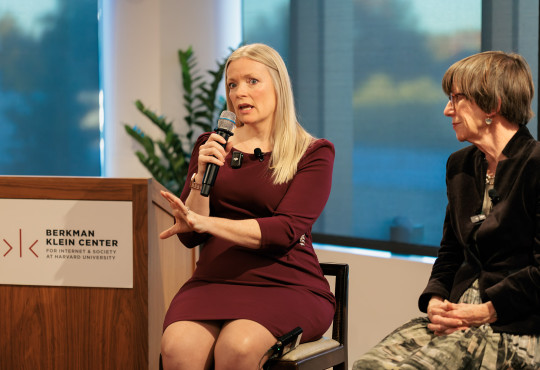
As AI becomes increasingly capable of creating chatbots or avatars simulating the voices, faces, and speech patterns of the dead, scholars are left confronting the legal and moral implications of what some call “digital resurrection.”
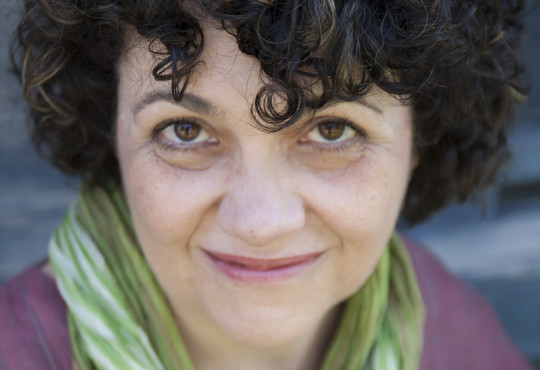
When English literature professor Deidre Lynch learned she was being inducted as a Fellow of the Royal Society of Canada, she felt a swirl of emotions. And she immediately thought of her 89-year-old mom, Barbara.