Yahya Chaudhry
Harvard Staff Writer
Expert in porous materials for energy and sustainability named to inaugural professorship, leadership in new materials initiative
Harvard Staff Writer
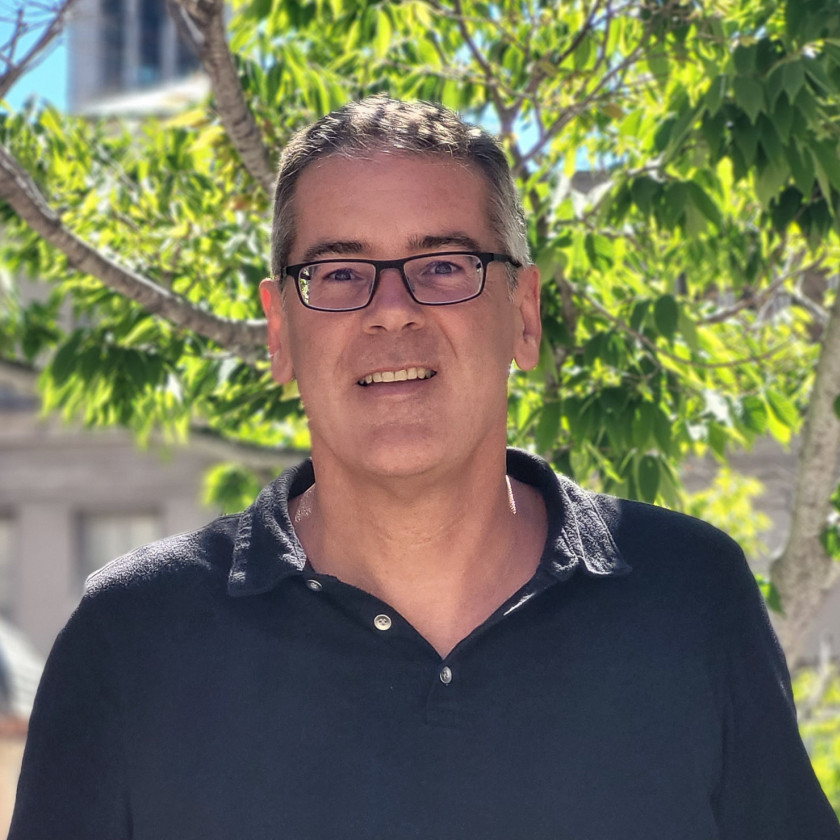
Jeffrey R. Long, Ph.D. ’95, a leading chemist who studies porous materials for energy and sustainability, will join the Faculty of Arts and Sciences as the inaugural Thomas C. Foley Professor of Energy and the Environment in the Department of Chemistry and Chemical Biology (CCB). Long, who begins the role effective January 1, 2027.
His appointment coincides with the launch of the Harvard Materials Initiative, a cross-FAS effort to address challenging problems in energy science and to enhance Harvard’s impact on teaching and research to help mitigate global warming and improve sustainability. Long will serve as the initiative’s inaugural director, supported by an advisory committee of faculty from relevant fields across the University.
“Professor Long will provide visionary leadership for a new initiative that develops novel materials for important real-world applications,” said Dan Kahne, Higgins Professor of CCB and department chair. “This initiative will connect faculty from different departments (Chemistry, Physics, and Earth and Planetary Sciences) and schools (FAS and SEAS), creating an interdisciplinary environment that can foster transformative research.”
The move marks a return to Cambridge for Long, who earned his Ph.D. in Chemistry here as a graduate student in the late Richard Holm’s laboratory before joining the University of California, Berkeley faculty, where he spent the last 29 years.
“I was a grad student at Harvard long ago in Dick Holm’s lab, and it was just a tremendous experience,” Long said. Holm, he recalled, created an atmosphere where students were well supported and free to explore, with constant back and forth among students and postdoctoral fellows about new ideas.
That formative period shaped Long’s view of Harvard as a place built for deep, focused inquiry.
“Harvard is this special place for being able to think deeply about problems and focus on the fundamental research that’s needed to make breakthroughs,” he said. “Harvard is unique in that it gives researchers a place where they have everything they need to do science without worrying about a lot of other distractions.”
Best known for work on porous solids that can selectively capture and store gases, Long’s lab has developed materials that can soak up large amounts of carbon dioxide, store hydrogen for clean-energy applications, and remove toxic or valuable metals from water.
“We work on new materials for energy and sustainability in the environment,” he said. “There’s really been a revolution in chemists’ ability to create porous materials in the last 10 to 20 years. In particular, the power of synthetic molecular chemistry can now be used to create sponge-like solids capable of soaking up large volumes of the gases that are driving climate change or recovering valuable metals from acidic solutions generated in recycling.”
The timing of the move comes as some federal programs supporting energy and sustainability research have contracted. Long is hopeful that Harvard’s new Materials Initiative will allow researchers to lean more on philanthropy and industry partnerships to fill the gap.
Said Kahne: “Jeff has an entrepreneurial bent and has been highly effective at collaborating with engineers to translate his basic research discoveries into practical solutions. His development of metal-organic frameworks (MOFs) that can be used to capture CO2 efficiently is critical work. He is also developing MOFs to store hydrogen for clean energy and is exploring other porous materials to remove toxic and high-value metals from water. This work will lead to major societal impact.”
Being born a few days on either side of the school-enrollment cutoff date might seem like an arbitrary difference. But new research finds boys born just after the cutoff, who start kindergarten relatively old for their grade, enjoy far more advantages than previously known.
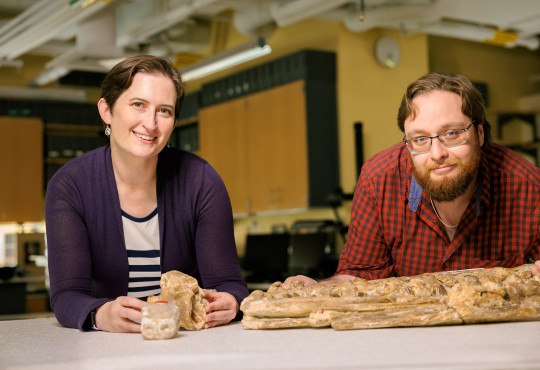
After 80 million years, a giant fossil jaw has quite a story to tell. Back in the age of the dinosaurs, Tylosaurus proriger was a fearsome predator — a bus-sized aquatic reptile with a crushing snout, daggerlike teeth, and knack for swallowing prey whole. How its bones wound up at Harvard is a tangled yarn involving a Wild West stagecoach station, the early western railroads, the infamous “Bone Wars” between rival fossil hunters, and a founding scholar of natural history.

New research by economist Rebecca Diamond found an increase in marriage among single women and an increase in employment rates among unemployed women after they started taking GLP-1 drugs for weight loss. Diamond says the pattern suggests that at least part of the female obesity penalty — the social and financial costs women bear due to their body size — is linked to first impressions.