Postdoc/researcher

Search
  • Filter by School
    School
    School (field_school)
  • Filter by Topic
    Topic
    Topics (field_topics)
  • Filter by People
    People
    Audience (field_audience)
Exploring why different groups of people, zebras, and even ants make nice
A panel discussion featuring evolutionary anthropologist Sarah Mathew, behavioral ecologist Leveda Cheng, behavioral biologist Stephanie King, and Harvard psychology professor Mina Cikara

Exploring why different groups of people, zebras, and even ants make nice

Cooperation can make us stronger, building alliances and increasing the availability of resources. A recent symposium hosted by the Human Evolutionary Biology Initiative brought together researchers to examine this principle, sharing studies and findings on intergroup cooperation from a variety of fields.

 Analyzing ‘time capsules’ from the early solar system, delivered by meteorites
interior slice of a carbonaceous chondrite meteorite

 Analyzing ‘time capsules’ from the early solar system, delivered by meteorites

Harvard geoscientists reported that organic matter harvested from certain meteorites bears chemical traces of “primitive oxygen reservoirs” that have changed little since the birth of our solar system. The findings help trace the origins of organic matter that meteorites may have delivered to a young Earth, supplying the planet with ingredients essential for life.

Evidence of board games building bedrock social skills
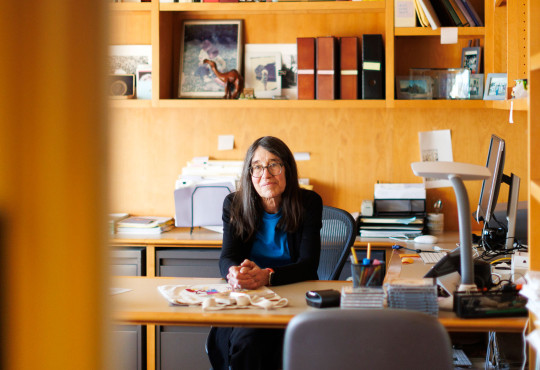
Elizabeth Spelke, Marshall L. Berkman Professor of Psychology, in her office at Harvard University

Evidence of board games building bedrock social skills

A recent study from the Harvard Laboratory for Developmental Studies describes how games aimed at improving social skills, played in preschool settings, boost social-cognitive development for Brazilian children living near or below the poverty line.

12 Nobels, two rhinos, and continued legacy of scientific discovery
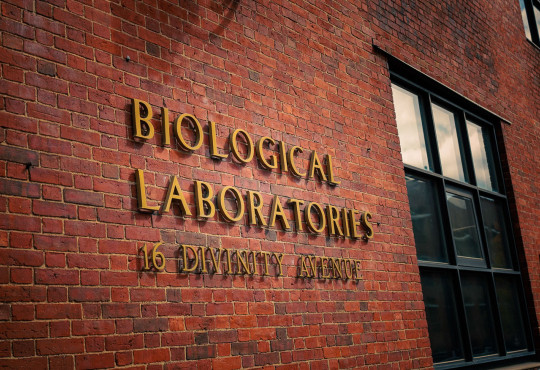
Front façade of the Harvard Bio Labs with building name and address

12 Nobels, two rhinos, and continued legacy of scientific discovery

The Biological Laboratories at 16 Divinity Avenue first opened in 1931. In the 95 years of its existence, the storied building has been home to the pioneering evolutionary biologist E.O. Wilson, a dozen eventual Nobel laureates, and even a self-described “zombiologist” or two.

 Rediscovering Thoreau the scientist
University of Connecticut professor Robert M. Thorson speaking about his book “The Walden Experiments” at a podium beneath a slide featuring a portrait of Henry David Thoreau

 Rediscovering Thoreau the scientist

Henry David Thoreau famously went to Walden Pond to live deliberately. But for far longer, he pursued a lesser-known obsession: observing scientifically.

At Harvard Forest, doomed eastern hemlocks found to further future generations
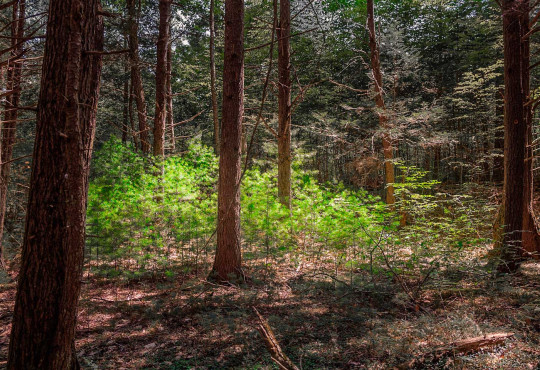
Small, newly regrown hemlock trees under larger old-growth forest

At Harvard Forest, doomed eastern hemlocks found to further future generations

Sixteen years ago, an invasive pest called the woolly adelgid arrived at Harvard Forest and slowly began to devastate its the eastern hemlocks — as they had done in forcce elsewhere. Since then, Harvard Forest scientists have begun to study how to manage the demise of its so-called foundation species.

What sprawling light pollution does to fireflies
Fireflies in a field

What sprawling light pollution does to fireflies

As the sun sinks below the horizon, two scientists perch quietly beside a darkening field and wait for flashes of light. They have traveled far outside the city in search of research sites, because they study a group of creatures that have been driven to the margins of human settlements: fireflies.

Mapping source of volcanic activity deep within the Earth
Geophysicist Xiyuan Bao behind the wheel of his car

Mapping source of volcanic activity deep within the Earth

Upon moving to Cambridge, geophysicist Xiyuan Bao often relied on navigation software to find his way through the unfamiliar network of roads. He realized the same technology could help him find something else: a solution to a mystery deep within the Earth.