Kermit Pattison
Harvard Staff Writer
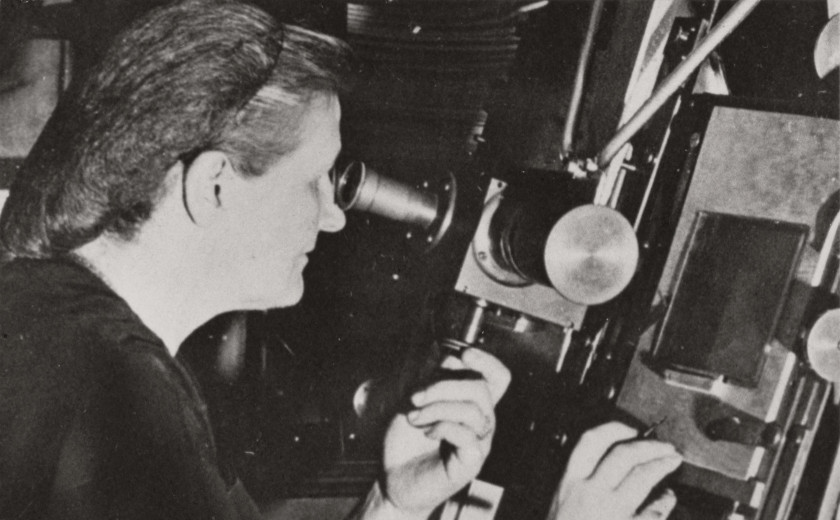
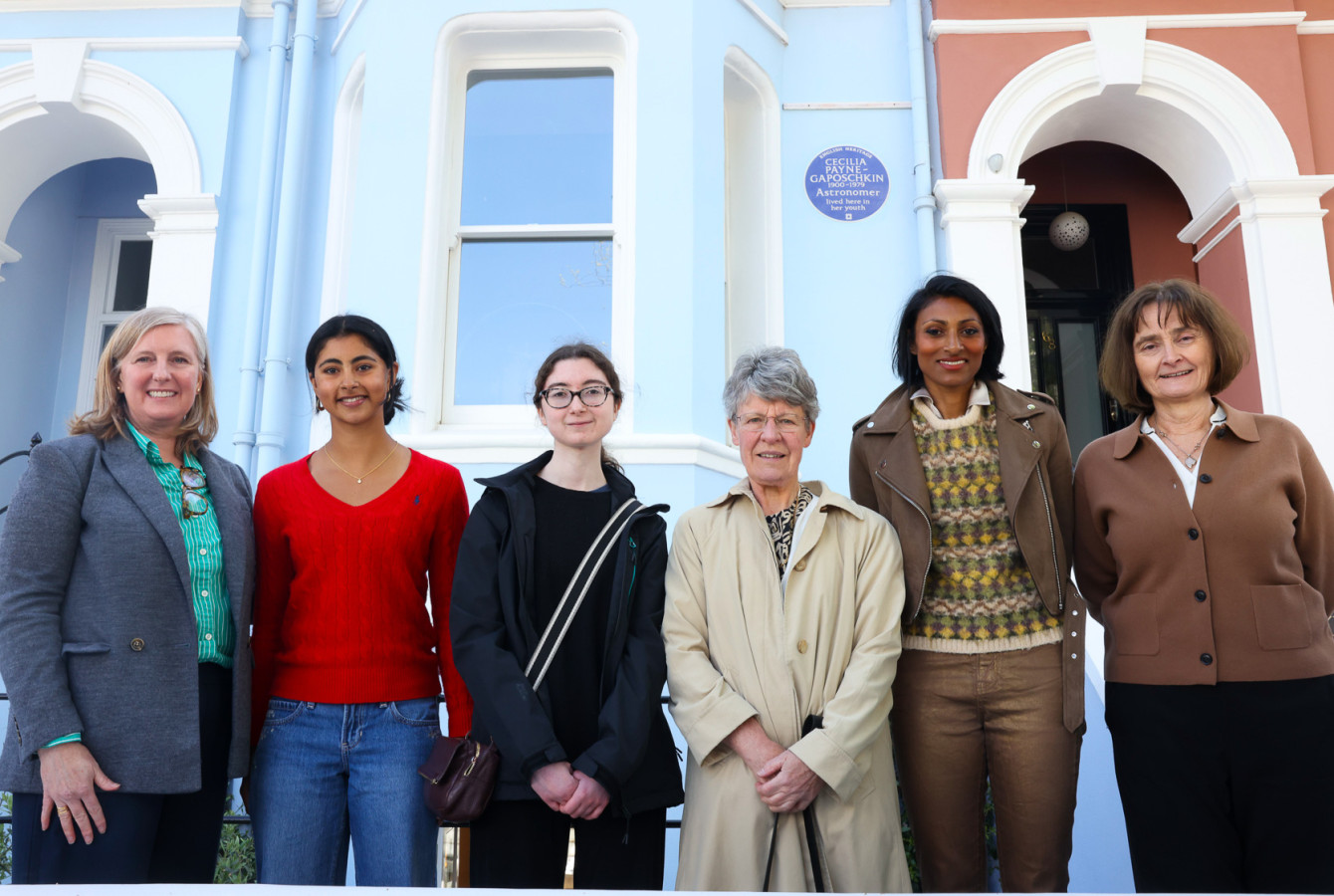
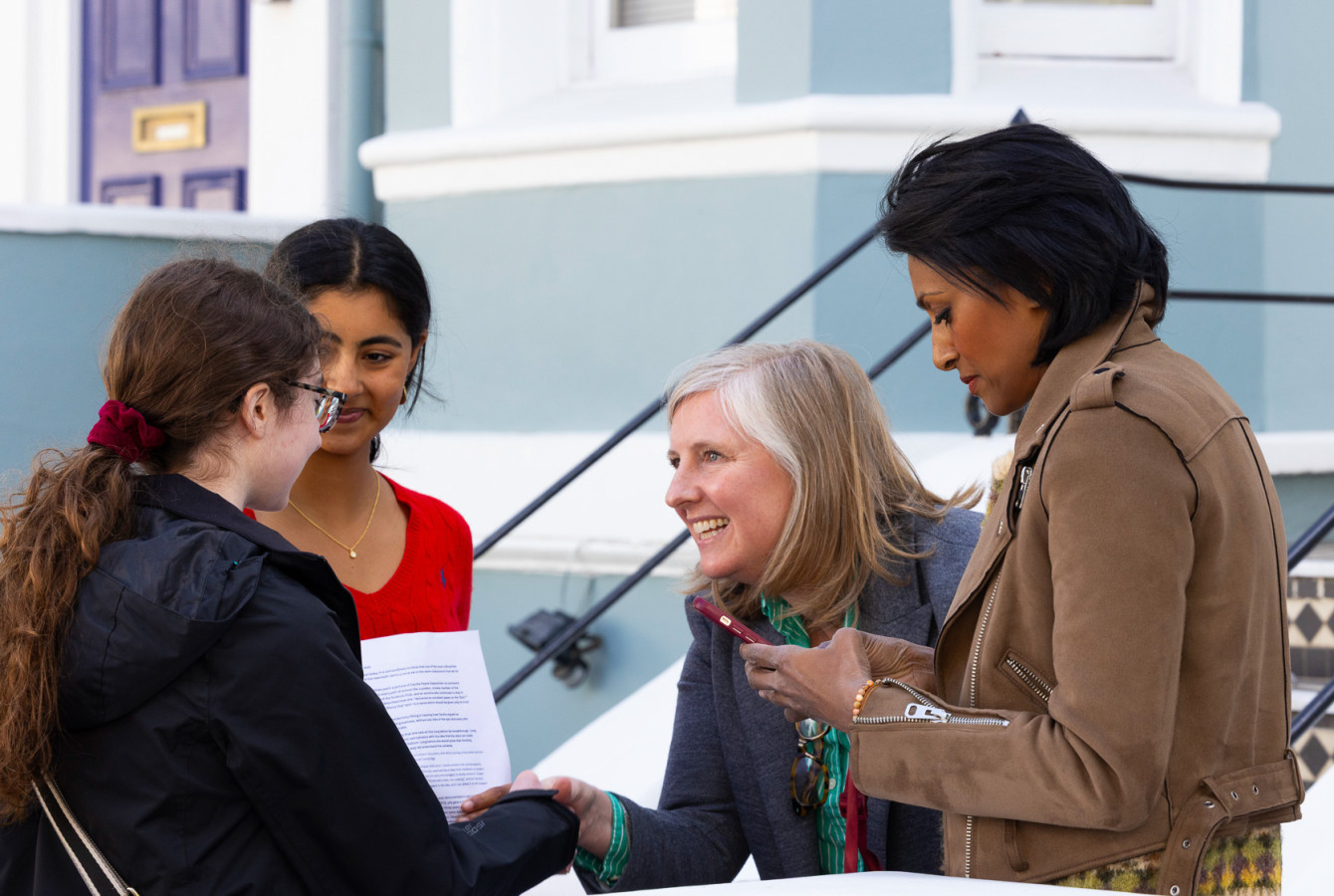
FAS Dean Hopi Hoekstra helped dedicate a plaque at the teenage home of Cecilia Payne-Gaposchkin
/ Read time: 7 minutes
Harvard Staff Writer
More than a century ago, a promising astronomy student named Cecilia Payne left Britain after realizing the country offered no opportunity for female scientists. She crossed the ocean to Harvard, joined its enclave of women astronomers, quickly produced groundbreaking work on the composition of stars, and eventually became the university’s first female full professor.
Now the Harvard scientist has received some overdue recognition from her homeland. English Heritage, an organization that stewards historic sites, unveiled a circular blue plaque at the teenage home of Cecilia Payne-Gaposchkin in London. Hopi Hoekstra, Edgerley Family Dean of the Faculty of Arts and Sciences, participated in the April dedication ceremony.
“In celebrating Cecilia Payne-Gaposchkin,” Hoekstra said at the event, “we celebrate a scientist who was proven right — and a trailblazer whose presence helped make it more possible for others to be seen, heard, and believed.”
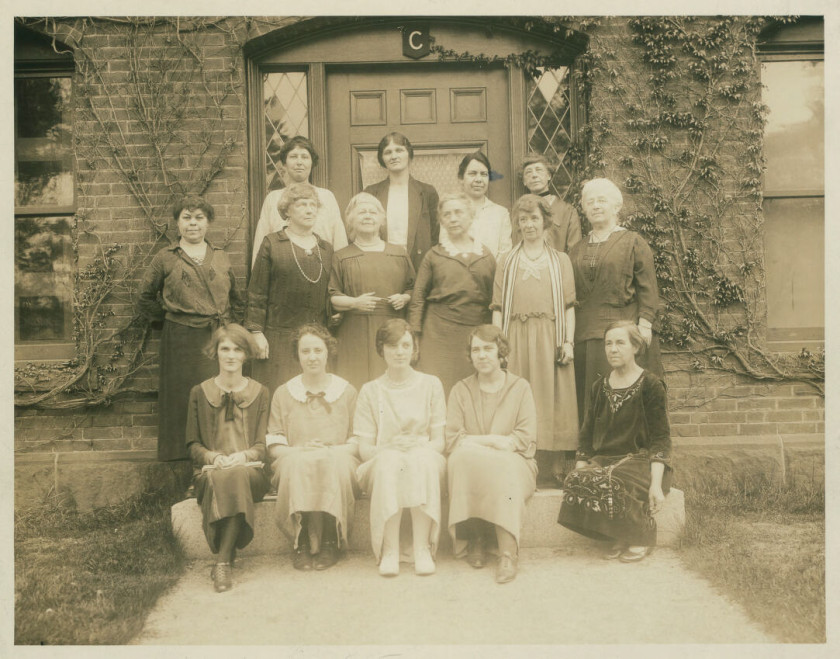
Born in 1900, Payne discovered a deep desire to study science — a pursuit at odds with the religious orientation of her schooling. Her devout school principal warned that she was “prostituting” her talents. Upon winning a prize at the end of the school year, she was asked what book she would like to receive. Instead of Shakespeare or Milton, she asked for a book on fungi.
Payne moved to London at age 12. While living at 70 Lansdowne Road in the Notting Hill section of the city — the home now adorned with the blue plaque — she won a scholarship to Newnham College, a women’s institution at Cambridge University.
As a first-year student in 1919, she heard astronomer Arthur Eddington lecture about a solar eclipse and describe how the deflection of light provided experimental confirmation of Einstein’s general theory of relativity. Thunderstruck, Payne immediately returned to her dorm to transcribe the lecture almost verbatim. She later recalled, “For three nights, I think, I did not sleep. My world had been so shaken that I experienced something like a nervous breakdown.”
She also studied at the Cavendish Laboratory, an iconic Cambridge institution with a long history of discoveries in physics and heard lectures by Nobel laureates J.J. Thomson, Ernest Rutherford, and Niels Bohr. Standing 5 feet, 10 inches tall, she often was the sole woman in her scientific classes and often loomed above male peers in both stature and intellect.
Though a brilliant student, Payne was warned that she would find few scientific opportunities as a woman in Britain. An adviser introduced her to Harlow Shapley, director of the Harvard College Observatory, who happened to be in London giving a lecture. Shapley invited Payne to the Cambridge on the other side of the Atlantic.
In 1923, Payne joined the Harvard Observatory. She typically arrived early in the morning, stayed late, and sometimes remained at the observatory for several days.
Shapley gave her free access to the observatory’s collection of glass plates of astronomical images. She worried about breaking the plates. Instead, she broke a glass ceiling.
Drawing on her knowledge of quantum physics, she analyzed the spectra of light telescopic observations to deduce the composition of stars. Her careful calculations suggested that hydrogen and helium, the two lightest elements, were far more prevalent in stellar atmospheres. Hydrogen alone was about a million times more abundant in stars than on Earth. In comparison, all other elements were mere traces.
But her conclusions were dismissed by the reigning expert, Princeton University’s Henry Norris Russell, so Payne downplayed her own observations. A few years later, Russell realized Payne was correct and acknowledged her work.
Radcliffe College awarded Payne a Ph.D. in 1925 — the first ever at the Harvard Observatory — and her thesis was published in hardcover. Prominent astronomer Otto Struve called her work “the most brilliant Ph.D. thesis ever written in astronomy.”
“It transformed the observatory, which was just a research facility, into an academic department,” said David Charbonneau, Fred Kavli Professor of Astrophysics and chair of the Astronomy Department. “Now we were granting degrees and soon we would be offering courses. So, she founded the Department of Astronomy and would go on to become its chair several decades later. She is our heroine.”
Payne remained at Harvard for the remainder of her life. She earned a reputation as a formidable intellect and chain-smoking lecturer; one former student described her “imposing stature and stormy personality.”
In time, she met another headstrong personality. In 1933, she attended a conference in Germany and met astronomer Sergei Illarionovich Gaposchkin, a Russian who had bicycled 150 miles to the meeting and handed her a biographical essay describing his plight after coming under suspicion by both Soviet and German authorities. She helped him secure a job at Harvard, get a visa to the United States, and became his boss.
After working together for three months, they eloped — astonishing colleagues who had no inkling of the romance. A day after her wedding, Payne-Gaposchkin wrote: “I had never thought that such happiness could be for me.” The couple remained scientific collaborators for the rest of their lives and had three children, two of whom became astronomers.
In 1956, Payne-Gaposchkin became the first woman promoted to full professor at Harvard. Soon afterwards, she became chair of the department.
At the plaque dedication ceremony, Hoekstra called Payne-Gaposchkin “an astronomer whose work fundamentally changed how we understand the universe.”
“Her story makes one thing very clear: that talent is widely distributed, but opportunity is not,” said Hoekstra, who holds the additional titles of C. Y. Chan Professor of Arts and Science and Xiaomeng Tong and Yu Chen Professor of Life Sciences. “And when barriers exist — whether explicit or subtle — they do not only limit individuals; they limit the progress of entire fields. Dr. Payne-Gaposchkin’s life reminds us that science advances most fully when it is open to those who challenge prevailing assumptions and when recognition is guided by merit rather than precedent.”
Payne-Gaposchkin continued to publish until her death in 1979. But her service to science did not end there. She bequeathed her body to medicine and was buried in the graveyard of Tufts Medical School.
She can be seen among the pantheon of scholars and administrators in the inner sanctum of University Hall.
“I see her almost every day,” Hoekstra said. “Her portrait hangs in the Faculty Room, just next to my office.”
Two Harvard scientists describe a way to engineer the evolutionary landscape that viruses experience, pushing them away from dangerous variants and into evolutionary dead ends.

Amid the rhythms of the back-to-campus bustle, new faculty find themselves experiencing the same first-day excitement — and jitters. We dropped in on three, on the first day of their first classes.

As the sun sinks below the horizon, two scientists perch quietly beside a darkening field and wait for flashes of light. They have traveled far outside the city in search of research sites, because they study a group of creatures that have been driven to the margins of human settlements: fireflies.