Kermit Pattison
Harvard Staff Writer
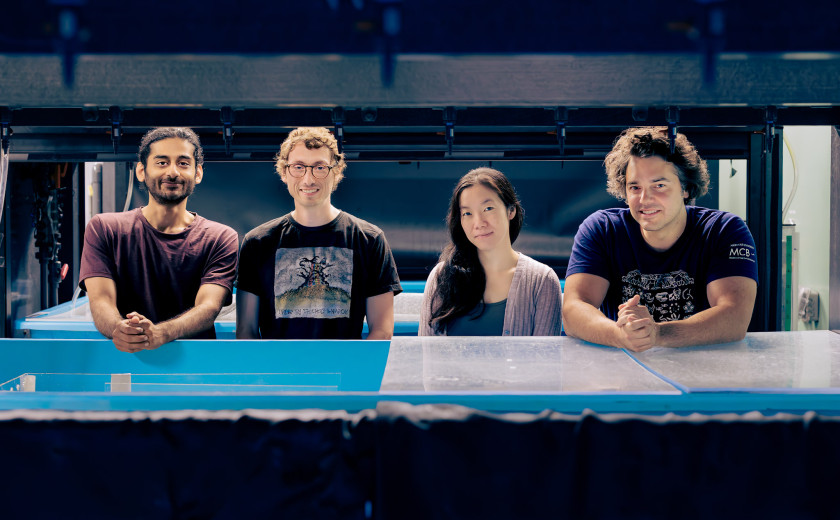
Researchers discover adaptation in the ribosome that may have assisted evolution of complex octopus sensory system
/ Read time: 7 minutes
Harvard Staff Writer
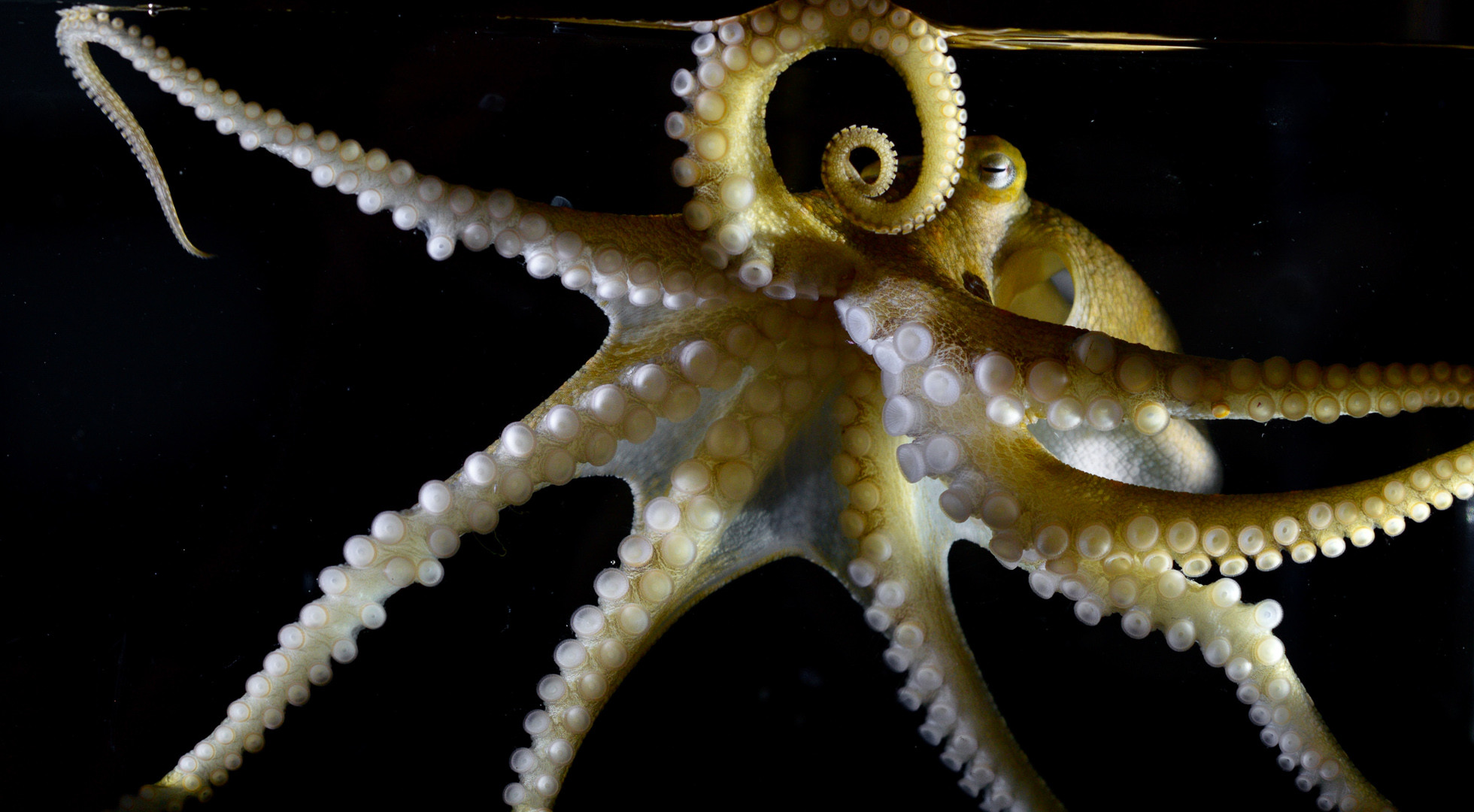
The octopus is a biological oddity. It can use tools, open jars, and its complex nervous system supports as many neurons as a small primate.
Now Harvard biologists have discovered a mysterious distinction at the core of its cellular biology: some octopuses have an adaptation in the protein-making machinery of their cells that helps ensure accuracy, perhaps an evolutionary byproduct of their acute sensory system.
In a study published recently in Current Biology, the researchers report the discovery of a structural aberration in the ribosome — the protein-manufacturing organelles of cells — that appears to be unique in the animal kingdom.
“This shows that the ribosome is actually an important part of the evolution of biological novelty across hundreds of millions of years,” said Nicholas Bellono, Professor of Molecular and Cellular Biology and one of the senior authors of the new study. “This opens a different way for people to think about the biochemical basis of comparative biology.”
The finding began with an accidental observation in the lab. About five years ago, Richard Han, then a Ph.D. student at Harvard Medical School, was conducting some routine control experiments and extracting ribosomal RNA (rRNA) from tissues of the California two-spot octopus, a species native to the Pacific coast that is also known by the scientific name Octopus bimaculoides. Han worked at the time in the lab of Amy Lee, assistant professor of cancer immunology and virology at Dana-Farber Cancer Institute and assistant professor of cell biology at Harvard Medical School. Lee and Bellono’s teams are frequent collaborators.
Normally, such sequences of rRNA remain uniform even among distantly related animals. In fact, they are so predictable that lab scientists often use them as quality controls to check if the material has degraded.
Then Han saw something unexpected. Instead of the normal single band, the octopus rRNA was split into two distinct fragments.
At first, the scientists assumed it was an error. But researchers repeated the experiment numerous times and kept finding the same break in the same spot. They saw the same pattern in all octopus tissues at all developmental stages.
Ribosomes contain a common core set of rRNAs and proteins. Some of these elements are among the most evolutionarily conserved RNA sequences known to biology, with variation in the basic architecture of the ribosome being rare.
“The assumption was that this doesn’t change very much,” said Lee, who specializes in how genetic code is translated into proteins. “That was the real surprise here.”
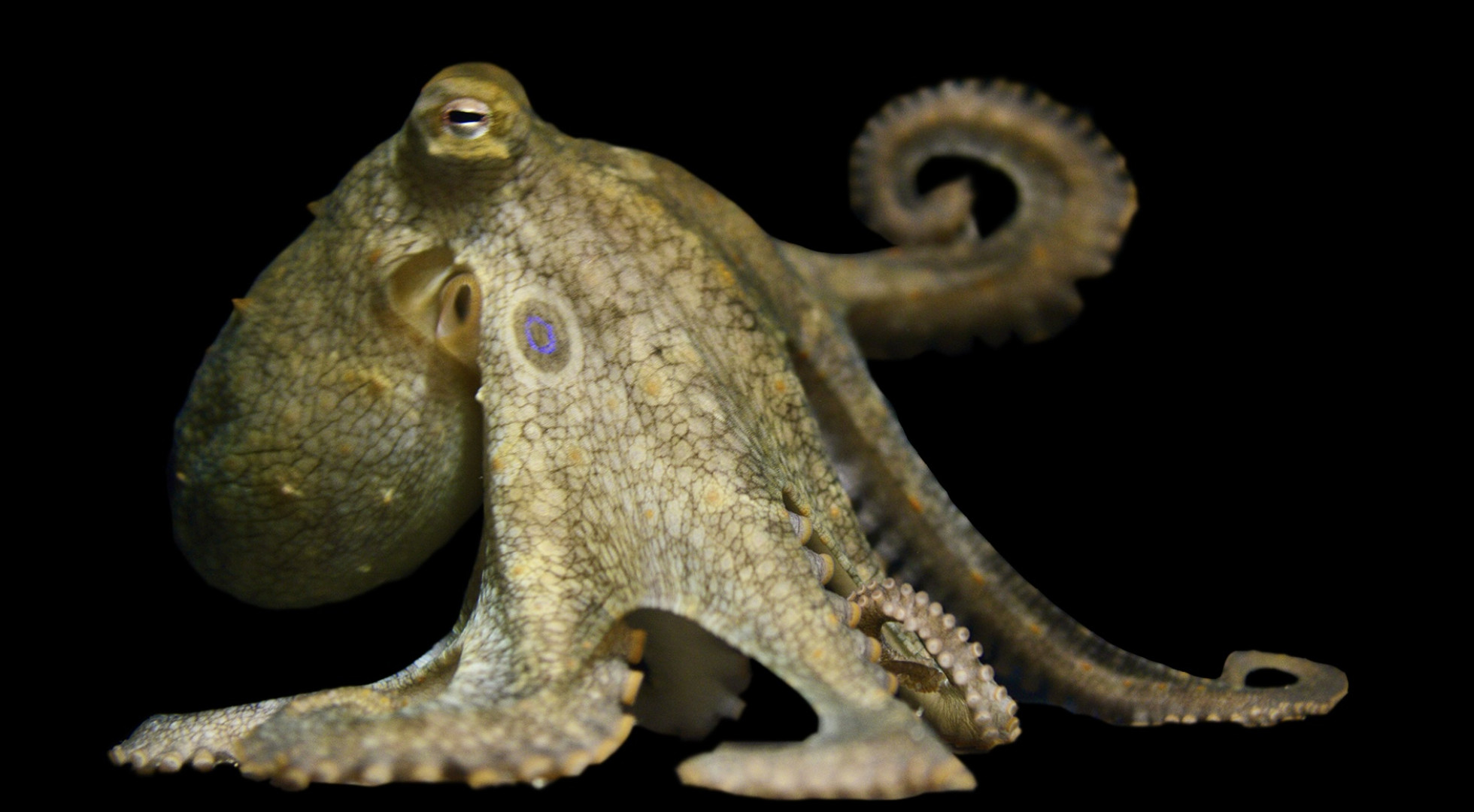
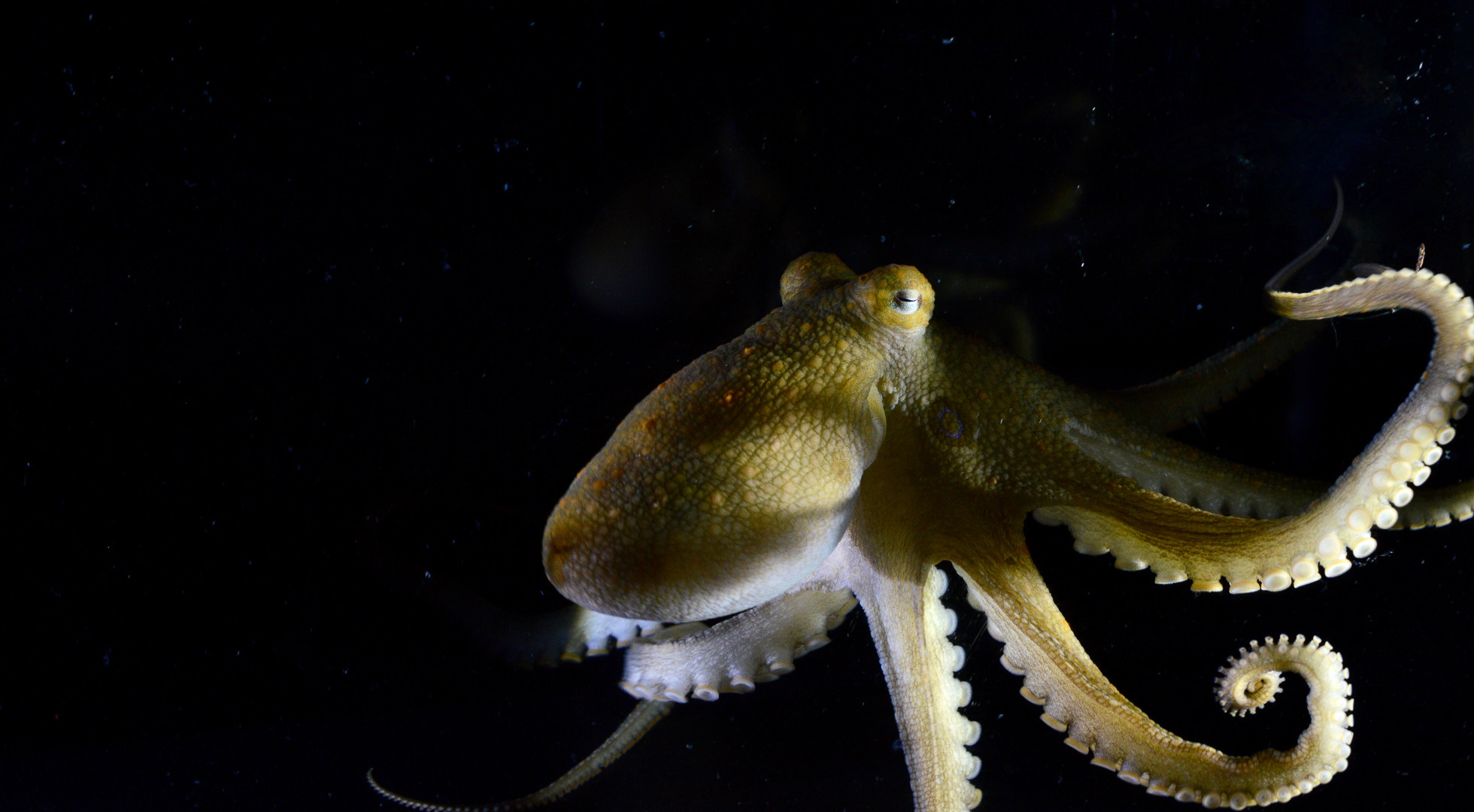
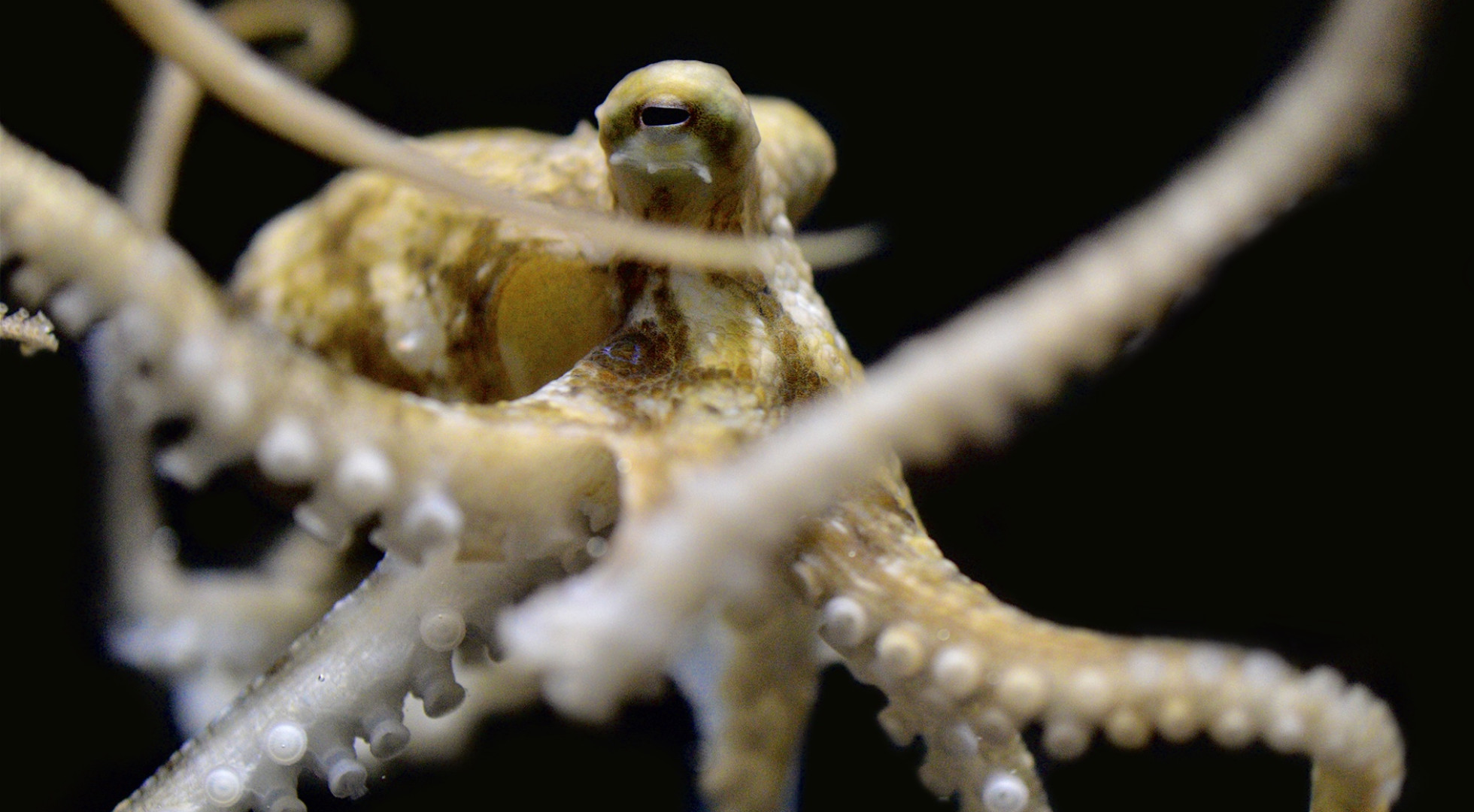

Intrigued, the scientists continued digging deeper. Ultimately, the study expanded to 10 co-authors and stretched over about five years. The research team discovered that the shift appears to enhance the accuracy of protein synthesis and reduces the risk of pathologies arising from misshaped proteins. Co-lead author Rishav Mitra, a postdoctoral fellow in the Bellono lab, helped decipher the functional consequences of the shift and trace it across the species family tree. Co-lead author Trey Scott, also a postdoctoral fellow, conducted the evolutionary analyses to map the shift to the diversification of shallow-water octopus species with large nervous systems.
When researchers inserted the same rRNA break into the ribosomes of E. coli, the bacteria produced proteins with twice their normal fidelity, or the accuracy of translating genetic code into proteins. The octopus ribosome adaptation appears to enhance the fidelity of protein synthesis, even when transplanted into very different creatures.
The rRNA break was found to be universal among shallow-water octopuses (the suborder Incirrates), which diverged from their deep-water cousins (the Cirrates) about 100 million years ago. The researchers obtained a sample of a deep-sea octopus that had been collected many years ago. When they analyzed the tissue, they discovered the Cirrate octopus did not possess the same change in its ribosome.
Likewise, squid, which diverged from the octopus lineage about 300 million years ago, did not possess the same change.
The researchers suspect the newly discovered adaptation may be tied to the evolution of the large nervous system and “taste by touch” sensory system of the shallow-water octopus. Most of the creature’s 500 million neurons are located in the arms, and a single suction cup contains some 10,000 sensory cells.
Despite these advanced sensory capabilities, octopuses do not show much genetic novelty compared to other invertebrates. Instead, their nervous system is believed to arise from how widely shared genes are regulated, or switched on and off.
Cephalopods (the taxonomic class of mollusks that includes octopus, squid, and cuttlefish) are known to edit their RNA far more than other organisms, which allows them to use existing genes to adapt proteins to new functions. But this shift also increases the potential for errors, or “misfolding” of proteins and the formation of toxic clumps known as aggregates.
Bellono suggested that the newly discovered feature of the ribosome in shallow-water octopuses might serve as a brake or filter to prevent this evolutionary innovation from running amok. “They have the ability to make many protein products from single genes, but the ribosome will only allow certain ones to be made,” he said.
Similarly, Lee described the rRNA adaptation as “controlled plasticity for the genetic information.”
“The major surprise is that the ribosome, which is highly conserved across life, can actually undergo evolutionary changes that impact function,” she said, “and may even contribute to new innovations — such as the more complex nervous system in the octopus.”
Lee suggested that these discoveries about protein-making ribosomes might someday be pursued for therapies for protein-folding diseases. These diseases occur when malformed proteins lose their ability to function and include neurodegenerative disorders such as Alzheimer’s and Parkinson’s.
“What’s really cool is that, by looking into the natural world, we are potentially starting to identify these hot spots we could target to change function,” she said.
This research received federal funding from the National Institutes of Health, grant R35GM142697.

Two Harvard scientists describe a way to engineer the evolutionary landscape that viruses experience, pushing them away from dangerous variants and into evolutionary dead ends.

Amid the rhythms of the back-to-campus bustle, new faculty find themselves experiencing the same first-day excitement — and jitters. We dropped in on three, on the first day of their first classes.

As the sun sinks below the horizon, two scientists perch quietly beside a darkening field and wait for flashes of light. They have traveled far outside the city in search of research sites, because they study a group of creatures that have been driven to the margins of human settlements: fireflies.