Kermit Pattison
Harvard Staff Writer

Geobiologist praised as exemplary leader with “intellectual breadth, creativity, and collaborative approach”
/ Read time: 5 minutes
Harvard Staff Writer
David Johnston, a leading geobiologist who studies the evolution of microbial life and Earth history, has been named Dean of Science. The appointment was announced Tuesday morning by Hopi Hoekstra, Edgerley Family Dean of the Faculty of Arts and Sciences.
“More than anything, I was pleased to learn that I have earned the trust and confidence of my peers and leadership,” Johnston said. “It is work that I take seriously, and a responsibility I don’t take lightly.”
Johnston, who has served in the same role on an interim basis since January, takes command of the Division of Science at a time of unprecedented challenges and severe cutbacks in federal research funding. More than 250 faculty work in the division, which encompasses 10 academic departments plus 19 other units, such as the Harvard Herbaria, the Center for Astrophysics, Harvard Forest, the Harvard Museum of Natural History, and the Harvard Quantum Initiative.
In a message to the community, Hoekstra hailed Johnston’s record as a dependable leader and credited his “intellectual breadth, creativity, and collaborative approach.”
“As Dean of Science, David will draw on his experience and perspective to provide steady, strategic leadership to the Division, supporting our faculty in pushing the frontiers of knowledge, championing our students’ educational and research opportunities, and deepening collaborations across disciplines,” continued Hoekstra, who holds the additional titles of C. Y. Chan Professor of Arts and Science and Xiaomeng Tong and Yu Chen Professor of Life Sciences. “His example as a leader, scientist, and mentor will be a tremendous asset to the FAS as we confront these challenges and make decisions that will shape the Division of Science for years to come.”
Johnston served nearly 15 years as co-director of Graduate Studies in Earth and Planetary Sciences and sat on numerous department committees. He also has served on the Dean of Science’s Faculty Advisory Committee and Executive Committee. He is currently the president of the Geobiology Society, a scientific organization that unites researchers from various disciplines.
Johnston has spent two decades as a research scientist who reconstructs ancient ecosystems and their environmental contexts. He studies the evolution of microorganisms and their relationships to the oceans and atmosphere. With techniques such as isotope geochemistry, theoretical models, and experiments with modern microbes, his team examines how the biosphere and chemical cycles have changed throughout our planet’s history.
Johnston grew up in a small town in western New York state and went to high school at a sports academy in Lake Placid, a training mecca for winter sports. At Bates College in Maine, he was a member of the alpine skiing and soccer teams, majored in environmental studies and philosophy, and discovered a passion for geochemistry and what he described as “a love for the storytelling that is intrinsic in understanding our planet.”
He earned a Ph.D. in geology from the University of Maryland, where he specialized in isotope geochemistry.
Johnston came to Harvard in 2007 as a Microbial Science Initiative Fellow in the Department of Organismic and Evolutionary Biology (OEB). In 2009, he joined the faculty of the Department of Earth and Planetary Sciences (EPS), where he currently serves as Betty Wold Johnson Foundation Professor of Earth and Planetary Sciences.
He stepped into the role of Interim Dean of Science four months ago. Now, Johnston said, his mission will begin with “stewarding a tradition and expectation of excellence, both in the classroom and in our research scholarship.” He hopes to help Harvard researchers blaze new paths through a rapidly changing scientific landscape in pursuit of new discoveries and innovations.
“I try to balance bullish optimism with a healthy dose of pragmatism,” he said. “I see this as an opportunity for us to stand up a model that isn’t built around closing a gap, but a foundation to propel science forward for the generations to come.”

The Harvard theoretical physicist and neuroscientist has won the Dirac Medal and Prize, one of the highest honors in physics.
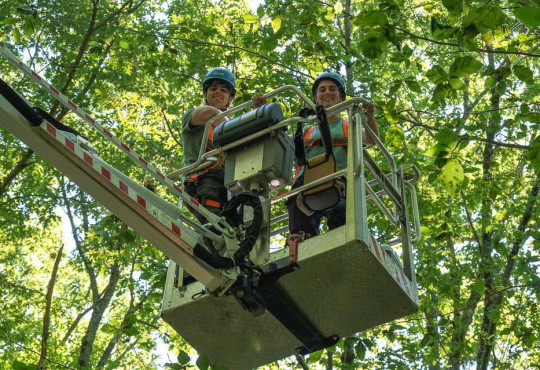
Deep in the woods of Petersham, Mass., the Harvard Forest Summer Research Program in Ecology is cultivating a renewable resource — future generations of scientists.

Forget about the ancient Greek myth of Icarus. For the last 10 years, Jenna Samra, Ph.D. ’18, and her colleagues have been pushing technology to fly closer to the hottest part of the sun. Samra, an astrophysicist at the Center for Astrophysics, an institution jointly run by Harvard and the Smithsonian, leads a scientific quest to study the solar corona.