Eileen O’Grady
Harvard Staff Writer
The expert on ancient Greek culture plans to prioritize the expansion of educational resources
/ Read time: 3 minutes
Harvard Staff Writer

Professor of the Classics Naomi Weiss has been named the new director of Harvard’s Center for Hellenic Studies (CHS) in Washington, D.C.
She succeeds Mark Schiefsky, C. Lois P. Grove Professor of the Classics, who has served as CHS director since 2021. Weiss’s five-year term is set to begin July 1.
“CHS has long been an international hub for the latest research in ancient Greek studies through its competitive fellowship programs,” said Weiss, noting that she is “very excited” to assume the leadership role. “I hope to strengthen its profile by developing ambitious programming and rebooting its open-access publishing.”
A member of the Harvard faculty since 2014, and chair of the Department of Classics since 2024, Weiss is a scholar of archaic and classical Greek literature and culture. Her research spans ancient Greek drama, music, and chorality, as well as the relationship between poetry and pottery.
Her most recent book, “Seeing Theater: The Phenomenology of Classical Greek Drama” (2023), examines how 5th-century drama interrogated the viewing experience. She is also the author of “The Music of Tragedy: Performance and Imagination in Euripidean Theater” (2018), an exploration of the dramatic function of mousikē (song, music, and dance) in the plays of Euripides.
Weiss brings a strong commitment to public-facing humanities. She recently launched the “Ancient Greece Today” podcast in collaboration with the Center for Hellenic Studies, uniting scholars with playwrights, novelists, poets, dancers, and other artists for conversations on the ancient Greek world and how it is used and reimagined today.
At the center, Weiss said she is looking forward to exploring new forms of collaboration with schools, theater groups, museums, and other universities.
“CHS has the potential to make a real difference in terms of public outreach for Classics and for the humanities in general,” Weiss said. “Growing its in-person and online educational resources will be a priority of mine.”
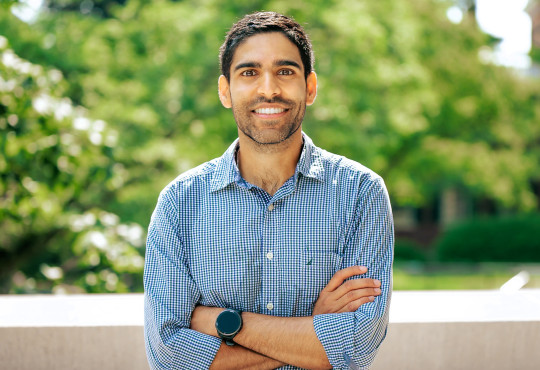
Being born a few days on either side of the school-enrollment cutoff date might seem like an arbitrary difference. But new research finds boys born just after the cutoff, who start kindergarten relatively old for their grade, enjoy far more advantages than previously known.
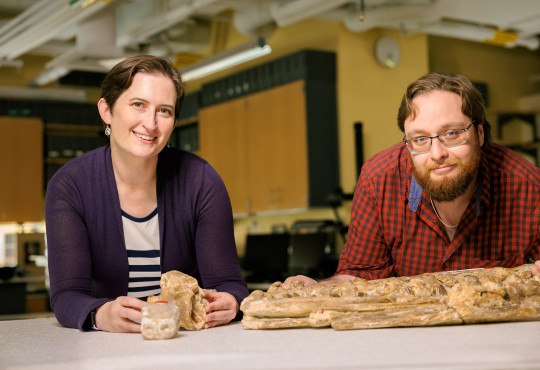
After 80 million years, a giant fossil jaw has quite a story to tell. Back in the age of the dinosaurs, Tylosaurus proriger was a fearsome predator — a bus-sized aquatic reptile with a crushing snout, daggerlike teeth, and knack for swallowing prey whole. How its bones wound up at Harvard is a tangled yarn involving a Wild West stagecoach station, the early western railroads, the infamous “Bone Wars” between rival fossil hunters, and a founding scholar of natural history.

New research by economist Rebecca Diamond found an increase in marriage among single women and an increase in employment rates among unemployed women after they started taking GLP-1 drugs for weight loss. Diamond says the pattern suggests that at least part of the female obesity penalty — the social and financial costs women bear due to their body size — is linked to first impressions.