
Cancer turned her into a scientist
Diagnosis transformed Mary Cipperman ’26 into a hyperproductive student researcher with diverse interests in physics, medicine, and AI
Diagnosis transformed Mary Cipperman ’26 into a hyperproductive student researcher with diverse interests in physics, medicine, and AI
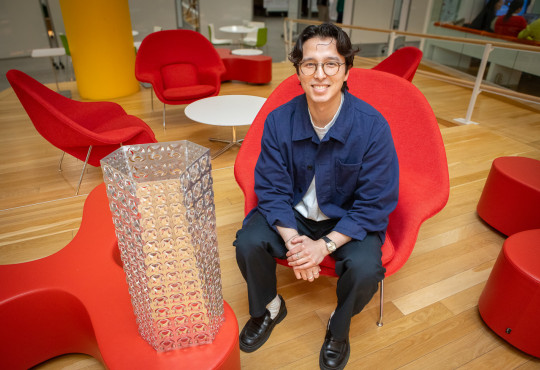
After three years as a Waymo software engineer, Luke Fiorante wanted a change. He’d been coding ever since he was a computer science major at Brown University, but the Vancouver native knew he could do more. Also interested in design and the arts, he decided to search for master’s programs focused on design and engineering.
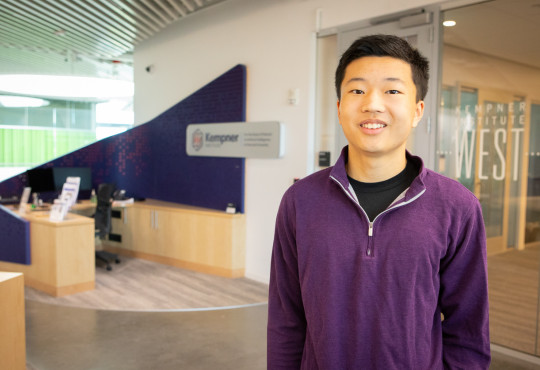
Benjamin Choi built a mind-controlled bionic arm as a high school student in Virginia, and it made him realize something critical about human brains: they’re noisy. Brains constantly send out all kinds of signals regulating everything from breathing to hunger to planning one’s daily schedule. For his prosthetic to work, it needed software that could filter out the noise and recognize the signals specifically intended to manipulate the arm.
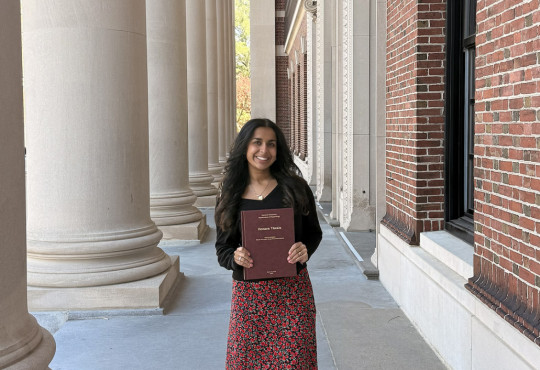
With artificial intelligence quickly becoming ingrained in everyday life, psychology and government double-concentrator Gauri Sood ’26 is skeptical about non-human technologies mimicking human experiences without bias.
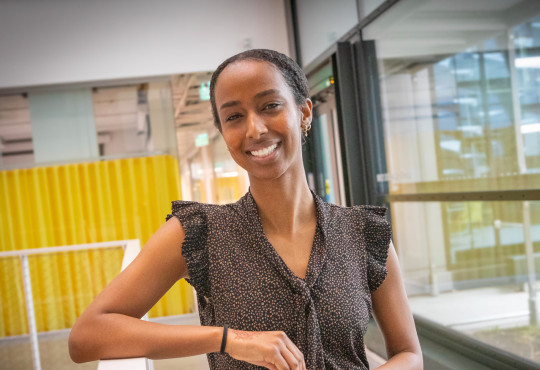
Engineering Design Projects (ES 100), the capstone course at the Harvard John A. Paulson School of Engineering and Applied Sciences, challenges seniors to engineer a creative solution to a real-world problem. Saron Meressi's project focused on optimizing cardiac gene delivery using adeno-associated virus (AAV) technology. She specifically designed a tunable, ventricle-specific gene delivery system that enables more precise targeting within the heart.

A recent event, hosted by the Edmond & Lily Safra Center for Ethics, interrogated the technology’s role in human relationships.

Danika Rodrigues has been researching cancer therapies since she was a biomedical engineering undergraduate and master’s student at the University of Michigan. But it was working at Janssen Pharmaceuticals, a division of Johnson & Johnson, that convinced her that not only was cancer research interesting — it was what she wanted for her career.

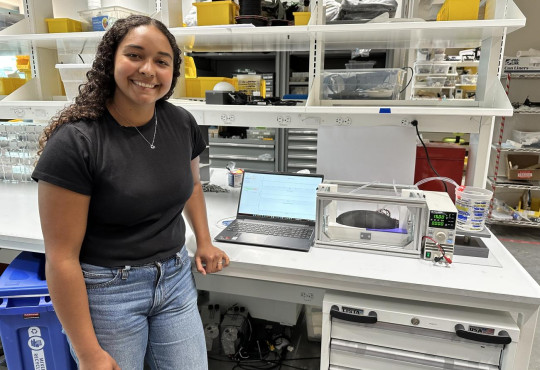
Tiahna Padilla ’26 has never been afraid of a challenge. While working on her senior thesis, the two worlds she inhabited at Harvard converged through the development of a mobile artificial limb that gives unique insight into the capabilities of athletes’ muscles.
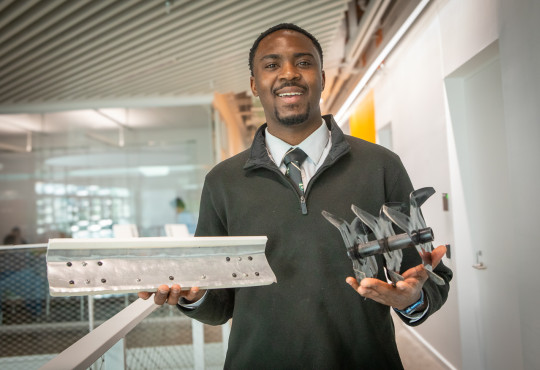
After a year at the Altoona campus of Penn State University, Tolu Ademola wanted a change. He wanted to go somewhere that felt like a true university campus. And while he knew he wanted to study engineering, he wanted a school that would encourage him to take humanities as well.
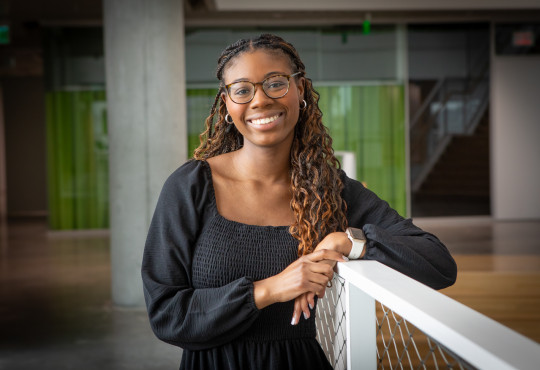
Find Jiani Johnson’s fifth-grade yearbook, and you’ll find a surprising response to the question of what she wanted to be when she grows up: a bioengineer. She liked tinkering and building things, and she always wanted to help people, making bioengineering the ideal interdisciplinary collaboration.