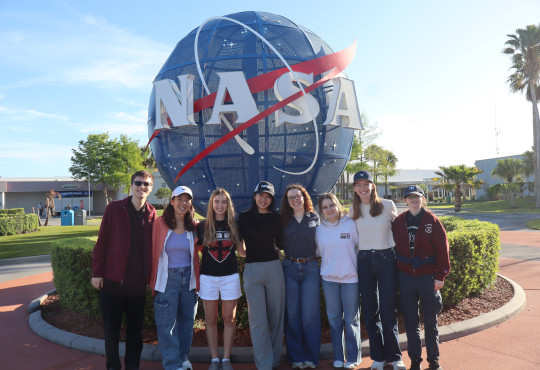
Undergraduate Aerospace Collective celebrates satellite launch
CubeSat launch from Cape Canaveral caps project that began in 2018
CubeSat launch from Cape Canaveral caps project that began in 2018

The honor is given annually to College seniors who demonstrate ‘intellectual adventure’
A new AI tool called Empirical Research Assistance can automatically write high-performance scientific software, even outperforming software written by experts.
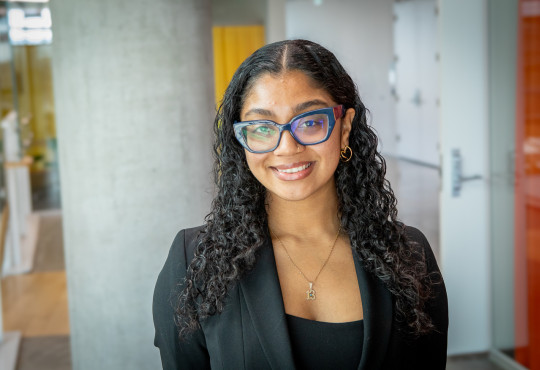
About 1 billion kilograms of wool gets wasted per year. Waste wool can come from farmers, from textile mills before the wool gets made into clothes and used by consumers. Environmental Science & Engineering concentrator Mia Montrose employed waste wool to make building cladding panels as an example of sustainable materials.

The Monk Skin Tone scale, devised in 2019 by Professor Ellis Monk, helps create more accurate medical diagnostic tools for patients with dark skin
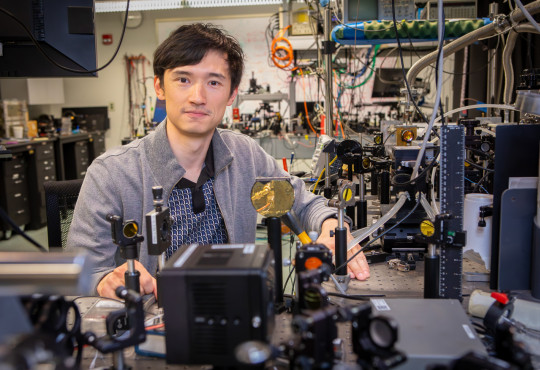
Arman Amirzhan chose to study materials science as an undergraduate at Imperial College in the United Kingdom thinking he’d learn about cutting edge technology like nanomaterials. Instead, he got ceramics and metallurgy – classical areas of the field, but not his area of interest. He was worried he’d picked the wrong field of study, and because of the U.K. educational system, changing majors would be much harder than in the U.S.
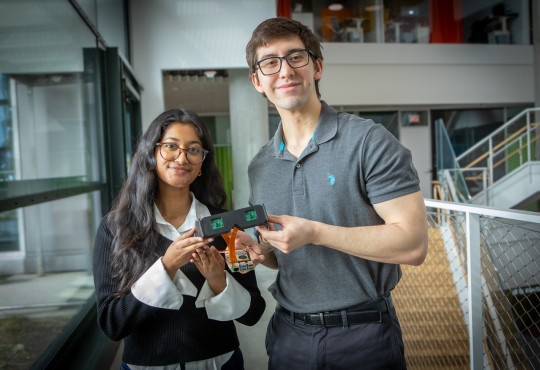
Electrical engineering concentrators offered a sleek, low-profile navigational aid for visually impaired individuals. More specifically, their project aimed to track and alert users of low-hanging obstacles that are typically missed with a mobility cane.

Diagnosis transformed Mary Cipperman ’26 into a hyperproductive student researcher with diverse interests in physics, medicine, and AI
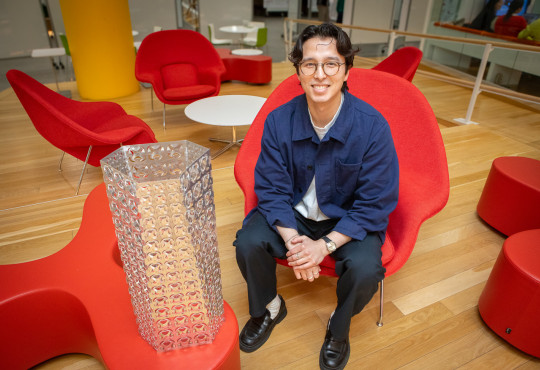
After three years as a Waymo software engineer, Luke Fiorante wanted a change. He’d been coding ever since he was a computer science major at Brown University, but the Vancouver native knew he could do more. Also interested in design and the arts, he decided to search for master’s programs focused on design and engineering.
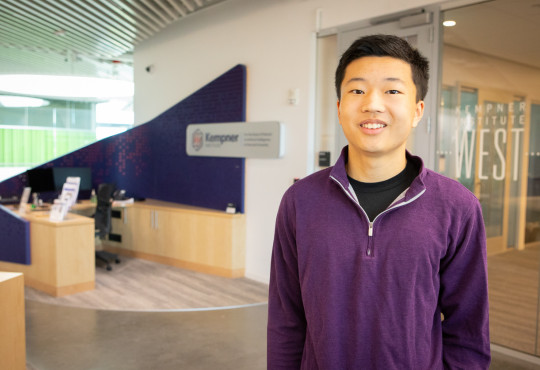
Benjamin Choi built a mind-controlled bionic arm as a high school student in Virginia, and it made him realize something critical about human brains: they’re noisy. Brains constantly send out all kinds of signals regulating everything from breathing to hunger to planning one’s daily schedule. For his prosthetic to work, it needed software that could filter out the noise and recognize the signals specifically intended to manipulate the arm.
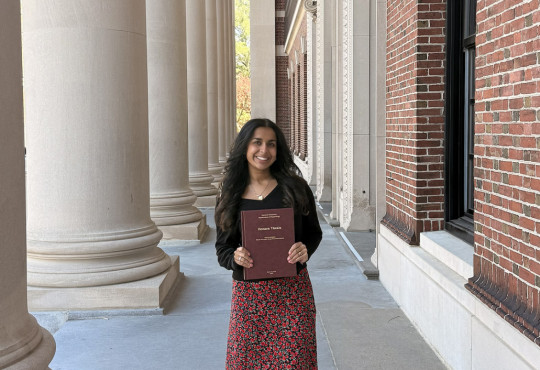
With artificial intelligence quickly becoming ingrained in everyday life, psychology and government double-concentrator Gauri Sood ’26 is skeptical about non-human technologies mimicking human experiences without bias.