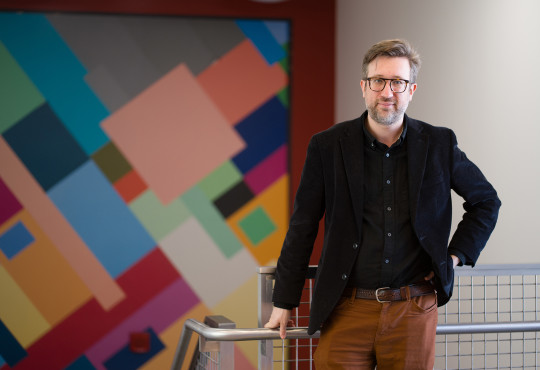
Bolstered Dean’s Competitive Fund awards promising research
Awardees include faculty studying infection, Atlantic slave trade, and South Asia artisan practices
Awardees include faculty studying infection, Atlantic slave trade, and South Asia artisan practices

Viktoriia Morad, a new fellow in physics and material science, wants to build upon the lab-grown semiconductors she uses to harvest light.
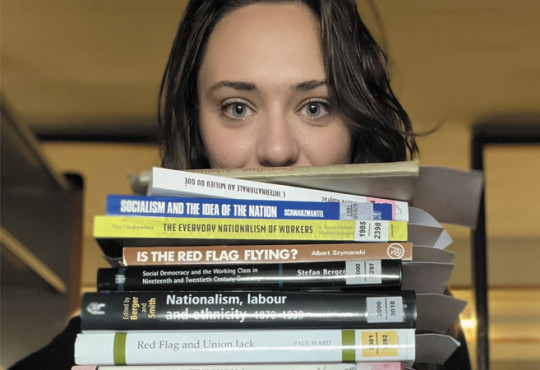
Natalie Behrends received an unusual present for her 10th birthday: a biography of Mary Harris “Mother” Jones, the turn-of-the-century American labor activist.
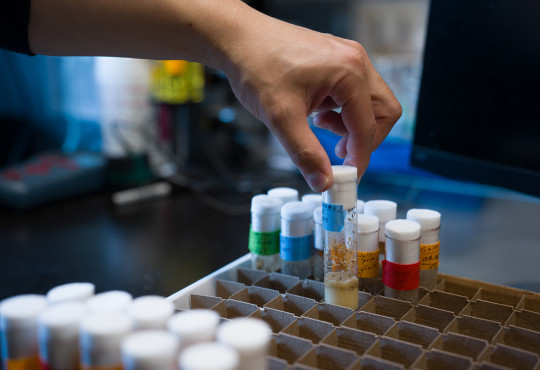
For more than a century, the fruit fly has been a workhorse of the biological sciences that has helped scientists to make fundamental breakthroughs in fields such as genetics and neuroscience.

This April, one thousand red oaks will be planted at Harvard Farm. The species, native to New England’s northern temperate climate zone, is increasingly threatened by drought and heat.

The U.S. government publishes hundreds of thousands of datasets every year. For decades, social scientists eagerly mined them, crunching the numbers to glean insights on everything from wage inequality, health outcomes, and long-term trends in standardized test scores.

Childhood is understood as a time to learn and grow. What Christopher Kuzawa’s research shows is that learning and growing are interconnected.

More than $198 billion in green investments were enacted under former U.S. President Joe Biden. But who reaped the political rewards from a set of policies that advanced renewable energy projects and green jobs across all 50 states?
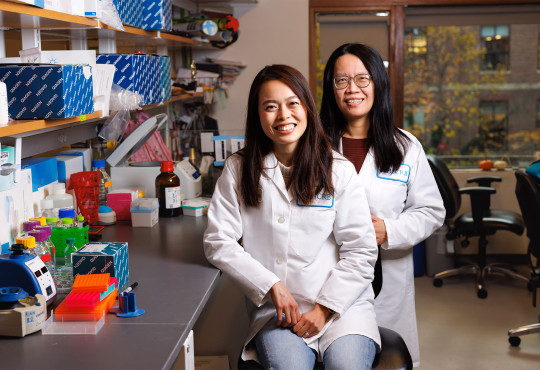
New findings by Harvard stem cell biologists suggest it may be possible in the future to regrow wounded skin without scarring.
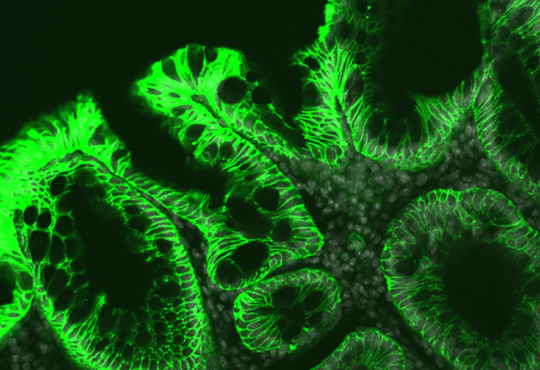
A study in mice suggests that even intestinal cells that appear healthy may hold epigenetic “memories” of earlier bouts of inflammation that can promote colon cancer later in life.

Insights into electro-optic frequency combs could lead to new applications.