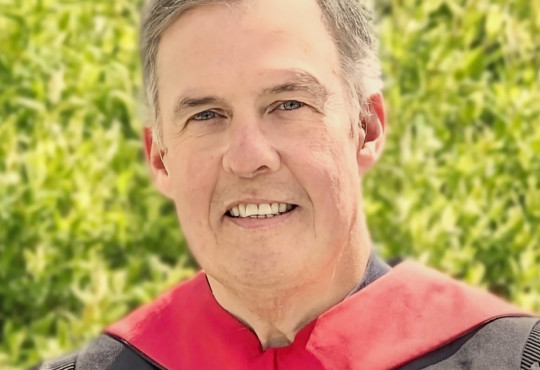
Shaping the world his granddaughters will inherit
At 68, he earned a master’s in sustainability at Harvard Extension School.
At 68, he earned a master’s in sustainability at Harvard Extension School.
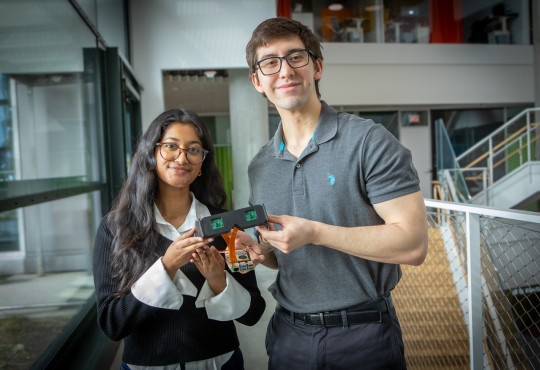
Electrical engineering concentrators offered a sleek, low-profile navigational aid for visually impaired individuals. More specifically, their project aimed to track and alert users of low-hanging obstacles that are typically missed with a mobility cane.

Diagnosis transformed Mary Cipperman ’26 into a hyperproductive student researcher with diverse interests in physics, medicine, and AI
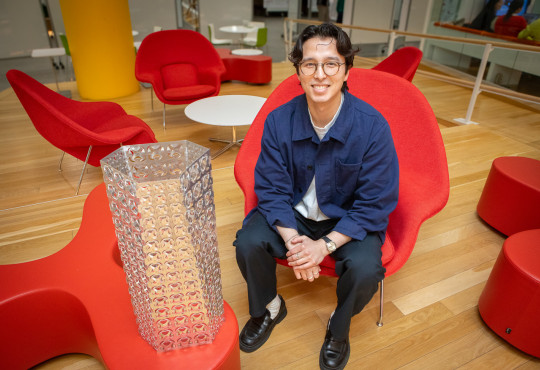
After three years as a Waymo software engineer, Luke Fiorante wanted a change. He’d been coding ever since he was a computer science major at Brown University, but the Vancouver native knew he could do more. Also interested in design and the arts, he decided to search for master’s programs focused on design and engineering.

When Russia invaded her home country of Ukraine in 2022, Anastasiia Pereverten was more than 5,000 miles away, studying at the University of Wyoming. From that distance, she watched a surge of support from Americans who were far removed from the conflict. “All this, so far away from Ukraine?” said Pereverten. “People were so incredibly vocal and supportive, and wanted to know more. I wanted to understand what shaped that.”

Faculty discussed at length proposed changes to the undergraduate grading policy for a final time at Tuesday’s Meeting of the Faculty, a week before voting begins.
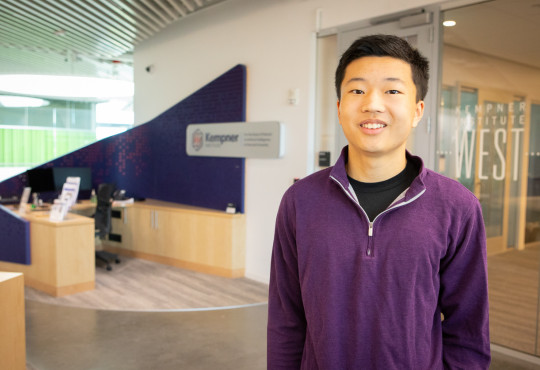
Benjamin Choi built a mind-controlled bionic arm as a high school student in Virginia, and it made him realize something critical about human brains: they’re noisy. Brains constantly send out all kinds of signals regulating everything from breathing to hunger to planning one’s daily schedule. For his prosthetic to work, it needed software that could filter out the noise and recognize the signals specifically intended to manipulate the arm.
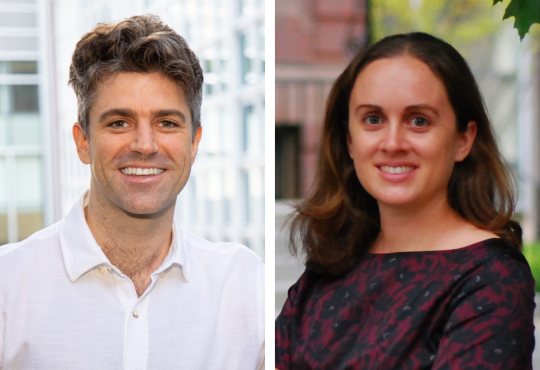
The annual award for teaching excellence, which includes a monetary prize, was established three decades ago with a gift from Edward Abramson ’57 in honor of his mother.
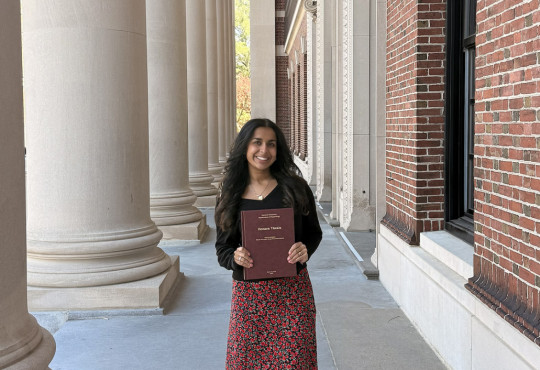
With artificial intelligence quickly becoming ingrained in everyday life, psychology and government double-concentrator Gauri Sood ’26 is skeptical about non-human technologies mimicking human experiences without bias.
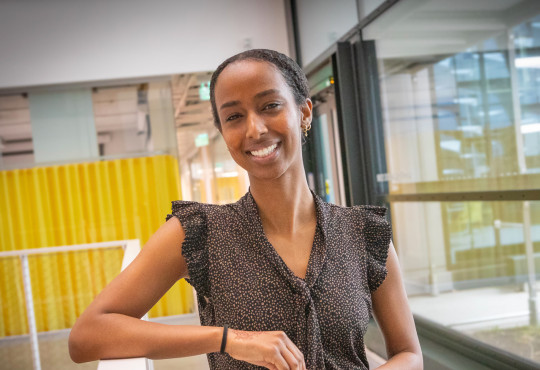
Engineering Design Projects (ES 100), the capstone course at the Harvard John A. Paulson School of Engineering and Applied Sciences, challenges seniors to engineer a creative solution to a real-world problem. Saron Meressi's project focused on optimizing cardiac gene delivery using adeno-associated virus (AAV) technology. She specifically designed a tunable, ventricle-specific gene delivery system that enables more precise targeting within the heart.

A researcher focused on developing therapeutic vaccines for the human papillomavirus (HPV), Alton Gayton will graduate from the Harvard Kenneth C. Griffin Graduate School of Arts and Sciences in May 2026 with a Ph.D. in virology. He discusses his pioneering work using circular RNA and artificial intelligence to treat and prevent cervical cancer, his upbringing in North Carolina, and his path from there to Harvard, via the University of North Carolina.