Eileen O’Grady
Harvard Staff Writer
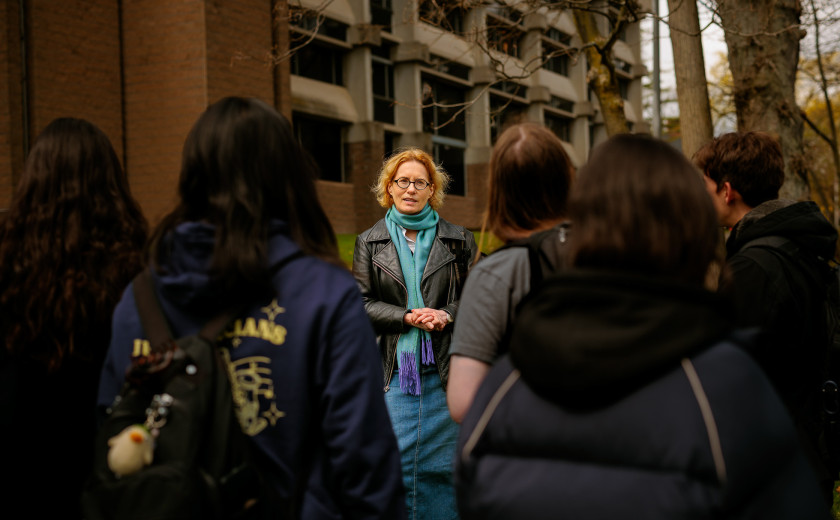
Joyce Chaplin’s “Rewilding Harvard” is reimagining the Harvard landscape
/ Read time: 6 minutes
Harvard Staff Writer
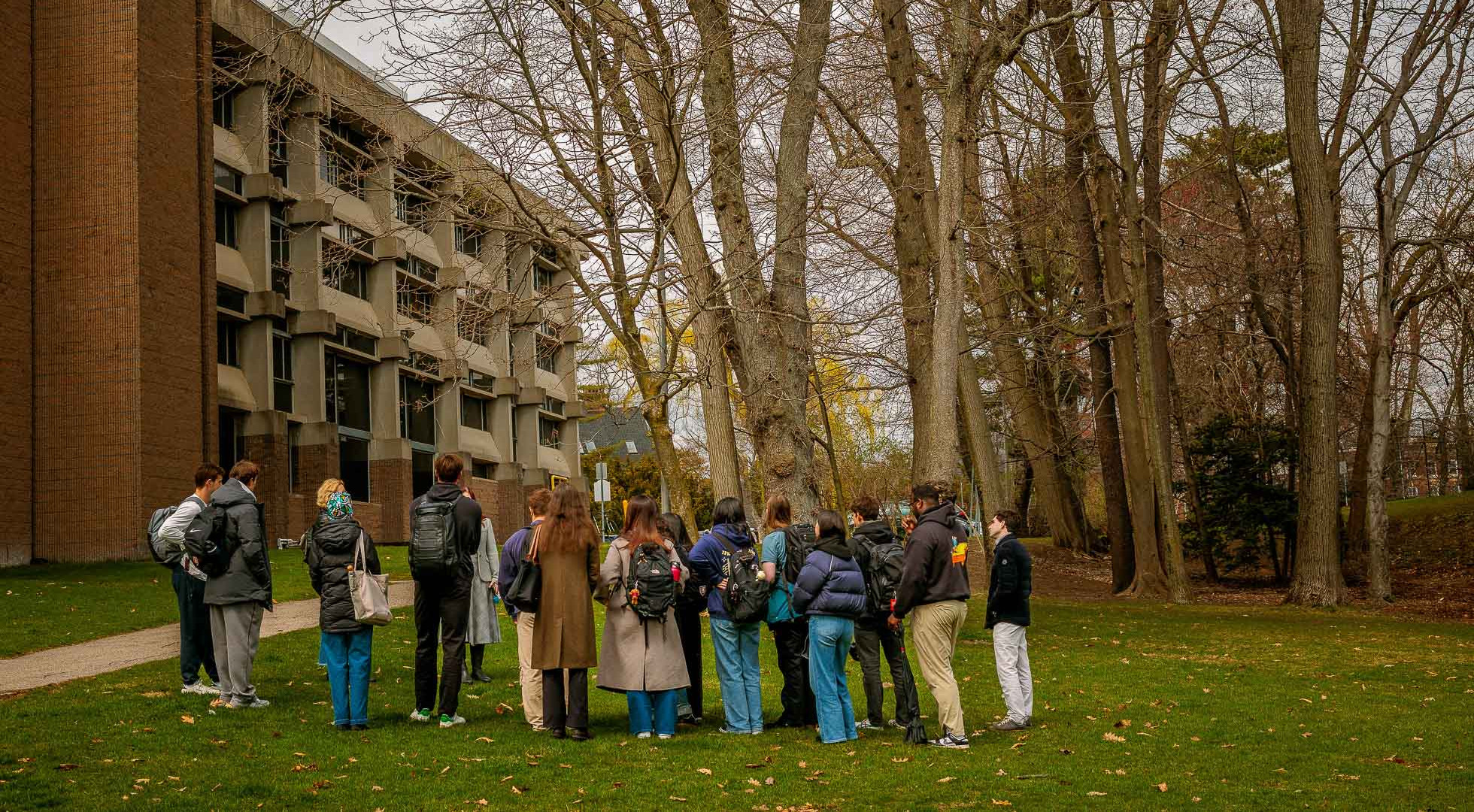
A group of students spread out across the lawn behind the Center for Astrophysics one Tuesday this spring. Some examined the grassy area, while others headed for a small stand of trees near an embankment separating the plot from the Quadrangle Recreational Athletic Center.
As they surveyed the site, some questions arose. What kind of green mulch might work around the trees? Would native violets be a good addition to the lawn? Then a neighbor walked by with a dog, prompting another consideration.
“It is important to make sure that spaces are beneficial to all who will use them,” said Hannah Murphy ’28. “You want to make sure it is going to be a healthy and happy space for the humans and the animals and the plants.”
The students, all enrolled in the History Department’s “Rewilding Harvard” course, had spent the semester studying the human and natural histories of New England. Now they were touring the Bond Street site in advance of proposing a redesign that promotes biodiversity, reintroduces native plant species, and makes the area friendlier to pollinators.
“Increasingly, there is concern that we should be using landscape better and that ecosystem functioning is an important goal for any kind of landscape use,” said Joyce Chaplin, James Duncan Phillips Professor of Early American History. “Urban ecosystem restoration is something we need to improve. Often there are old ideas about what campus space should look like, or what it should be for, that we need to rethink.”
The Bond Street lawn is the fourth campus-based project Chaplin’s students have taken on over the past five years, always in partnership with local stakeholders and Facilities Services personnel. First offered in 2020-2021, “Rewilding Harvard” initially worked with Harvard Museums of Science & Culture and the Landscape Services team to redesign a planter, still visible in front of the Museum of Natural History, with native pollinator-friendly species like common ninebark, blue wild indigo, New England aster, and yarrow.
The 2023 class redesigned a grassy mound for the center of a Harvard Business School parking lot, in partnership with HBS Operations, Reed Hilderbrand Landscape Architecture, and Cambridge Landscaping. They added pollinator-friendly trees and shrubs like serviceberry and spicebush, as well as wildflowers like blue flax, sweet William, and sweet alyssum.
The 2025 class designed a low-mow lawn proposal for Harvard Business School, introducing a pattern that requires less-frequent cutting, giving bees and butterflies more time to complete their seasonal pollinating tasks.
Chaplin got the idea for the course when a campus campaign for fossil fuel divestment left her thinking about how the University could use its land differently to address the “polycrisis” of global warming and biodiversity loss.
“Partly I’m doing the class to show students they can do something,” Chaplin said. “The polycrisis is terrifying. The world we’re bequeathing to young people is so, so compromised.”
That leaves today’s young adults with difficult work ahead, she continued. “Showing that there are ways you can make a difference and that there can be cooperative efforts — that's important.”
For the Center for Astrophysics partnership this spring, Chaplin divided students into groups focused on either the sunny lawn, the shady area with trees, or historical research on the site. Rupert Chen ’27, a double concentrator in history and economics with a secondary in computer science, was part of the team that focused on the wooded area, looking into flowering “green mulch” alternatives to a regular lawn.
Murphy, a joint concentrator in physics and mathematics with a secondary in philosophy, was in the group that focused on the mowed areas. They proposed keeping some of it lawn-like, traversable for pedestrians and dog-walkers, while adding smaller “islands” with sun-loving flowers like bird’s foot violet to support pollinators.
“It’s interesting to see just how little has to be changed in order for a space to be significantly better for the environment, for pollinators, and for the people who are there,” Murphy said. “Even if you don’t want to get rid of the lawn entirely, maybe consider reseeding it with some wildflowers, or look at incorporating other plants that will often fare better than the traditional ‘lawn’ that has to be rewatered, recut, and redone every year.”
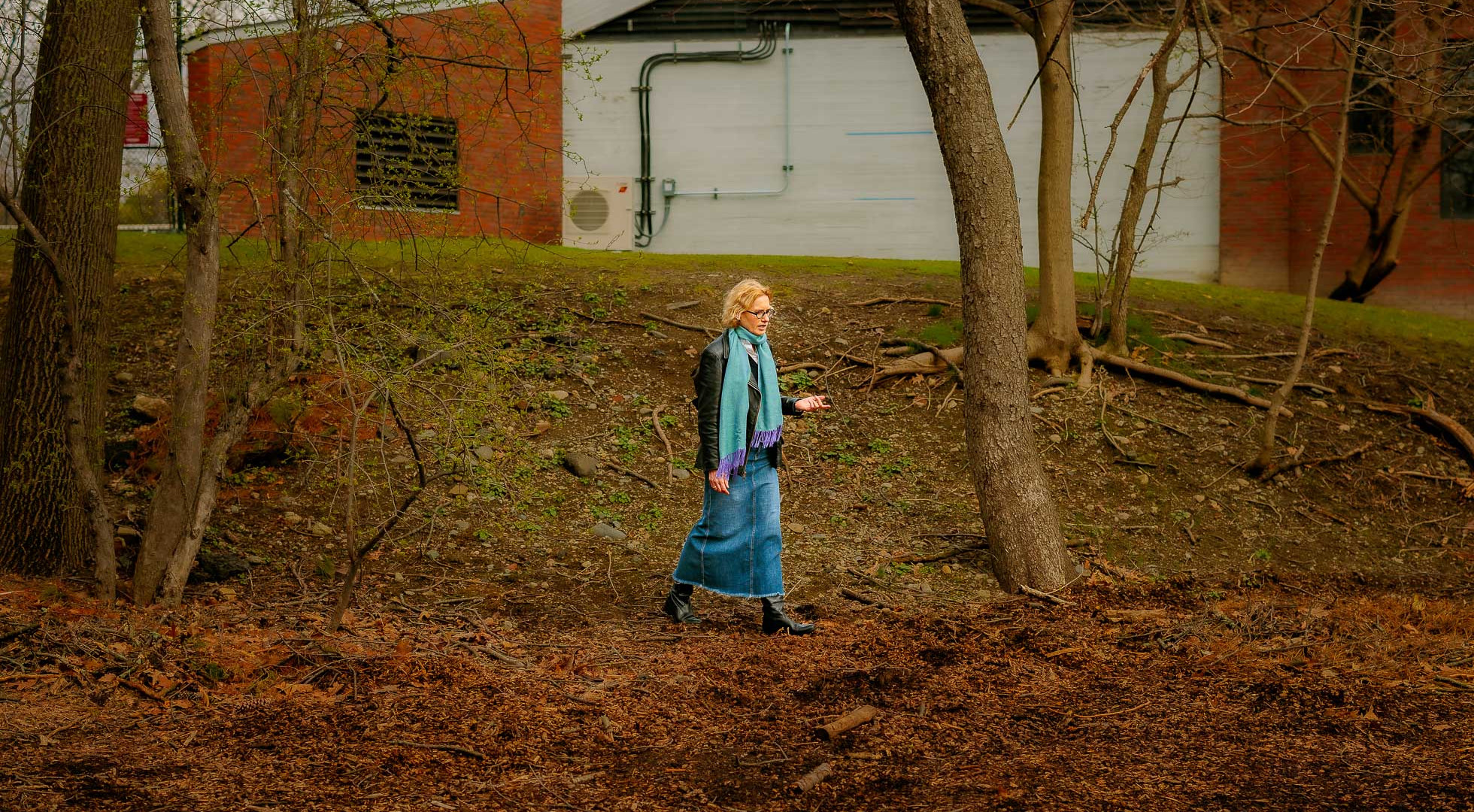



The way Chaplin sees it, public parks and college campuses are designed to please by meeting contemporary expectations. But she said this preset look is often achieved by narrowing the range of species included in the landscape, keeping certain aesthetically appealing trees and shrubs over native species, and not taking into account the animals and insects who might inhabit those landscapes.
Harvard’s manicured lawns and paved sidewalks are a relatively recent development. The spring 2024 class learned this from primary sources, working with the Harvard Map Collection to study the history of Harvard’s landscape and ecosystems. Students used geographic information system (GIS) tools to map their findings, with historic drawings and photographs revealing the dirt paths that crisscrossed campus in the 19th century.
“They really got the central point, which is that Harvard’s landscape has a history, and arguing, ‘Well, it’s always been this way,’ is never true,” Chaplin said. “It has changed in the past, so why not more changes moving forward?”
With the students’ proposal for the Center for Astrophysics lawn now complete, Chaplin will now work with administrators and Landscape Services personnel to finalize and implement the plan. The transformation is set to begin in late summer and early fall.
“It was exciting to work on a project with such tangible impact, and to participate in a course that was so project-based,” said Chen, who was particularly moved by reading William Cronon’s “Changes in the Land” for the course. “Professor Chaplin taught me a side of history I hadn’t encountered before in ecology and the environment, while also showing us all the necessity of working together to address wide-ranging challenges.”
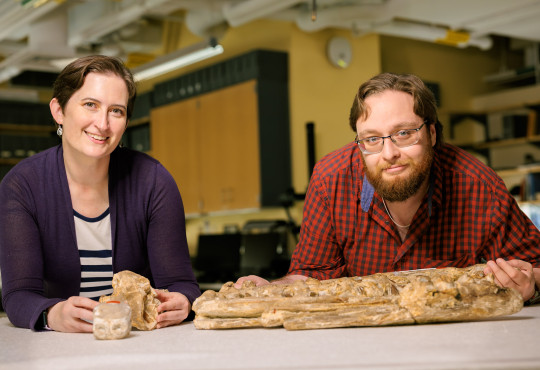
After 80 million years, a giant fossil jaw has quite a story to tell. Back in the age of the dinosaurs, Tylosaurus proriger was a fearsome predator — a bus-sized aquatic reptile with a crushing snout, daggerlike teeth, and knack for swallowing prey whole. How its bones wound up at Harvard is a tangled yarn involving a Wild West stagecoach station, the early western railroads, the infamous “Bone Wars” between rival fossil hunters, and a founding scholar of natural history.

New research by economist Rebecca Diamond found an increase in marriage among single women and an increase in employment rates among unemployed women after they started taking GLP-1 drugs for weight loss. Diamond says the pattern suggests that at least part of the female obesity penalty — the social and financial costs women bear due to their body size — is linked to first impressions.
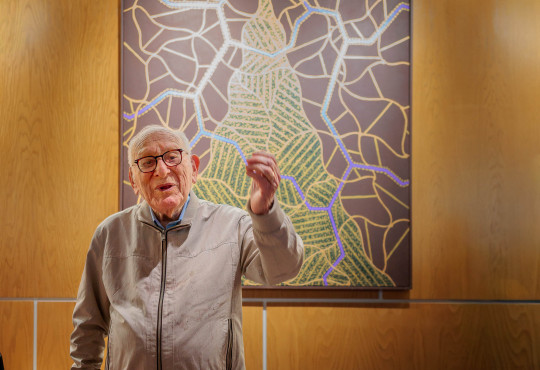
When David Bakalar first set foot at Harvard, he was a 17-year-old child of immigrants commuting by bus from Lynn, his $500 “nonresident scholarship” covering tuition and a study space at Leverett House but not room and board.