Eric Moskowitz
Harvard Staff Writer
“The one compliment I’ll give myself is I’ve done a really good job at learning from those mistakes,” says Richard Glazunov ’26
Harvard Staff Writer
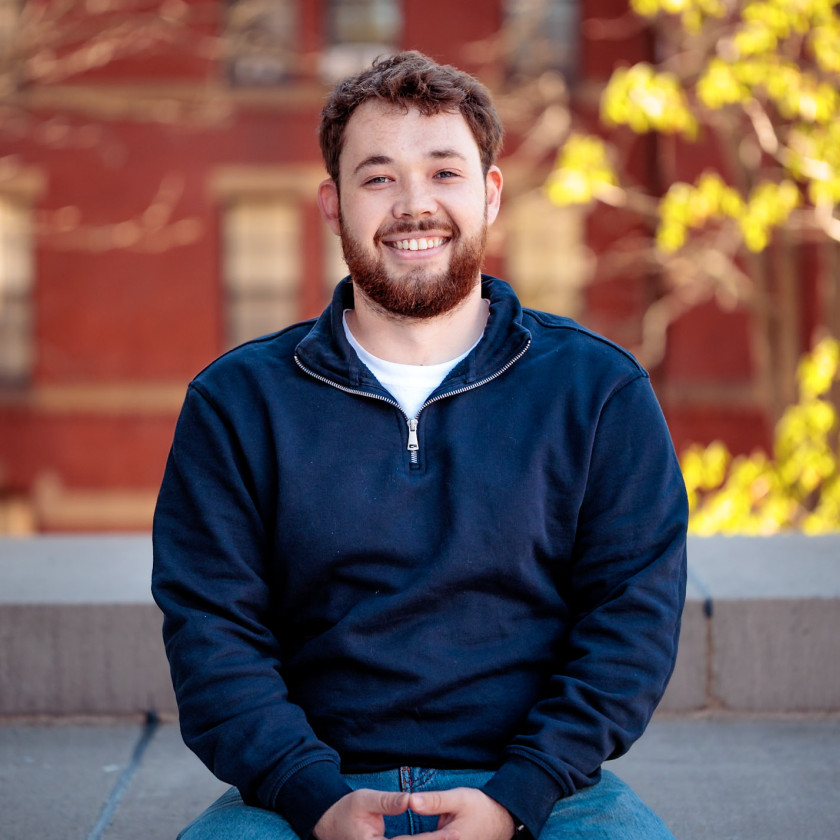
For many Harvard College students, junior year of high school looked a certain way: studying hard, loading up on AP classes, prepping for standardized tests, maximizing extracurriculars. Not Richard Glazunov ’26, who spent the first half of junior year — back in 2012 — ditching high school in Brooklyn to play video games and handball.
Sometimes he would hide beneath his bed so his parents and grandmother wouldn’t know he was still home when they left for work. A dedicated teacher and then a guidance counselor intervened, but neither did the trick. Those invested educators at Edward R. Murrow High School spurred the boy just enough to earn a diploma with a 2.1 GPA. Though he sometimes daydreamed about a brighter future, he mostly viewed himself as a “knucklehead,” a feeling compounded by the tough-love parenting of his immigrant father.
And that was before he flunked out of the College of Staten Island at 18, raising questions of whether he had the discipline to pursue his original goals of joining the military and becoming a New York City police officer like his oldest brother.
Now, a few months shy of 30, Glazunov is poised to graduate from Harvard College with a degree in government and a campus reputation for cultivating community and fostering debate. It’s enough to make even his own head spin.
It speaks to the ways Glazunov matured during five years as a Navy Corpsman — a combat medic attached to a Marine Corps infantry unit — and to the potential he harbored as a teen, if few saw it then besides those educators and his late grandmother, Nelly, who lost her parents to the Holocaust and endured both antisemitism and forced secularism as a Jew in Soviet-era Ukraine.
It also speaks to Glazunov’s introspection and self-awareness along with his affability and self-deprecating wit. “I’ve just messed up so much,” he said. “The one compliment I’ll give myself is I’ve done a really good job at learning from those mistakes.”
He cited a military adage: Pain retains. Still, he was in his mid-20s, a year out of the Navy, before everything clicked.
“Everybody says your frontal lobe develops when you turn 25,” he said. “On my 25th birthday, it was almost a spiritual experience. I became super disciplined, super motivated, and said, ‘I am not messing around anymore.’”
He buckled down at Kingsborough Community College — more on that in a bit — and set his sights on the Ivy League, where he has continued to grow.
Sergio Imparato, assistant director of undergraduate studies in the Department of Government, has taught Glazunov multiple times. He said three traits distinguish him in class: his unusual diversity of life experiences, an open mind, and a willingness to assume the minority position in controversial debates in the “most kind, empathic way possible.”
“It’s not necessarily a rare thing for our students to be open-minded,” Imparato said, “but the way in which Richard brings open-mindedness to the forefront of his engagement in the classroom and with other students is just something that strikes you right away.”
He took Glazunov to Washington, D.C., in January with 14 other students for a Wintersession on Global Democracy and Citizenship, visiting think tanks, embassies, and congressional offices. He’s also joined Glazunov for dinner with other veterans, gaining a better perspective on that student community while seeing how others “look up to Richard as a kind of natural leader.” Last year, Glazunov served as vice president of the Harvard Undergraduate Veterans Organization (HUVO).
Vanessa Valverde ’27, a Marine Corps veteran, met Glazunov at orientation in 2023, when she was a first-year and he was a sophomore transfer. They became fast friends; she especially appreciated his humor and gift for connecting with others. “He knows how to make you feel seen and heard,” said Valverde, current HUVO president.
Every week, the two grab pizza at Joe’s and hash out the geopolitical issues of the day. Sometimes they head to the Smith Campus Center, filling a whiteboard with notes. Other times, they don’t even make it out of the pizza place. A woman interrupted them recently to tell them they gave her “hope for the future,” Valverde said. They joke about starting a podcast, calling it Hot Slices and Hot Takes.
Glazunov was raised in the Russian-speaking enclave around Sheepshead Bay and Coney Island in Brooklyn, born a year after his parents left Odessa, the youngest of three boys. They gave him the Western name Richard “so I could have a better chance in this country,” though they call him “Richik.” His father, a mechanic in Ukraine, worked here as a long-haul truck driver and then a limo driver. His mother worked as a hairdresser.
Around 2004, Glazunov’s oldest brother joined the Marines and went on to serve two tours in Iraq, a formative period in which young Richard internalized his family’s anxiety over the daily American death toll, even as he resolved he would also grow up to join the military. At the same time, his father got into construction, doing window and door installation and basement rehabs. Amid the house-flipping boom, life changed. “We went from being poor to actually like upper-middle class,” he said, with vacations and plentiful presents. Then came the 2008 crash. They scraped by on his mother’s hairdressing income and his grandmother’s work in a medical billing office.
Around that time, Glazunov’s grandfather died from cancer. In their small two-family house, his parents sent him downstairs to live in the apartment with his widowed grandmother when he was in middle school. The two would sit for hours talking about her years in Odessa. Three times they traveled to Las Vegas, just the two of them. “She always believed in me,” he said, even when “I didn’t believe in myself.”
In 2014, Glazunov limped out of high school — figuratively with that GPA, and literally, while rehabbing a fractured kneecap and torn quadriceps from a severe handball injury. His parents implored him to try college before considering the military.
He received numerous rejections but couldn’t bring himself to go to nearby Kingsborough, opting instead for the College of Staten Island. Never mind that it was a nearly two-hour commute, requiring multiple bus transfers that quickly sapped his commitment. When a professor gave him a poor grade for misunderstanding an assignment and refused to let him try again, Glazunov gave up. At the end of the year, his grades were so low that the school advised him not to return.
He tried to enlist in the Navy but was initially rebuffed for his leg, until he secured the medical paperwork to demonstrate he could handle the strain. He thrived in boot camp at Naval Station Great Lakes and, aided by ibuprofen and tightly cinched leg braces, persisted through the most extreme tests to become a Marine medic at Camp Pendleton.
In 2017, he deployed for nine months on the USS America, an amphibious assault ship mainly targeting ISIS in the Middle East. They were just a few hours from Singapore in August 2017 when word came that the USS John S. McCain had been hit. They feared a terrorist attack. The America raced toward the scene, with Glazunov’s tactical unit — practiced in “fast roping” helicopter descents — prepared to drop onto the ship for an assault. It soon became clear that the McCain instead had struck a tanker in an accidental collision, a disaster that killed 10 sailors in their bunks and wounded 48 others. After divers recovered the bodies, Glazunov helped transport them to a morgue aboard the America.
He still thinks about it, how he and the Marines he served with were trained to fight, but these sailors had not signed up for direct combat; they were engineers and electronics technicians who joined the Navy seeking money for college or because they loved the sea. One was a father of two, about to retire. “That really affected me.”
Aboard the America and afterward, Glazunov bonded with a fellow corpsman named Luke Hixson, who was heading to Princeton after their 2021 discharge. Hixson thought his friend could do the same. “Luke, you’re crazy,” thought Glazunov, who had never met an Ivy League student growing up.
Back in Brooklyn, he enrolled in school again — this time at nearby Kingsborough. He earned a 4.0 and applied to transfer to several schools that spring. Mostly, he was waitlisted. With nothing to lose, Glazunov called Yale University for feedback and was told to load up on rigorous STEM classes the next year. He did. He also formed a veterans’ club at KCC to foster community and help other veterans prepare transfer applications, too.
That spring, he was driving to his girlfriend’s home when he got an impulse to check his phone at a red light. He saw an email from Harvard, offering admission. He pulled over and called his parents. “Good job, son,” his dad said, in a brief call — before phoning back six more times that night to make sure it wasn’t a mistake.
Glazunov and his girlfriend, Africa Martin, relocated to Cambridge. He worried initially that he would stick out, fail to keep up, or have little to offer in class. Those fears quickly faded. He discovered that if he dressed in jeans and hoodies, other undergrads assumed he was also 19 or 20. And though many veterans led with their military experience, Glazunov found that it could alter a discussion; if he initially kept his service in his back pocket, he could connect with other students organically before opening up about his time in the service.
His own identity is hard to distill, as a veteran, a child of immigrants, a Jewish student, a speaker of multiple languages, an emphatic New Yorker, a community college transfer — and a reformed “knucklehead,” about to earn a Harvard diploma on the cusp of 30. “I have all these backgrounds tugging at me,” he said. It’s why he tries to reserve judgment as a listener.
At Harvard, he’s made close friends, kindled a love for study and debate, and gained considerable confidence, while realizing how much he still has to learn. “I have Harvard and the community here to thank for so many lessons,” he said.
Where Martin moved with him for Harvard, he now plans to move with her as she decides among MBA programs. Eventually, he wants to join the State Department and serve as a diplomat. “The American dream was very real for my family,” he said. “I really do care about this country, and I want to build up our reputation, so people still view Americans in a positive light.”
Looking back, he’s still not sure how he got here, beyond hard work, “delusional optimism,” and a fair amount of luck.
“Life has a really funny way of playing out,” he said. “Never in my life would I have imagined that my second chance at school would be at Harvard.”
Being born a few days on either side of the school-enrollment cutoff date might seem like an arbitrary difference. But new research finds boys born just after the cutoff, who start kindergarten relatively old for their grade, enjoy far more advantages than previously known.
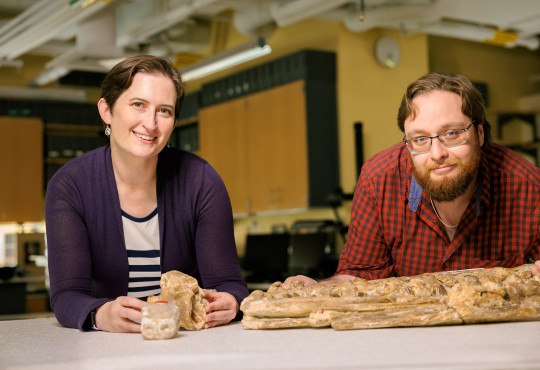
After 80 million years, a giant fossil jaw has quite a story to tell. Back in the age of the dinosaurs, Tylosaurus proriger was a fearsome predator — a bus-sized aquatic reptile with a crushing snout, daggerlike teeth, and knack for swallowing prey whole. How its bones wound up at Harvard is a tangled yarn involving a Wild West stagecoach station, the early western railroads, the infamous “Bone Wars” between rival fossil hunters, and a founding scholar of natural history.

New research by economist Rebecca Diamond found an increase in marriage among single women and an increase in employment rates among unemployed women after they started taking GLP-1 drugs for weight loss. Diamond says the pattern suggests that at least part of the female obesity penalty — the social and financial costs women bear due to their body size — is linked to first impressions.