Tenzin Dickie
Harvard Library
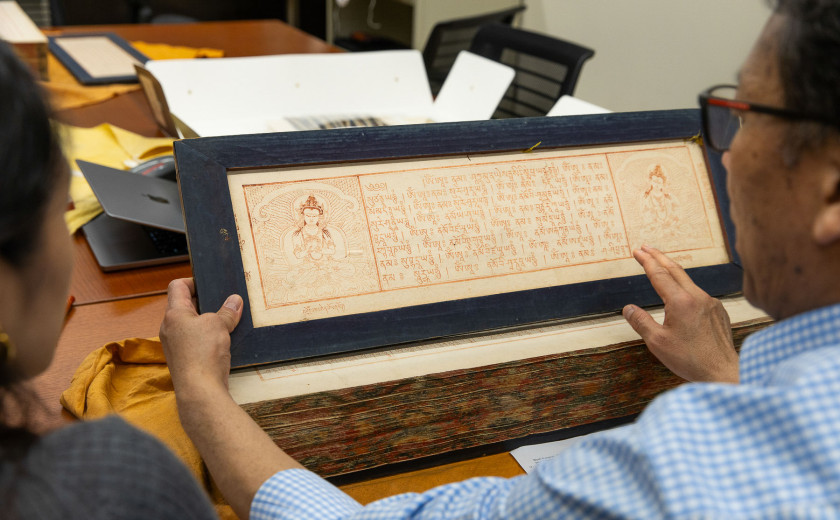
Students recently paid a visit to the historic block prints, all carefully preserved for teaching and research
/ Read time: 5 minutes
Harvard Library
Stepping into Harvard–Yenching Library’s special collections reading room felt like a homecoming for Sherab Chomphel, M.T.S. ’25. After spending two years immersed in digitized versions of the Tibetan Buddhist canon for his Harvard Divinity School studies, he was finally face to face with the centuries-old block prints themselves.
The texts once shaped daily life in Chomphel’s village in Tibet. In his hometown, truth was pledged on the words of the Buddha. “Kangyur,” people said, invoking the authority of the canon.
But after leaving occupied Tibet in 2007 and resettling in India, Chomphel saw the customs of home begin to fade. Only in Cambridge did he return to the canon.
Chomphel spent much of his master’s program examining Buddhist sutras, historical works, grammatical treatises, and texts on logic and epistemology. Yet nothing matched his encounter with the 400‑year‑old block print leaf last spring.
“I can’t believe I’m just holding it like this and studying it,” he said.
Harvard–Yenching Library holds one of the largest Tibetan collections in the Western hemisphere — materials that, experts note, would be inaccessible in Tibet today. “If these were in Tibet, they would be under lock and key,” said Tibetan language instructor Karma Gongde.
In Cambridge, however, everything is accessible to both Harvard students and visiting researchers.
“We have an incredible depth and breadth of classical Asian literature that we are delighted to make available to our visitors for study and research,” said Jidong Yang, head of the Harvard–Yenching Library. “As the most comprehensive East Asian collection of any American university, we have a responsibility to preserve and share these texts to advance global scholarship.”
The Tibetan Buddhist canon is a library, not a book.
It’s composed of around a hundred volumes of the Buddha’s teachings, called the Kangyur, and several hundred volumes of commentaries, called the Tengyur. In total, the canon consists of over 5,000 works translated into Tibetan a millennium or more ago from Sanskrit and other Indic languages.
“The canon is foundational for a Buddhist education,” said Janet Gyatso, Hershey Chair of Buddhist Studies at Harvard Divinity School, pointing out that its masterworks cover not just Buddhist philosophy, metaphysics, and monastic discipline — but even astronomy, medicine, and poetry.
The Tibetan Buddhist canon is also crucial to academic studies of Buddhism. “The Tibetan canon is filled with really important and unique texts that were lost in Sanskrit,” Gyatso said. “If you are interested in the historical development of Buddhism, it is invaluable.”
“The canon shows the genius of the early Tibetans, who in the 8th to 11th centuries transported Indic culture into Tibetan,” said Leonard van der Kuijp, Professor of Tibetan and Himalayan Studies in the Department of South Asian Studies. “Without any dictionaries or grammar texts, they created a new system of writing.”
Like the Romans, who adopted Greek modes of discourse, thereby preserving Greek knowledge for the western enlightenment project, van der Kuijp said the Tibetans served to preserve Indic knowledge for the world. While almost everything else from Buddhist India was lost, the vast Tibetan canon survives.
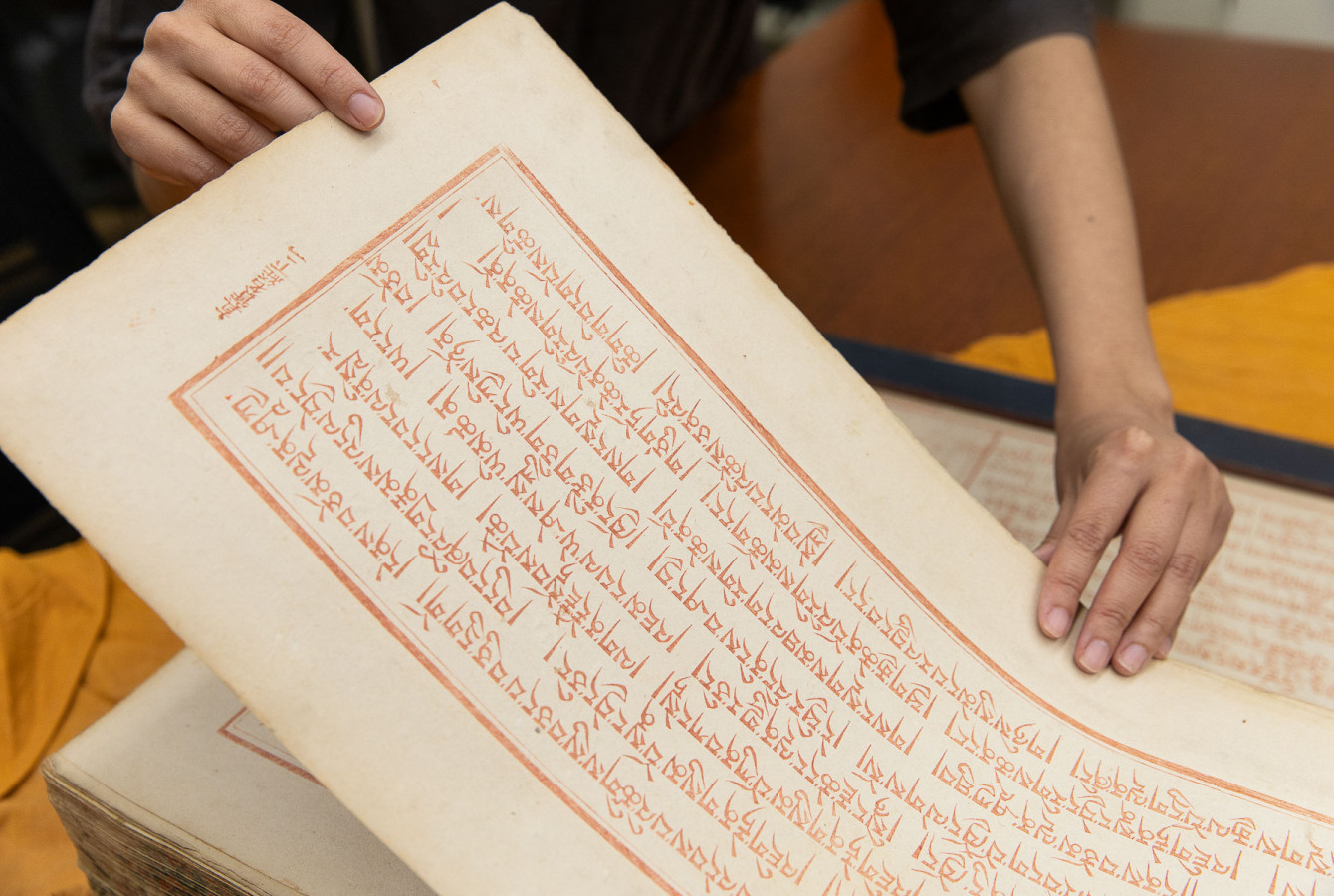
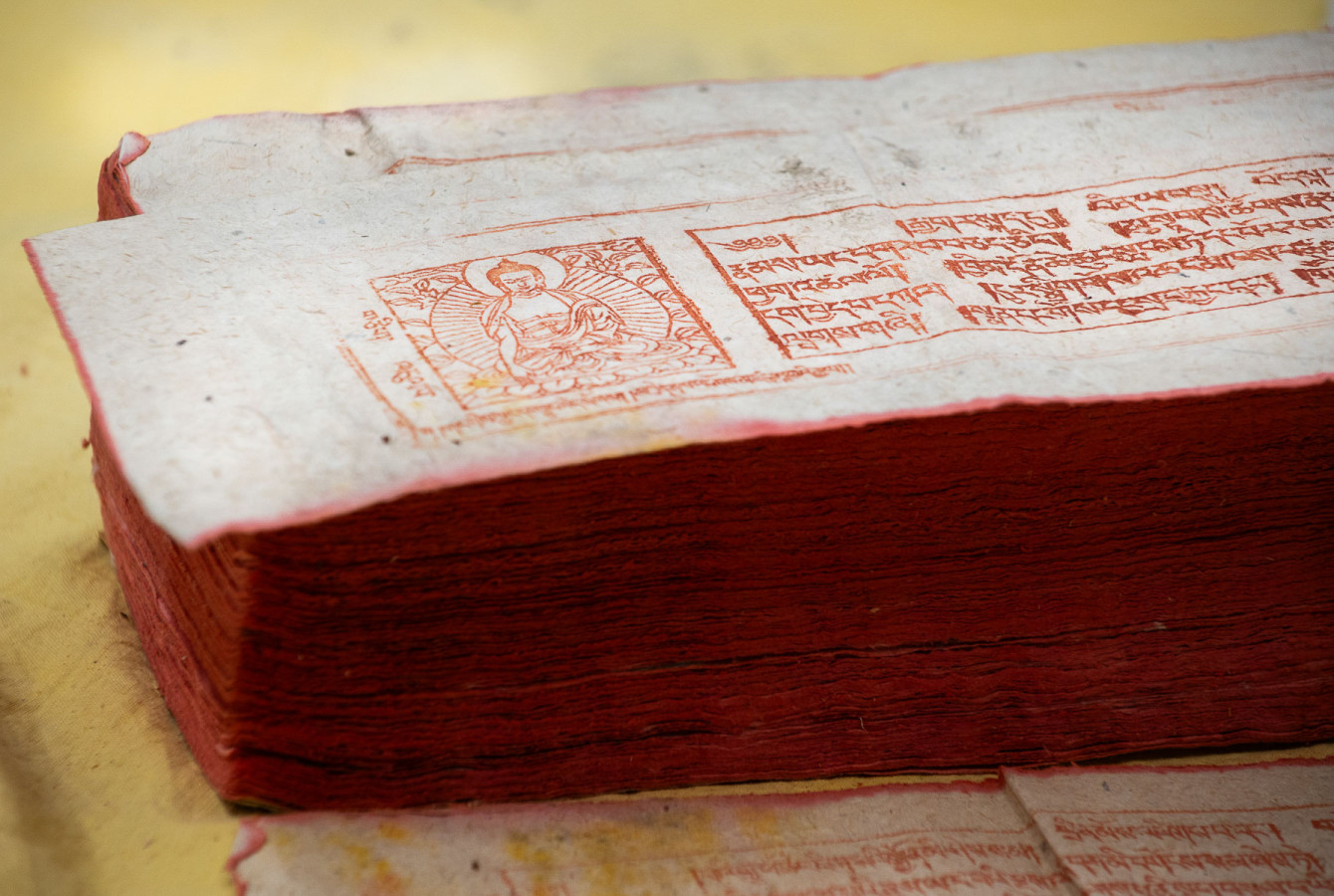
The journey of these canonical sets echoes Tibet’s turbulent history. After China’s 1949 invasion and the destruction of more than 90 percent of monasteries and libraries over the following decades, surviving texts became rare legacies of a threatened culture. The Peking and Derge Kangyur editions, prominent printings that are both hundreds of years old, were acquired by Harvard in 1938 and 1957–58.
For many Tibetans, that preservation carries profound meaning. Lobsang Sangay, former president of the Tibetan government‑in‑exile and now a lecturer at Harvard Law School, expressed gratitude for the careful stewardship of these treasures.
“At a time when Tibetan culture and identity is endangered in our homeland, I am grateful that these texts are being housed and preserved, and shared with researchers from all over the world,” Sangay said.
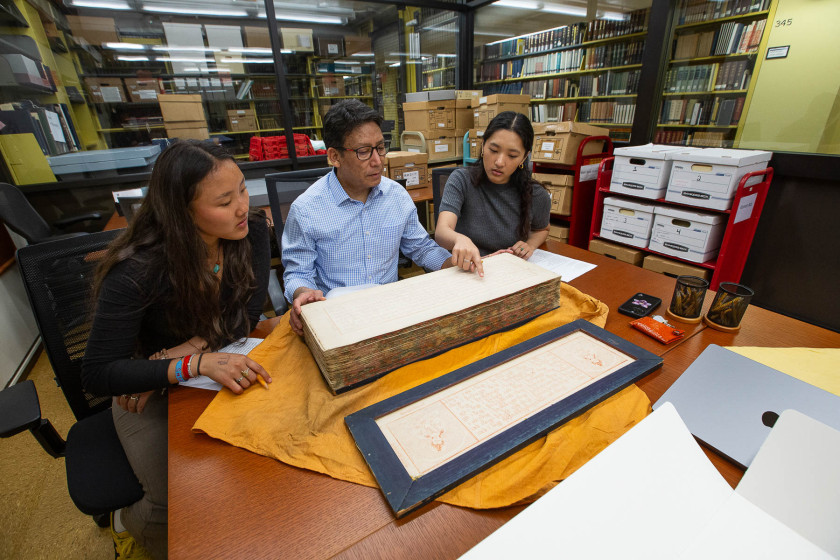
Following Chomphel’s visit, Gongde brought two undergraduates to see the same volumes. These were Gongde’s first Tibetan students in the Harvard class he has taught for four years. “They should get an audience with the Kangyur and Tengyur,” he said.
In Harvard‑Yenching Library’s reading room, Gongde pointed out grammar rules — markers for phrases, sentences, and topics — to Tsering Yangchen ’26 and Tenzin Yiga ’27, both native New Yorkers who spoke Tibetan at home but were still learning to read the language formally.
Yiga spoke of feeling grateful yet conflicted about the texts residing so far from Tibetan monasteries. Yangchen, reflecting on histories of destruction, found it “incredibly moving” to see the canon so well preserved.
Tibetan block prints are not bound but instead wrapped in cloth, and Harvard Library’s conservators have created boxes to secure and protect the text. The library has also digitized some volumes of the canon and made them openly accessible to the public.
“The purpose of these texts is to be read,” Gongde said. “Because Harvard Library has made this copy accessible online, all over the world, researchers and scholars can access this book. This allows Tibetan literature to be shared with the world.”
One passage from an 11th‑century Tibetan grammar text “The Gate of Speech” captured Chomphel’s attention.
“Commit no sin, practice perfect virtue, and subdue your mind; this is the Buddha’s teaching.”
It reminded him of the need to study multiple editions of the canon. “There are many different editions of the Kangyur, and even slight differences in orthography or sentence structure in a phrase can lead to variations in meaning,” he explained.
When he examined the ones held at Harvard–Yenching, Chomphel was moved by the artistry that had gone into producing them, with their block printed lines as clean and crisp as manuscripts. The physical texts, so different from digital ones, held a force all their own.
All texts in the Kangyur begin the same way: “Thus have I heard.” For Chomphel, encountering the canon at Harvard was a reminder of a cultural legacy still alive — and still being heard.
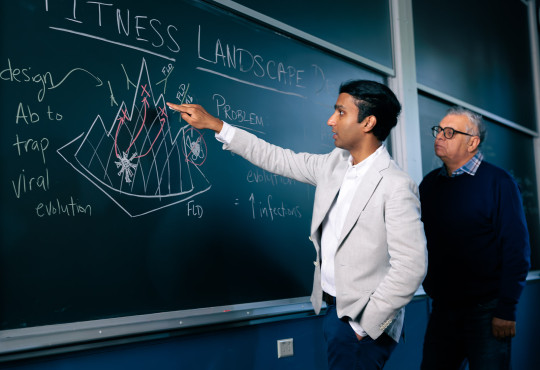
Two Harvard scientists describe a way to engineer the evolutionary landscape that viruses experience, pushing them away from dangerous variants and into evolutionary dead ends.

Amid the rhythms of the back-to-campus bustle, new faculty find themselves experiencing the same first-day excitement — and jitters. We dropped in on three, on the first day of their first classes.

As the sun sinks below the horizon, two scientists perch quietly beside a darkening field and wait for flashes of light. They have traveled far outside the city in search of research sites, because they study a group of creatures that have been driven to the margins of human settlements: fireflies.