All Stories

Search
  • Filter by School
    School
    School (field_school)
  • Filter by Topic
    Topic
    Topics (field_topics)
  • Filter by People
    People
    Audience (field_audience)
Caribbean art takes campus spotlight
A screenshot from Martinique-based artist David Gumbs’ “Sonjé,” a VR installation with wallpaper

Caribbean art takes campus spotlight

“We have never before shown an entire exhibition from the French and Creole-speaking Caribbean,” said Cécile Fromont, M.A. ’04, Ph.D. ’08, faculty director of the Hutchins Center’s Alain Locke Gallery of African & African American Art.
12 Nobels, two rhinos, and continued legacy of scientific discovery
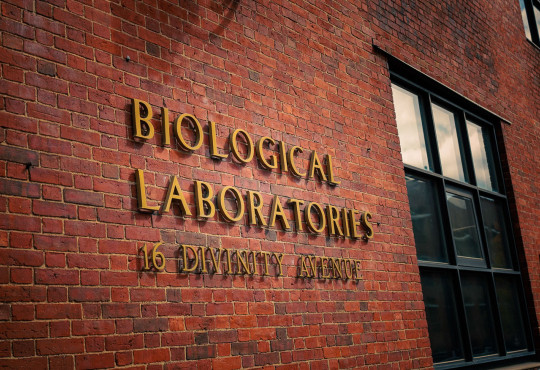
Front façade of the Harvard Bio Labs with building name and address

12 Nobels, two rhinos, and continued legacy of scientific discovery

The Biological Laboratories at 16 Divinity Avenue first opened in 1931. In the 95 years of its existence, the storied building has been home to the pioneering evolutionary biologist E.O. Wilson, a dozen eventual Nobel laureates, and even a self-described “zombiologist” or two.

Alarm over menstrual tracking apps
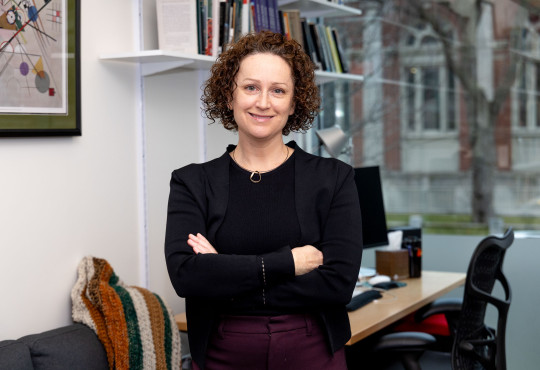
Professor Sarah Richardson in her office at Harvard University

Alarm over menstrual tracking apps

Menstrual tracking apps have become all the rage, leading the growing field of “femtech” that claims to help women understand — and regulate — their bodies. But these apps may promise more than they deliver — and even be harmful to women.

‘This is really not a time to find your chatbot BFFs’
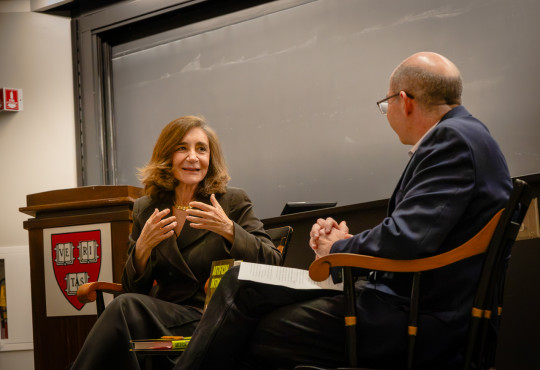
MIT professor Sherry Turkle discussing her book with colleague David Kaiser

‘This is really not a time to find your chatbot BFFs’

The advance of artificial intelligence, we are told, is inevitable. Nothing can stop AI chatbots from entering classrooms, nursing homes, workplaces, even bedrooms.

 Rediscovering Thoreau the scientist
University of Connecticut professor Robert M. Thorson speaking about his book “The Walden Experiments” at a podium beneath a slide featuring a portrait of Henry David Thoreau

 Rediscovering Thoreau the scientist

Henry David Thoreau famously went to Walden Pond to live deliberately. But for far longer, he pursued a lesser-known obsession: observing scientifically.

If AI is allowed to drive discourse, can democracy survive?
James Mickens, Manon Revel, and Shannon Vallor participated in Edmond & Lily Safra Center for Ethics’ “Ethics In Real Life” event.

If AI is allowed to drive discourse, can democracy survive?

Say political engagement could be increased in a certain society by the introduction of effective artificial intelligence tools — but those living there would have fewer in-person interactions. Should such tools be adopted?

Sky Hopinka awarded Rappaport Art Prize
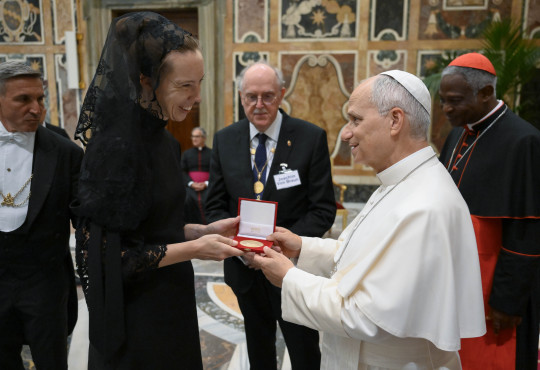
Sky Hopinka is a a multidisciplinary artist and filmmaker and an assistant professor in the Department of Art, Film, and Visual Studies.

Sky Hopinka awarded Rappaport Art Prize

The assistant professor in the Department of Art, Film, and Visual Studies has been named this year’s winner of a distinguished annual honor for artists with strong ties to New England.

Finding their way in ‘Masquerade’
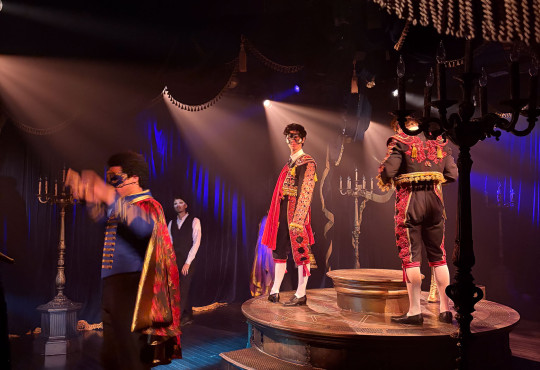
Tanner Quirk performs as Young Phantom in costume on a circular stage during the immersive theater production “Masquerade.”

Finding their way in ‘Masquerade’

This past summer, three Harvard students helped transport Manhattan audiences to Parisian rooftops, opera house dressing rooms, and a subterranean labyrinth in “Masquerade,” an immersive adaptation of Andrew Lloyd Webber’s “The Phantom of the Opera.”

The optimal diet? Kitchen experiment leads scientist to answer
Professor Dan Lieberman and Tonia Prescott in their kitchen. Lieberman stirs a pot on the stove and Prescott holds a tomato.

The optimal diet? Kitchen experiment leads scientist to answer

For most of his life, Daniel Lieberman has dedicated his mind to studying the evolution of the human body. In his latest project, he also devoted his body — specifically his digestive tract — to science.

How Paul Giamatti becomes a rhinoceros
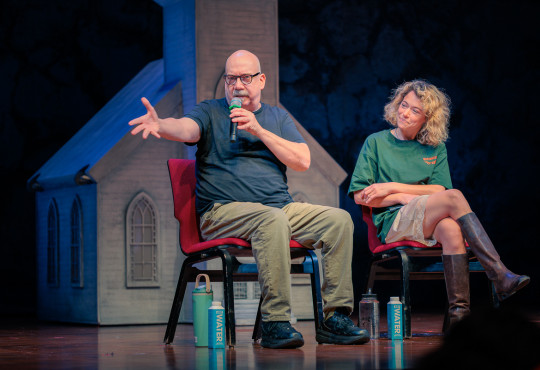
Paul Giamatti and Tatiana Maslany seated on stage at the Loeb Drama Center in a Q&A session

How Paul Giamatti becomes a rhinoceros

When Paul Giamatti was 7 years old, his mother told him the story of the Eugène Ionesco play “Rhinoceros.” Giamatti was a monster enthusiast at the time, and something about the idea of a man turning into a rhinoceros lodged in his brain.