All Stories

Search
  • Filter by School
    School
    School (field_school)
  • Filter by Topic
    Topic
    Topics (field_topics)
  • Filter by People
    People
    Audience (field_audience)
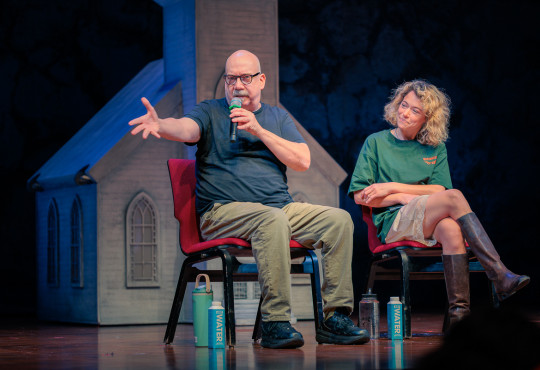
How Paul Giamatti becomes a rhinoceros
Paul Giamatti and Tatiana Maslany seated on stage at the Loeb Drama Center in a Q&A session

How Paul Giamatti becomes a rhinoceros

When Paul Giamatti was 7 years old, his mother told him the story of the Eugène Ionesco play “Rhinoceros.” Giamatti was a monster enthusiast at the time, and something about the idea of a man turning into a rhinoceros lodged in his brain.
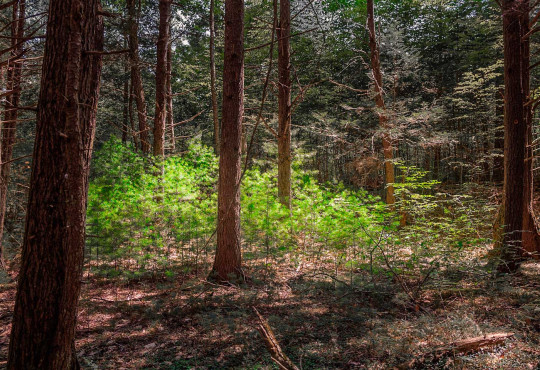

At Harvard Forest, doomed eastern hemlocks found to further future generations
Small, newly regrown hemlock trees under larger old-growth forest

At Harvard Forest, doomed eastern hemlocks found to further future generations

Sixteen years ago, an invasive pest called the woolly adelgid arrived at Harvard Forest and slowly began to devastate its the eastern hemlocks — as they had done in forcce elsewhere. Since then, Harvard Forest scientists have begun to study how to manage the demise of its so-called foundation species.

Sarah Lewis wins 2026 Rabkin Prize for visual arts writers
Sarah Lewis is the John L. Loeb Associate Professor of the Humanities and associate professor of African and African American Studies at Harvard.

Sarah Lewis wins 2026 Rabkin Prize for visual arts writers

The John L. Loeb Associate Professor of the Humanities and associate professor of African and African American Studies is one of eight U.S. visual arts writers to receive the award this year.

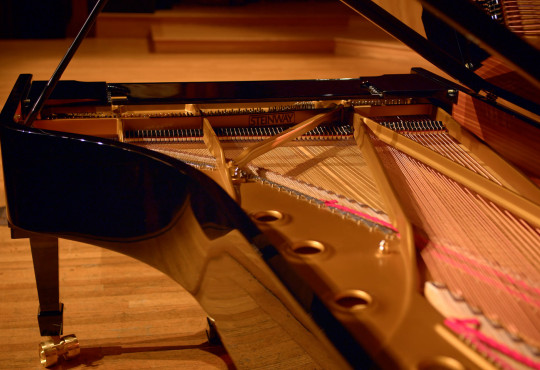
New piano, a ‘unicorn that can do everything,’ arrives at Sanders Theatre
Interior of the Steinway concert grand piano unveiled at Sanders Theatre

New piano, a ‘unicorn that can do everything,’ arrives at Sanders Theatre

Piano Technical Services and the Office for the Arts worked with Vijay Iyer, Franklin D. and Florence Rosenblatt Professor of the Arts and Professor of African and African American Studies, to select the “unusually strong” instrument.

What if Emmett Till had made it safely home?
Sarah Lewis and Rev. Wheeler Parker Jr. stand before the Mississippi barn where Emmett Till was tortured and killed in 1955

What if Emmett Till had made it safely home?

Professor Sarah Lewis’s curated exhibition, “If Emmett Till Lived: Freedom on American Ground,” opened September 10 at the Museum of Contemporary Photography in Chicago.

Will AI ever outsmart humans? Philosophers weigh in
The moderator and two panelists sitting on chairs

Will AI ever outsmart humans? Philosophers weigh in

A September 14 talk, co-hosted by the Division of Arts & Humanities’ Public Culture Project and Berkman-Klein Center for Internet and Society, explored the distinctions between human and artificial intelligence.

New economics building reaches its peak
A crane hoists a steel beam atop a building frame.

New economics building reaches its peak

The topping-off ceremony, a construction rite rooted in ancient Scandinavian rituals, took place August 27 at the site of the future Pritzker Hall, which will house the Department of Economics. The building project was set in motion five years ago.

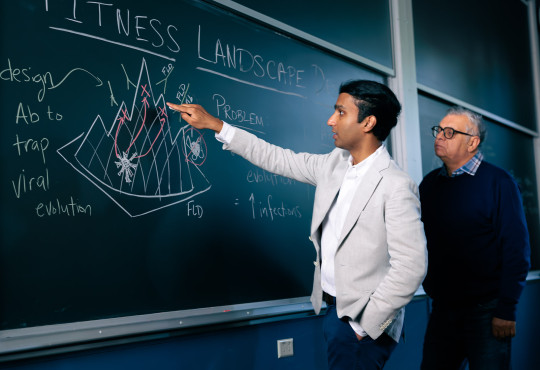
How to build an evolutionary trap for viruses
M.D./Ph.D. student Vaibhav Mohanty, at left, with Eugene Shakhnovich, Roy G. Gordon Professor of Chemistry, used a chalkboard to illustrate their fitness landscape design (FLD).

How to build an evolutionary trap for viruses

Two Harvard scientists describe a way to engineer the evolutionary landscape that viruses experience, pushing them away from dangerous variants and into evolutionary dead ends.

New faces step to the front of the class
Snapshots from classrooms featuring professors Anna Russo, Tomer Schlank, and Mine Doğucu

New faces step to the front of the class

Amid the rhythms of the back-to-campus bustle, new faculty find themselves experiencing the same first-day excitement — and jitters. We dropped in on three, on the first day of their first classes.

What sprawling light pollution does to fireflies
Fireflies in a field

What sprawling light pollution does to fireflies

As the sun sinks below the horizon, two scientists perch quietly beside a darkening field and wait for flashes of light. They have traveled far outside the city in search of research sites, because they study a group of creatures that have been driven to the margins of human settlements: fireflies.