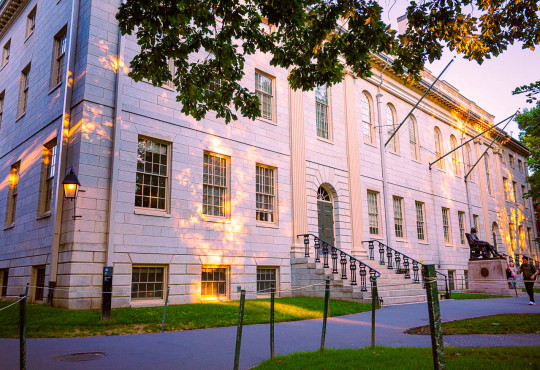
Donors meet fundraising goal for Ph.D. fellowships — and raise their hands to do it again
Through the Research Accelerator Challenge, donors raised $100 million for new endowed doctoral fellowships.
Through the Research Accelerator Challenge, donors raised $100 million for new endowed doctoral fellowships.

Researcher Matthew Nock pioneered the technique of using smartphone technology to survey high-risk adults and adolescents in real time. In a new study, Nock and his team report using the technology to predict 75 percent of suicide attempts in the week before they occurred.
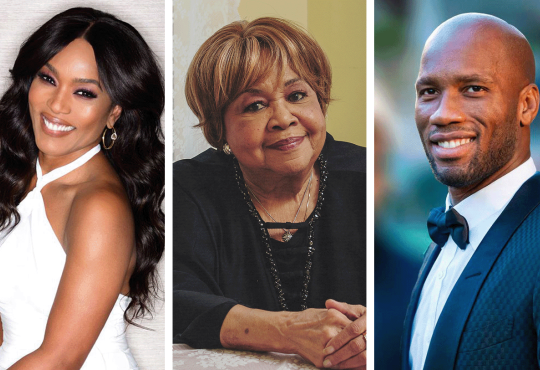
The Hutchins Center for African and African American Research has named its 2026 cohort of W.E.B. Du Bois Medalists, including actress Angela Bassett, humanitarian and soccer legend Didier Drogba, and five-time Grammy-winning singer Mavis Staples.

Upon moving to Cambridge, geophysicist Xiyuan Bao often relied on navigation software to find his way through the unfamiliar network of roads. He realized the same technology could help him find something else: a solution to a mystery deep within the Earth.

Coastal erosion, worsened by climate change, is consuming West African communities on the Gulf of Guinea. A team led by the Salata Institute’s Emmanuel Akyeampong surveyed 450 residents on the mental health impacts of the destruction.

Blazars, or galaxies powered by supermassive black holes, act as anchor points in the sky. They shine brightly in telescope observations, but because they are so far away, they appear almost perfectly fixed.
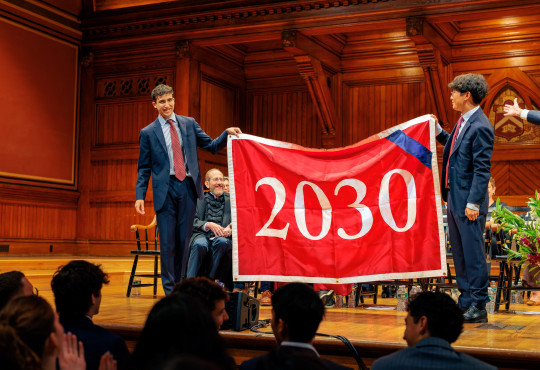
“If you get a sense that someone sees something in you — talent, capacity, or passion — that you haven’t recognized, listen to them carefully and take their suggestions seriously,” President Alan Garber advised the Class of 2030.
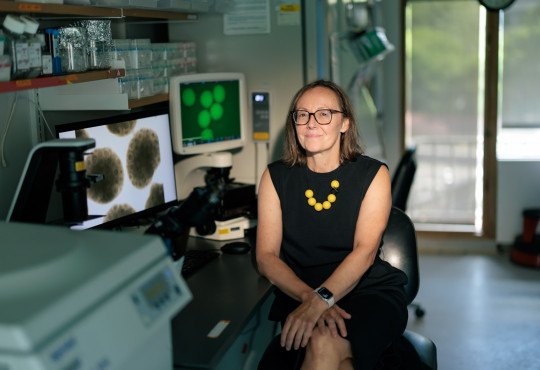
The leading stem cell scientist calls the $46 million award “dream-come-true opportunity.”
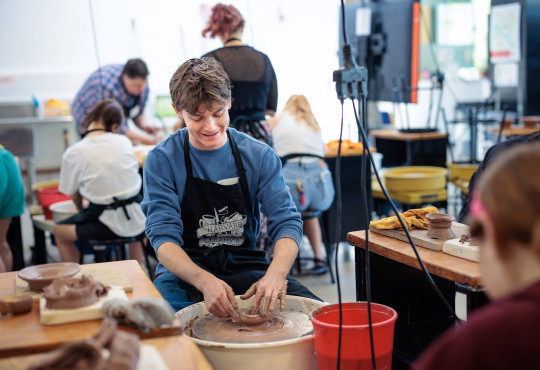
For more than three decades, the Harvard College First-Year Arts Program has served as incoming students’ first encounter with the breadth of artistic people, places, and pursuits awaiting them on campus.

Ross McElwee has often set out to make a film about one thing, only for it to become about something else entirely.
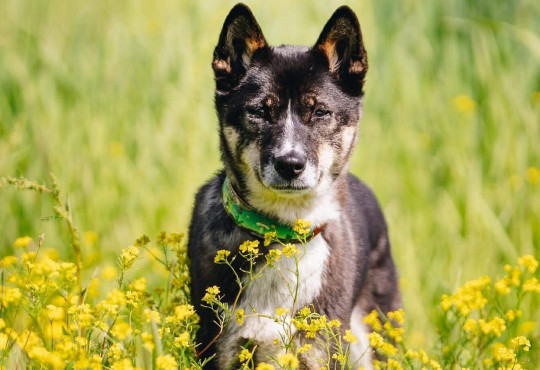
New research from Erin Hecht’s Evolutionary Neuroscience Laboratory analyzes how human influence has shaped the canine brain to make dogs better communicators.