Harvard faculty recognized by the National Academy of Sciences
Inspired by the trailblazing female politicians of her native Costa Rica, which elected its second woman president earlier this year, Daniela Solis ’26 arrived at Harvard with a dream to run for office. Then an arts class in her junior year opened her eyes to an entirely new calling she never would have predicted.
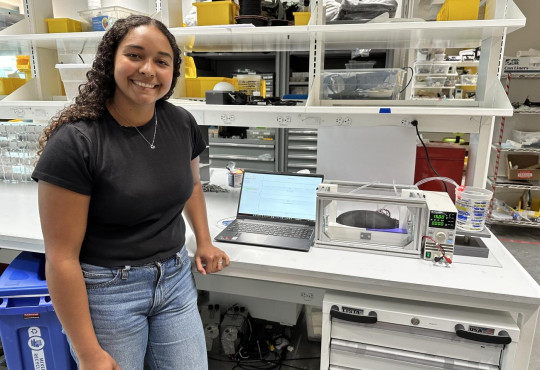
Tiahna Padilla ’26 has never been afraid of a challenge. While working on her senior thesis, the two worlds she inhabited at Harvard converged through the development of a mobile artificial limb that gives unique insight into the capabilities of athletes’ muscles.
Thousands filled the pews of one of Chicago’s largest Black churches on June 15, 2008, to hear then-Senator Barack Obama deliver a much-anticipated Father’s Day speech. Given the occasion and setting, few would have been surprised if the candidate for president had taken the opportunity to lift up the role of Black men in family life. And at first, he did, briefly praising the work and virtues of the congregation's leader, Bishop Arthur Brazier, and his son, Rev. Byron Brazier. Then Obama pivoted sharply, delivering a withering indictment of absentee fathers in the Black community.
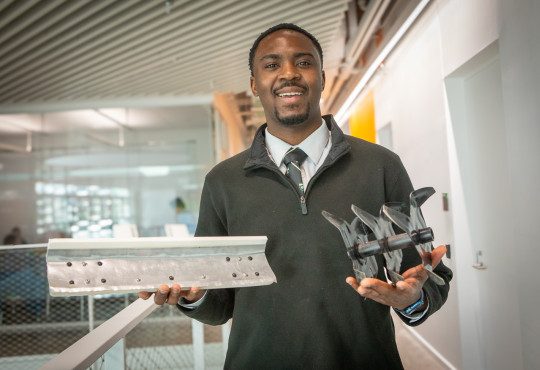
After a year at the Altoona campus of Penn State University, Tolu Ademola wanted a change. He wanted to go somewhere that felt like a true university campus. And while he knew he wanted to study engineering, he wanted a school that would encourage him to take humanities as well.
Find Jiani Johnson’s fifth-grade yearbook, and you’ll find a surprising response to the question of what she wanted to be when she grows up: a bioengineer. She liked tinkering and building things, and she always wanted to help people, making bioengineering the ideal interdisciplinary collaboration.
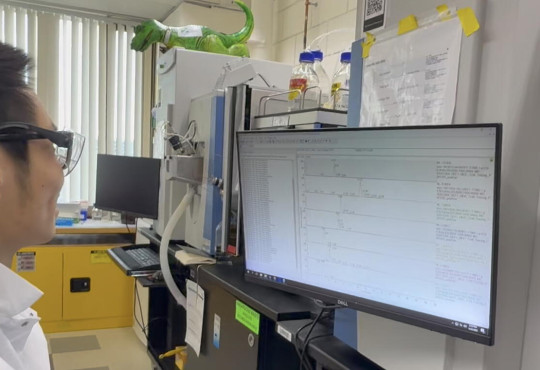
In the Kanarek Laboratory at Boston Children’s Hospital, Alan Wong, who will receive his PhD in biological and biomedical sciences this May from the Harvard Kenneth C. Griffin Graduate School of Arts and Sciences, focuses on developing new approaches to treat pediatric leukemia while reducing harm to the brain.
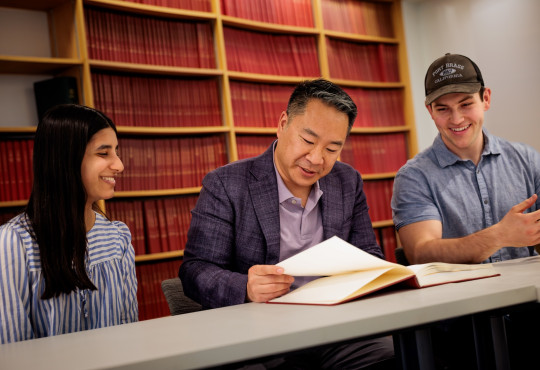
Tutorial’s enduring impact marks a century of training future scientists and physicians
Researchers detail connections between mid-20th-century America’s drug culture and covert CIA experiments
Communication has always been the thread tying the story of Lani Tran ’26 together. For her senior thesis in biomedical engineering, Tran turned that concept into action by designing a collaborative feedback system that helps healthcare providers improve patient care. Originally from the small town of Alhambra, Calif., Tran arrived at Harvard with an inkling that she wanted to pursue science.
If approved, ENCE would become the first new concentration for Harvard College students since 2018.