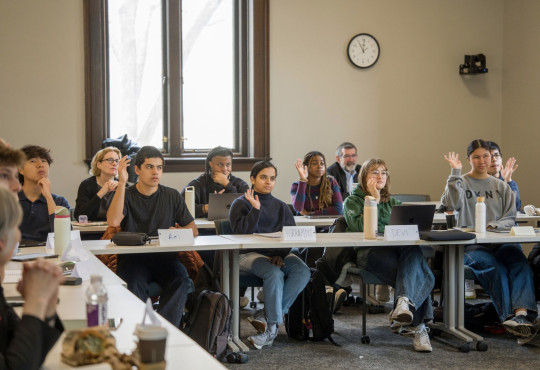
Faculty to vote on new multidisciplinary climate concentration
If approved, ENCE would become the first new concentration for Harvard College students since 2018.
If approved, ENCE would become the first new concentration for Harvard College students since 2018.
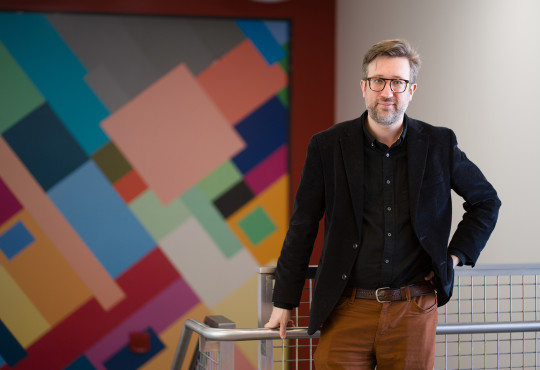
Awardees include faculty studying infection, Atlantic slave trade, and South Asia artisan practices
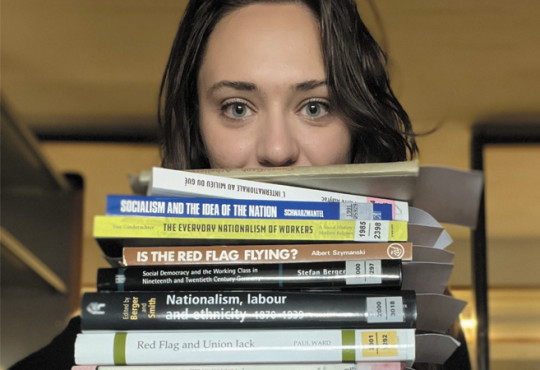
Natalie Behrends received an unusual present for her 10th birthday: a biography of Mary Harris “Mother” Jones, the turn-of-the-century American labor activist.
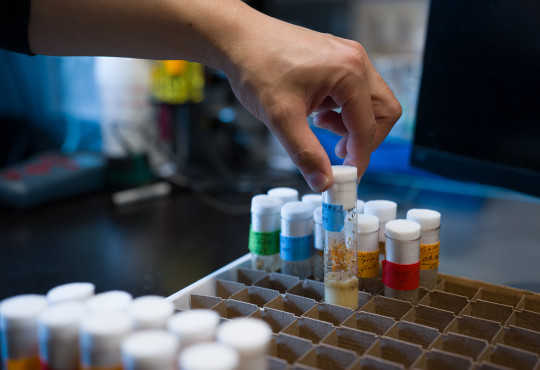
For more than a century, the fruit fly has been a workhorse of the biological sciences that has helped scientists to make fundamental breakthroughs in fields such as genetics and neuroscience.

This April, one thousand red oaks will be planted at Harvard Farm. The species, native to New England’s northern temperate climate zone, is increasingly threatened by drought and heat.

Throughout the history of biology, numerous discoveries stemmed from observing living systems, but seeing the innerworkings of living organisms presents challenges.
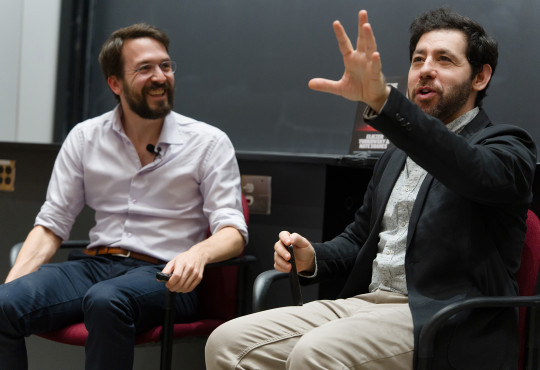
To a packed audience, author of “If Anyone Builds It, Everyone Dies” talks real stakes of “superhuman” AI threats.
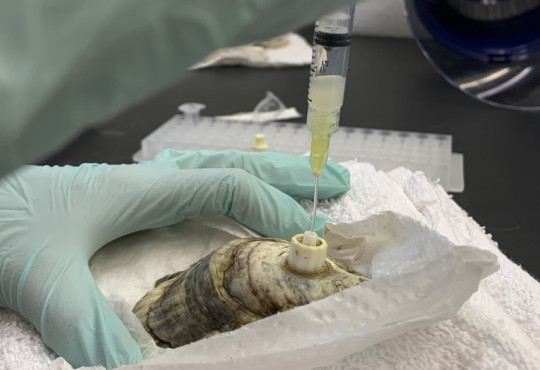
For an oyster, creating an internal environment for calcification that forms its distinctive hard shell is essential. But new Harvard research has found that these bivalves may outsource the work.

Childhood is understood as a time to learn and grow. What Christopher Kuzawa’s research shows is that learning and growing are interconnected.

This year, Harvard College is home to one current and two former National Youth Poet Laureates.

Can a river be a living entity? Harvard College senior Hassan Looky, a joint concentrator in anthropology and history, is asking this very question as he focuses his thesis on the rights of the Yarra River (Birrarung) in Melbourne, Australia.