Life Sciences

Search
  • Filter by School
    School
    School (field_school)
  • Filter by Topic
    Topic
    Topics (field_topics)
  • Filter by People
    People
    Audience (field_audience)
At Harvard Forest, doomed eastern hemlocks found to further future generations
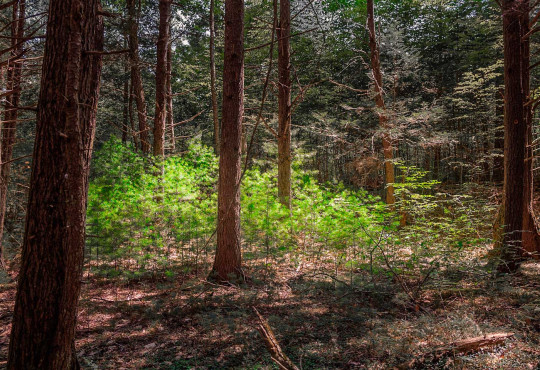
Small, newly regrown hemlock trees under larger old-growth forest

At Harvard Forest, doomed eastern hemlocks found to further future generations

Sixteen years ago, an invasive pest called the woolly adelgid arrived at Harvard Forest and slowly began to devastate its the eastern hemlocks — as they had done in forcce elsewhere. Since then, Harvard Forest scientists have begun to study how to manage the demise of its so-called foundation species.
How to build an evolutionary trap for viruses
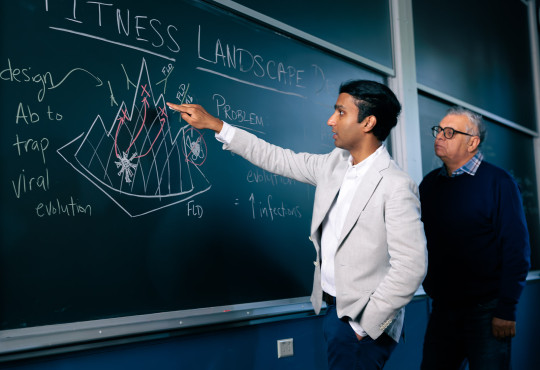
M.D./Ph.D. student Vaibhav Mohanty, at left, with Eugene Shakhnovich, Roy G. Gordon Professor of Chemistry, used a chalkboard to illustrate their fitness landscape design (FLD).

How to build an evolutionary trap for viruses

Two Harvard scientists describe a way to engineer the evolutionary landscape that viruses experience, pushing them away from dangerous variants and into evolutionary dead ends.

What sprawling light pollution does to fireflies
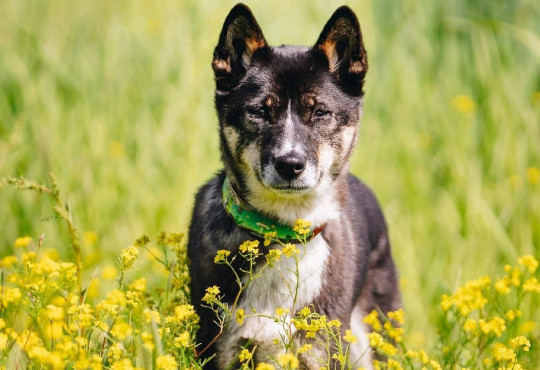
Fireflies in a field

What sprawling light pollution does to fireflies

As the sun sinks below the horizon, two scientists perch quietly beside a darkening field and wait for flashes of light. They have traveled far outside the city in search of research sites, because they study a group of creatures that have been driven to the margins of human settlements: fireflies.

Lab-grown brain ‘organoids’ set longevity record
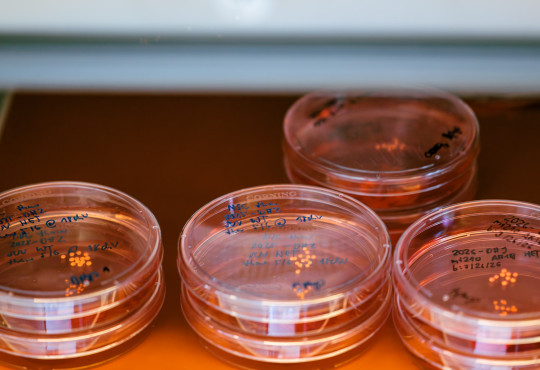
A stack of lab dishes containing lab-grown human brain organoids

Lab-grown brain ‘organoids’ set longevity record

In a new milestone for stem cell research, Harvard neuroscientists have set a record for keeping alive lab-grown human brain “organoids” and proven that they mimic key developmental stages seen in living people.

Haim Sompolinsky wins top physics prize
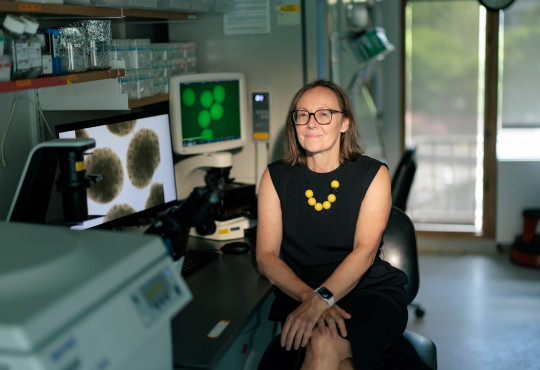
Portrait of Haim Sompolinsky

Haim Sompolinsky wins top physics prize

The Harvard theoretical physicist and neuroscientist has won the Dirac Medal and Prize, one of the highest honors in physics.

Where undergrads grow into scientists
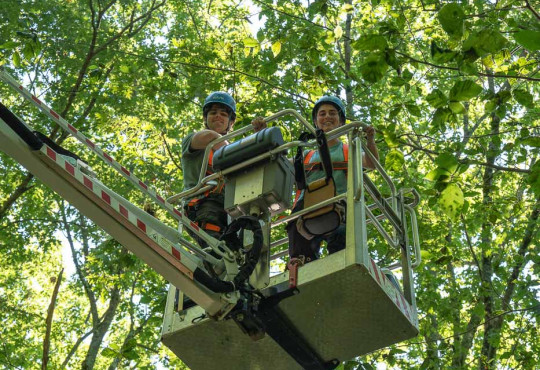
Tom Weber and mentor Laura Ostrowsky in a bucket lift at Harvard Forest

Where undergrads grow into scientists

Deep in the woods of Petersham, Mass., the Harvard Forest Summer Research Program in Ecology is cultivating a renewable resource — future generations of scientists.

Octopus cells pack ‘real surprise’ for biologists
A California two-spot octopus waving its arms

Octopus cells pack ‘real surprise’ for biologists

Harvard biologists have discovered a mysterious distinction at the core of the octopus‘ cellular biology that appears to be unique in the animal kingdom.

How a giant predator of prehistoric seas was discovered — twice
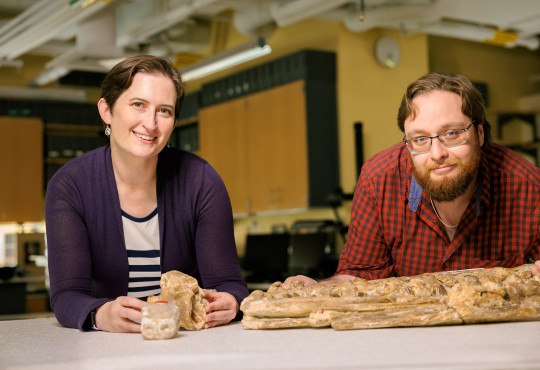
Museum of Comparative Zoology collections manager Christina Byrd, at left, and MCZ fossil preparator Scott Johnston pose with a Tylosaurus proriger fossil jaw.

How a giant predator of prehistoric seas was discovered — twice

After 80 million years, a giant fossil jaw has quite a story to tell. Back in the age of the dinosaurs, Tylosaurus proriger was a fearsome predator — a bus-sized aquatic reptile with a crushing snout, daggerlike teeth, and knack for swallowing prey whole. How its bones wound up at Harvard is a tangled yarn involving a Wild West stagecoach station, the early western railroads, the infamous “Bone Wars” between rival fossil hunters, and a founding scholar of natural history.