Inquiry & Impact

The pursuit of knowledge through research, teaching, and learning, with impact at the FAS and beyond

Period tracker, meet reality check
A female soccer player using her phone in the locker room

Period tracker, meet reality check

A new paper from the GenderSci Lab interrogates the claims of a leading menstrual cycle tracking app, finding that the “speculative marginal benefit does not justify the potential harms,” including concerns surrounding privacy, personal data, and credibility.

Oil and water do mix, chemically speaking
Doctoral student Abdulrahman Alfaraidi in the lab with Harvard professors Richard Liu and Michael Aziz.

Oil and water do mix, chemically speaking

The process of producing essential medicines and fine chemicals has long been powered by reactions involving intense heat, heavy metal catalysts, and hazardous hydrogen gas. Now, a team of Harvard chemists and engineers has demonstrated that these critical transformations can be driven cleanly by electricity.

When gospel artists went platinum
Charrise Barron sitting in an auditorium seat holding a copy of her book “The Platinum Age of Gospel”

When gospel artists went platinum

Prior to the 2000s, it was unusual to see a gospel artist performing in skinny jeans or bodycon dresses. Also unusual was hearing gospel songs about romantic love, songs including rap verses, or music videos featuring hip-hop dance choreography and celebrity cameos.

Search
  • Filter by School
    School
    School (field_school)
  • Filter by Topic
    Topic
    Topics (field_topics)
  • Filter by People
    People
    Audience (field_audience)
Fly ball!
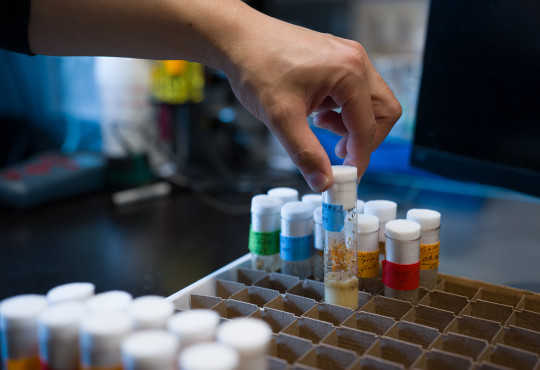
A hand pulling a test tube from a collection of samples

Fly ball!

For more than a century, the fruit fly has been a workhorse of the biological sciences that has helped scientists to make fundamental breakthroughs in fields such as genetics and neuroscience.

Experiment asks: What helps trees resist climate change?
Thousands of flags mark the planting of 17,000 trees in the FAB experiment at the Harvard Farm.

Experiment asks: What helps trees resist climate change?

This April, one thousand red oaks will be planted at Harvard Farm. The species, native to New England’s northern temperate climate zone, is increasingly threatened by drought and heat.

The atlas maker of the microscopic world
Cell atlas of a whole mouse brain

The atlas maker of the microscopic world

Throughout the history of biology, numerous discoveries stemmed from observing living systems, but seeing the innerworkings of living organisms presents challenges.

The oyster’s invisible architects
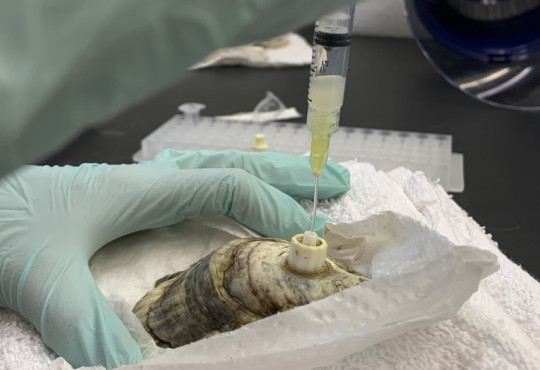
A researcher extracts calcifying fluid form a live oyster.

The oyster’s invisible architects

For an oyster, creating an internal environment for calcification that forms its distinctive hard shell is essential. But new Harvard research has found that these bivalves may outsource the work.

Assignment: Walk that robot across campus
A yellow Boston Dynamics Spot robot is seen in a crosswalk on the Harvard University campus.

Assignment: Walk that robot across campus

Three robots walked into the Science Center, their human handlers trailing several feet behind. Within seconds, a crowd circled the cute one, a jaunty silver contraption.

Inside the very hungry brains of preschoolers
Chris Kuzawa

Inside the very hungry brains of preschoolers

Childhood is understood as a time to learn and grow. What Christopher Kuzawa’s research shows is that learning and growing are interconnected.

For policymakers, standing behind the curtain comes with risks
A close-up view of a group of solar panels

For policymakers, standing behind the curtain comes with risks

More than $198 billion in green investments were enacted under former U.S. President Joe Biden. But who reaped the political rewards from a set of policies that advanced renewable energy projects and green jobs across all 50 states?

How inflammation may prime the gut for cancer (external link)
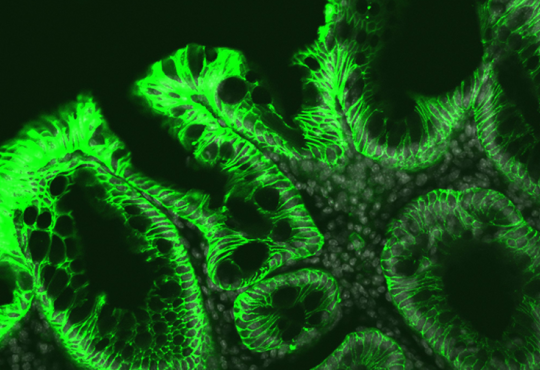
A fluorescence micrograph of mouse colon shows dysfunctional and abnormal cells in green against a black background

How inflammation may prime the gut for cancer 

A study in mice suggests that even intestinal cells that appear healthy may hold epigenetic “memories” of earlier bouts of inflammation that can promote colon cancer later in life.