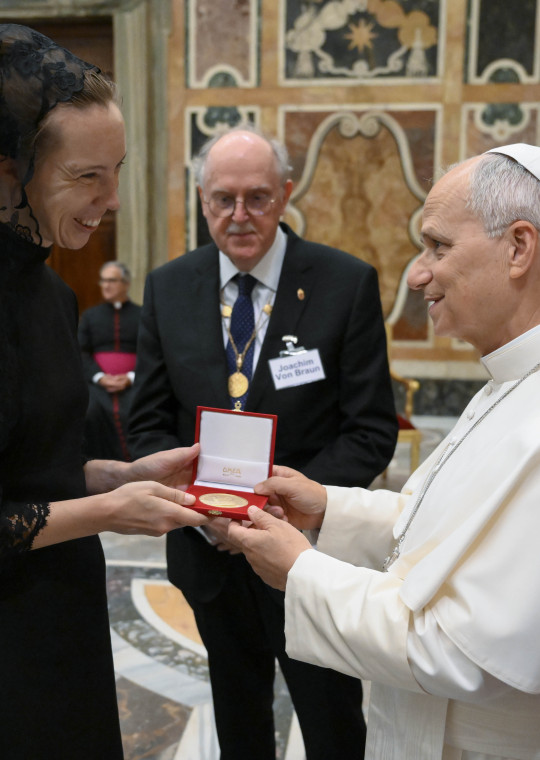
Pope Leo XIV presents scientific honor to astrochemist Karin Öberg
The astrochemist traveled to Vatican City to accept the award in a September 24 ceremony.
Faculty, students, researchers, staff, and alumni who comprise the FAS community
The astrochemist traveled to Vatican City to accept the award in a September 24 ceremony.
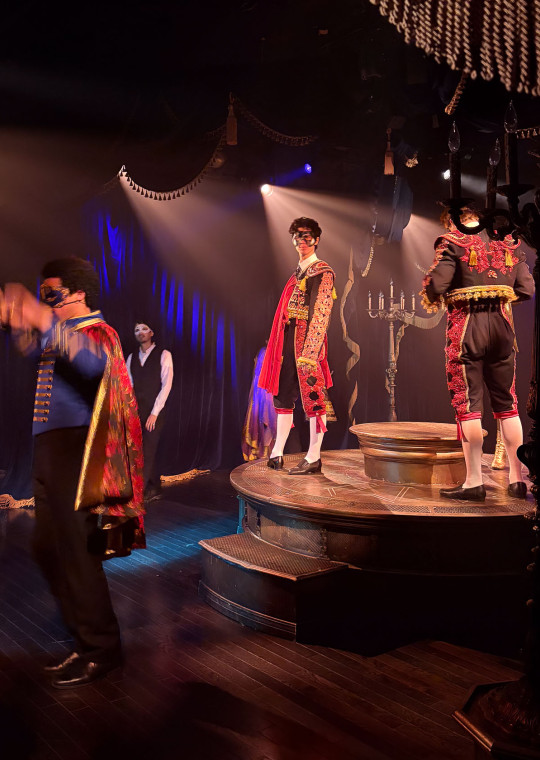
This past summer, three Harvard students helped transport Manhattan audiences to Parisian rooftops, opera house dressing rooms, and a subterranean labyrinth in “Masquerade,” an immersive adaptation of Andrew Lloyd Webber’s “The Phantom of the Opera.”

Ross McElwee has often set out to make a film about one thing, only for it to become about something else entirely.
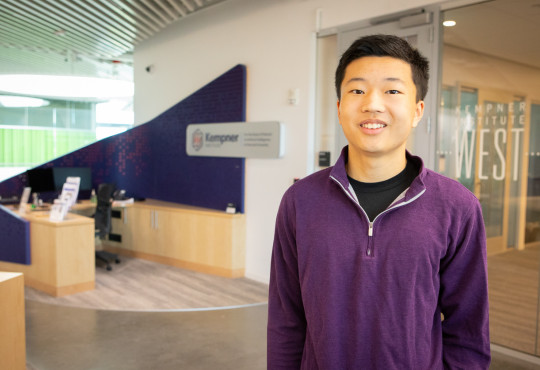
Benjamin Choi built a mind-controlled bionic arm as a high school student in Virginia, and it made him realize something critical about human brains: they’re noisy. Brains constantly send out all kinds of signals regulating everything from breathing to hunger to planning one’s daily schedule. For his prosthetic to work, it needed software that could filter out the noise and recognize the signals specifically intended to manipulate the arm.
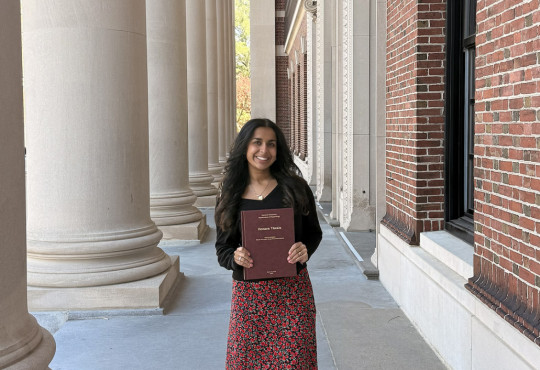
With artificial intelligence quickly becoming ingrained in everyday life, psychology and government double-concentrator Gauri Sood ’26 is skeptical about non-human technologies mimicking human experiences without bias.

Engineering Design Projects (ES 100), the capstone course at the Harvard John A. Paulson School of Engineering and Applied Sciences, challenges seniors to engineer a creative solution to a real-world problem. Saron Meressi's project focused on optimizing cardiac gene delivery using adeno-associated virus (AAV) technology. She specifically designed a tunable, ventricle-specific gene delivery system that enables more precise targeting within the heart.

In an interview, the veteran professor sees “a real hunger” for history about the document.

Fei Chen and Ryan Flynn were honored for promising investigations into cellular mechanisms of the disease.

Ike Ogbu didn’t arrive at Harvard with a clear academic plan. He’d taken an engineering design class at Foxborough Regional Charter School in southeastern Massachusetts, but wasn’t sure if he wanted to study engineering, computer science, or another topic entirely.
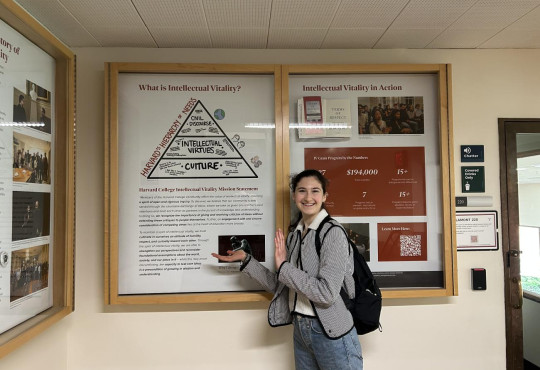
Throughout her Harvard College experience, Social Studies and Philosophy concentrator Ari Kohn ‘26 has explored how the mission of Harvard College, to educate citizen and citizen-leaders through a liberal arts education, is enacted and preserved. The motivation behind her senior thesis, “Citizen or Citizen-Leader: Civic Thought Programs and the Trust Crisis in American Higher Education”, began as a first-year student in the aftermath of the pandemic, when Kohn witnessed difficulties in defining what an undergraduate institution should be.
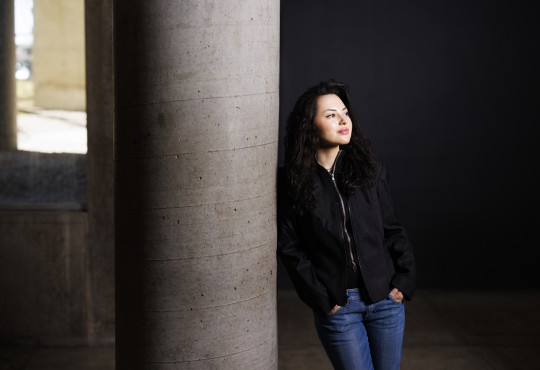
Inspired by the trailblazing female politicians of her native Costa Rica, which elected its second woman president earlier this year, Daniela Solis ’26 arrived at Harvard with a dream to run for office. Then an arts class in her junior year opened her eyes to an entirely new calling she never would have predicted.
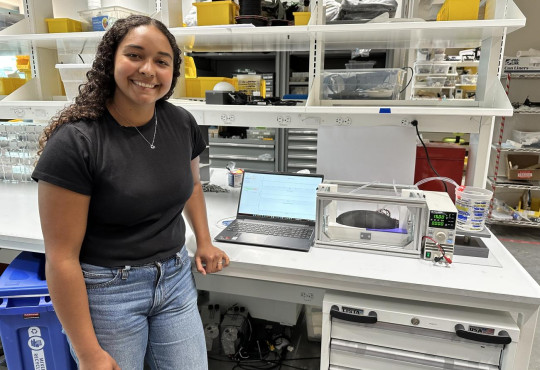
Tiahna Padilla ’26 has never been afraid of a challenge. While working on her senior thesis, the two worlds she inhabited at Harvard converged through the development of a mobile artificial limb that gives unique insight into the capabilities of athletes’ muscles.
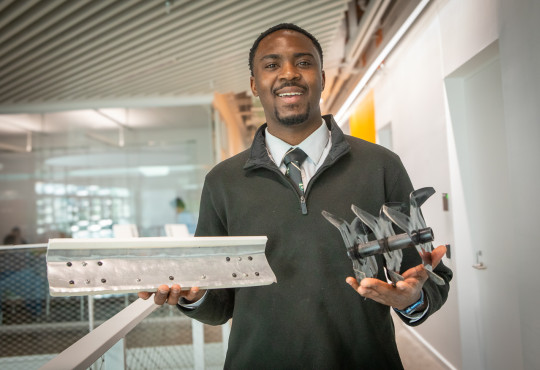
After a year at the Altoona campus of Penn State University, Tolu Ademola wanted a change. He wanted to go somewhere that felt like a true university campus. And while he knew he wanted to study engineering, he wanted a school that would encourage him to take humanities as well.
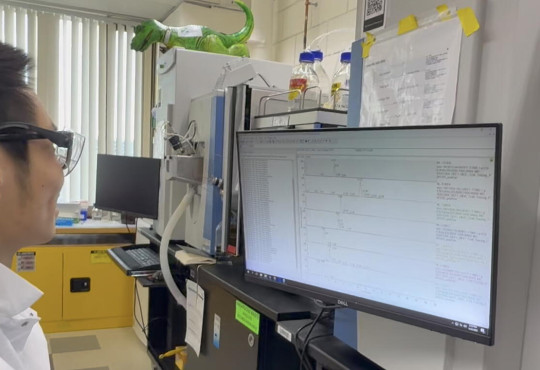
In the Kanarek Laboratory at Boston Children’s Hospital, Alan Wong, who will receive his PhD in biological and biomedical sciences this May from the Harvard Kenneth C. Griffin Graduate School of Arts and Sciences, focuses on developing new approaches to treat pediatric leukemia while reducing harm to the brain.