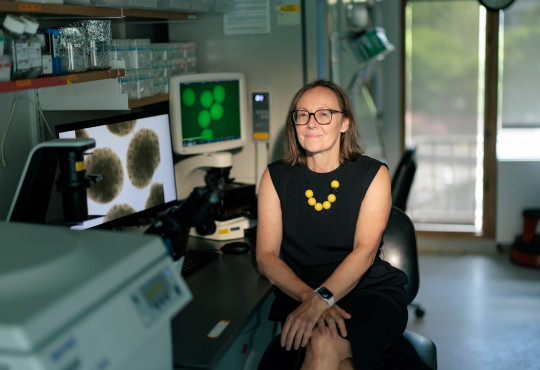
Paola Arlotta awarded ARIA grant for autism research
The leading stem cell scientist calls the $46 million award “dream-come-true opportunity.”
The leading stem cell scientist calls the $46 million award “dream-come-true opportunity.”

New research from Erin Hecht’s Evolutionary Neuroscience Laboratory analyzes how human influence has shaped the canine brain to make dogs better communicators.
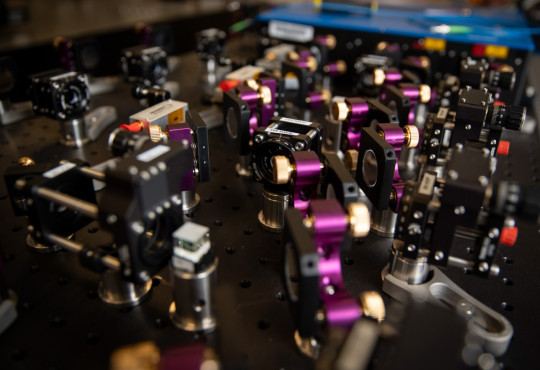
The institute will bring together 39 researchers across fields including mathematics, computer science, engineering, physics, and chemistry.
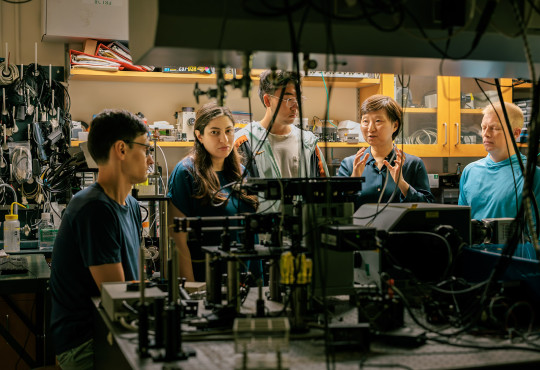
The technology, described in a new paper in Cell, could reshape how scientists investigate tissue function and disease.
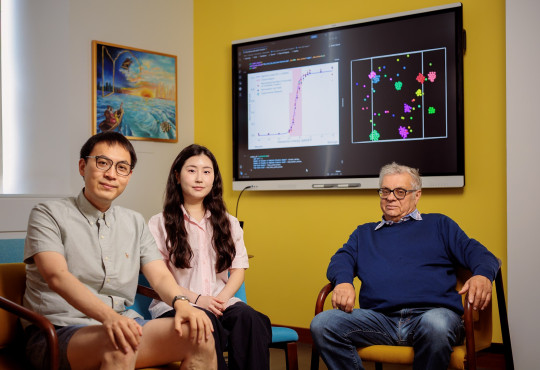
Researchers in the Department of Chemistry and Chemical Biology combined biophysics, structural biology, and simulation to solve a manufacturing question.
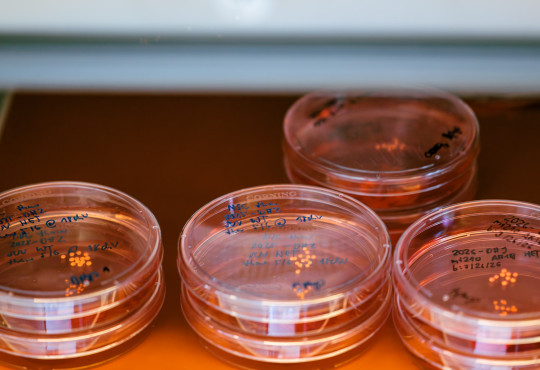
In a new milestone for stem cell research, Harvard neuroscientists have set a record for keeping alive lab-grown human brain “organoids” and proven that they mimic key developmental stages seen in living people.

The Harvard theoretical physicist and neuroscientist has won the Dirac Medal and Prize, one of the highest honors in physics.
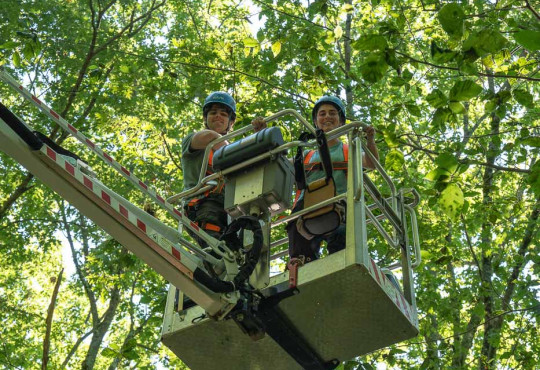
Deep in the woods of Petersham, Mass., the Harvard Forest Summer Research Program in Ecology is cultivating a renewable resource — future generations of scientists.

Forget about the ancient Greek myth of Icarus. For the last 10 years, Jenna Samra, Ph.D. ’18, and her colleagues have been pushing technology to fly closer to the hottest part of the sun.
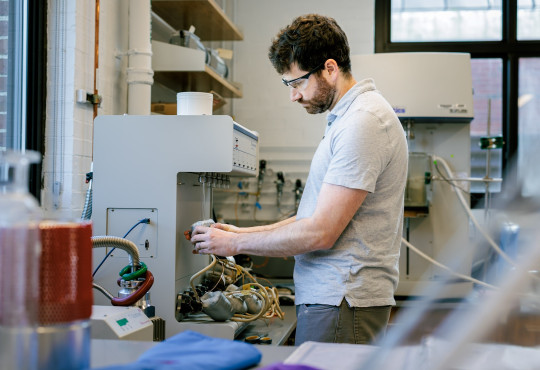
FluxBio’s near-term focus is to help biomanufacturers get more out of the reactors they already own.

Harvard biologists have discovered a mysterious distinction at the core of the octopus‘ cellular biology that appears to be unique in the animal kingdom.