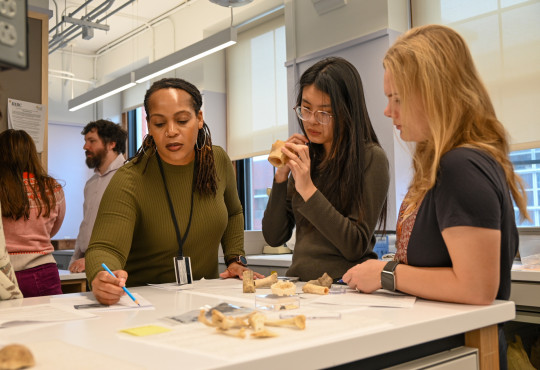
New faculty director gives Zooarchaeology Lab a refresh
Shayla Monroe, assistant professor of archaeology, renovated the space with an eye to honoring its storied collection.
Shayla Monroe, assistant professor of archaeology, renovated the space with an eye to honoring its storied collection.
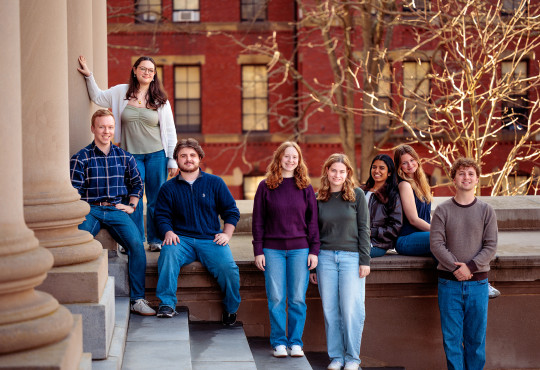
The Harvard Undergraduate Rural League hosts a first-of-its-kind forum to address small-town America’s most urgent issues, while confronting the urban-rural divide.
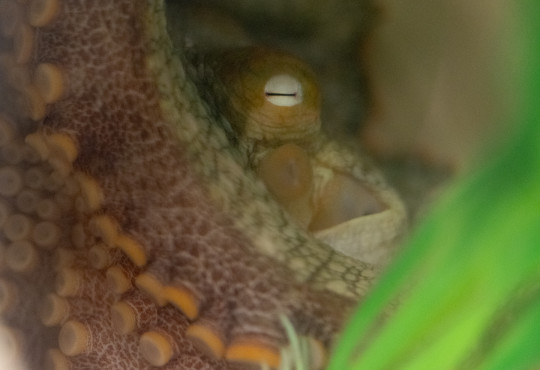
Study discovers how species uses “taste by touch” sensory system to feel out potential mates
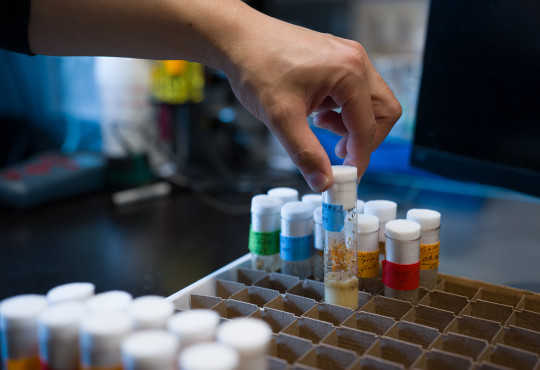
For more than a century, the fruit fly has been a workhorse of the biological sciences that has helped scientists to make fundamental breakthroughs in fields such as genetics and neuroscience.

This April, one thousand red oaks will be planted at Harvard Farm. The species, native to New England’s northern temperate climate zone, is increasingly threatened by drought and heat.

Throughout the history of biology, numerous discoveries stemmed from observing living systems, but seeing the innerworkings of living organisms presents challenges.
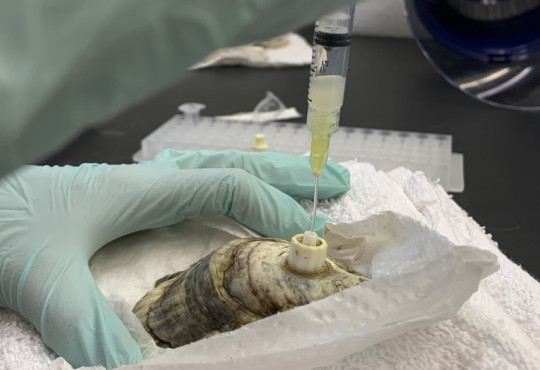
For an oyster, creating an internal environment for calcification that forms its distinctive hard shell is essential. But new Harvard research has found that these bivalves may outsource the work.

Childhood is understood as a time to learn and grow. What Christopher Kuzawa’s research shows is that learning and growing are interconnected.
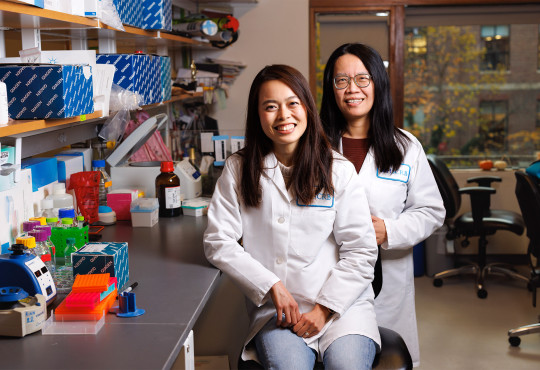
New findings by Harvard stem cell biologists suggest it may be possible in the future to regrow wounded skin without scarring.
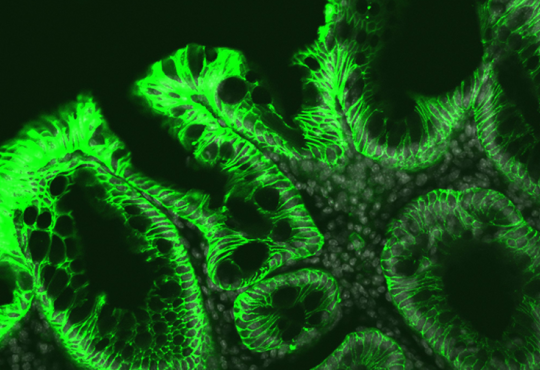
A study in mice suggests that even intestinal cells that appear healthy may hold epigenetic “memories” of earlier bouts of inflammation that can promote colon cancer later in life.

Neurobiology concentrator Sean Meng ’26 is fascinated by how individuals see the world. He first became aware of how differently people can experience the same environment while serving as a teaching assistant at a school in Lawrence, Massachusetts. There, he met Elmer, a first grader with severe autism who was, for the most part, overlooked. After spending more time with him, Meng found that Elmer truly “was seeing the world in very different ways.”