
The geological roots of life on Earth
Andrew Knoll previews his new book on the 4-billion-year “conversation” between Earth and life — and recent interruptions by humans
Andrew Knoll previews his new book on the 4-billion-year “conversation” between Earth and life — and recent interruptions by humans
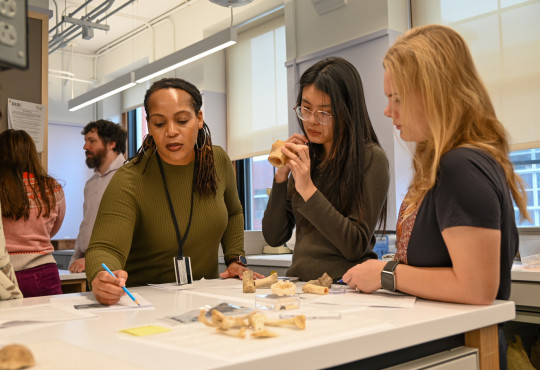
Shayla Monroe, assistant professor of archaeology, renovated the space with an eye to honoring its storied collection.
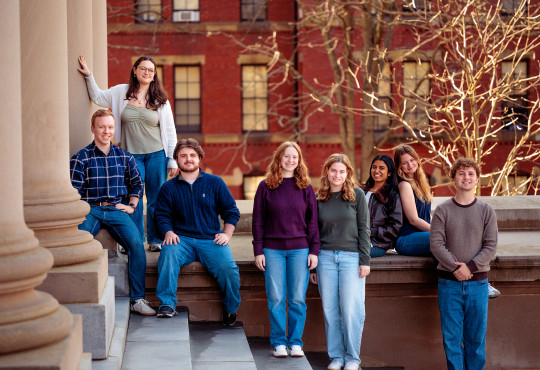
The Harvard Undergraduate Rural League hosts a first-of-its-kind forum to address small-town America’s most urgent issues, while confronting the urban-rural divide.
The 38-year-old economics professor was specifically recognized for macroeconomic modeling that predicts behavior according to income.
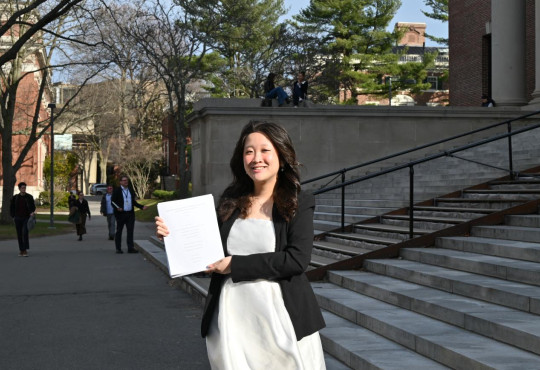
Communication has always been the thread tying the story of Lani Tran ’26 together. For her senior thesis in biomedical engineering, Tran turned that concept into action by designing a collaborative feedback system that helps healthcare providers improve patient care. Originally from the small town of Alhambra, Calif., Tran arrived at Harvard with an inkling that she wanted to pursue science.
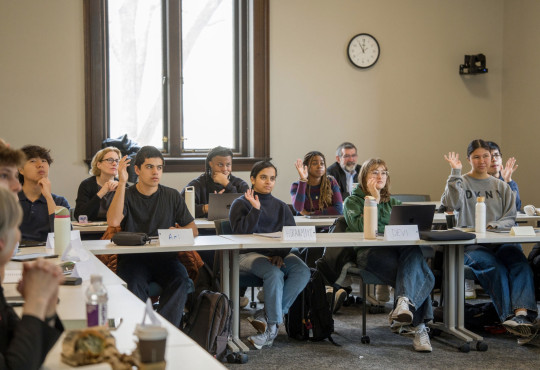
If approved, ENCE would become the first new concentration for Harvard College students since 2018.
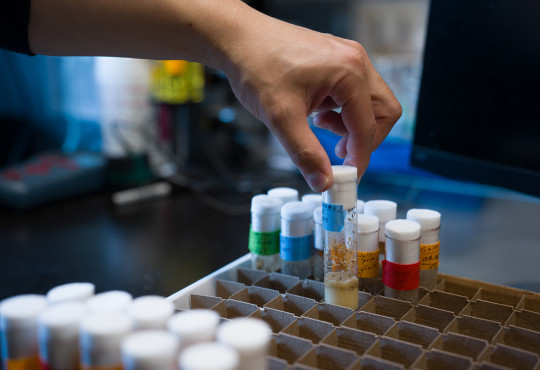
For more than a century, the fruit fly has been a workhorse of the biological sciences that has helped scientists to make fundamental breakthroughs in fields such as genetics and neuroscience.

This April, one thousand red oaks will be planted at Harvard Farm. The species, native to New England’s northern temperate climate zone, is increasingly threatened by drought and heat.
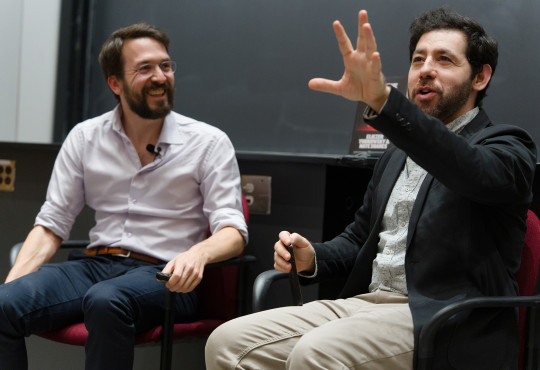
To a packed audience, author of “If Anyone Builds It, Everyone Dies” talks real stakes of “superhuman” AI threats.

Three robots walked into the Science Center, their human handlers trailing several feet behind. Within seconds, a crowd circled the cute one, a jaunty silver contraption.
The proposal to rein in inflated grading at Harvard College has dominated campus discussion and ricocheted around the Ivy League and across higher education since its Feb. 6 release.