
At Harvard, Flavor Flav weighs place in hip-hop history
The Public Enemy icon discussed his career, his influences, and the power of music as political commentary.
The Public Enemy icon discussed his career, his influences, and the power of music as political commentary.
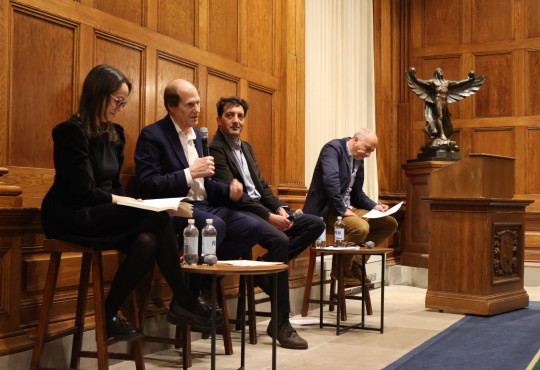
A recent event, hosted by the Public Culture Project, grappled with the political philosophy’s aesthetic appeals (or lack thereof).
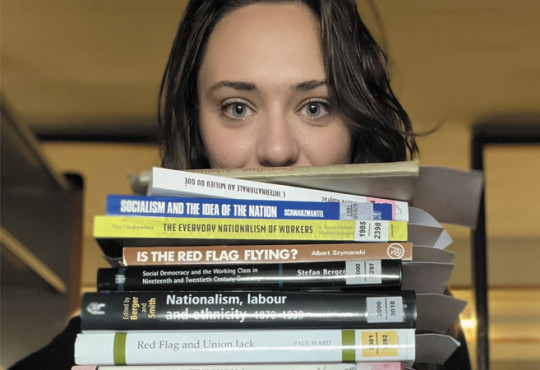
Natalie Behrends received an unusual present for her 10th birthday: a biography of Mary Harris “Mother” Jones, the turn-of-the-century American labor activist.
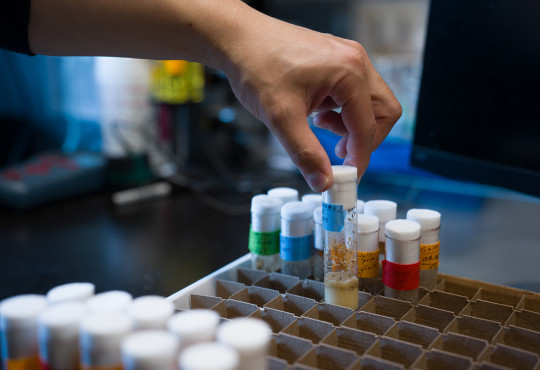
For more than a century, the fruit fly has been a workhorse of the biological sciences that has helped scientists to make fundamental breakthroughs in fields such as genetics and neuroscience.

This April, one thousand red oaks will be planted at Harvard Farm. The species, native to New England’s northern temperate climate zone, is increasingly threatened by drought and heat.
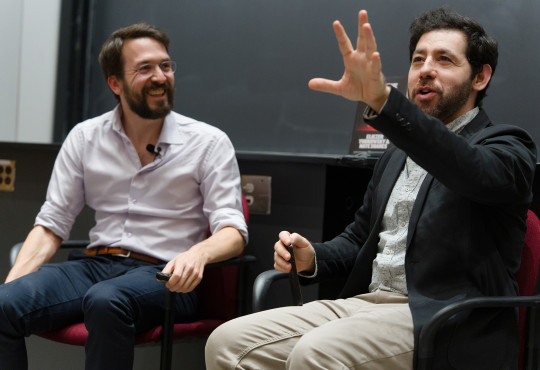
To a packed audience, author of “If Anyone Builds It, Everyone Dies” talks real stakes of “superhuman” AI threats.

The U.S. government publishes hundreds of thousands of datasets every year. For decades, social scientists eagerly mined them, crunching the numbers to glean insights on everything from wage inequality, health outcomes, and long-term trends in standardized test scores.

Three robots walked into the Science Center, their human handlers trailing several feet behind. Within seconds, a crowd circled the cute one, a jaunty silver contraption.

Childhood is understood as a time to learn and grow. What Christopher Kuzawa’s research shows is that learning and growing are interconnected.

More than $198 billion in green investments were enacted under former U.S. President Joe Biden. But who reaped the political rewards from a set of policies that advanced renewable energy projects and green jobs across all 50 states?
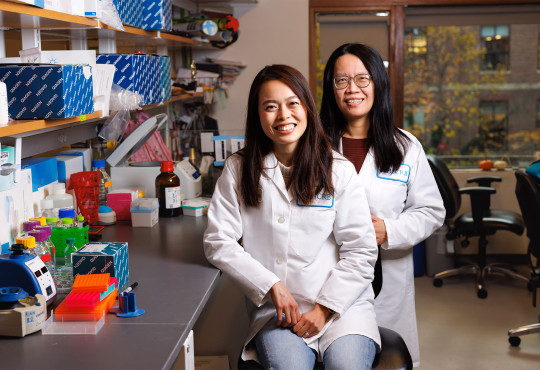
New findings by Harvard stem cell biologists suggest it may be possible in the future to regrow wounded skin without scarring.