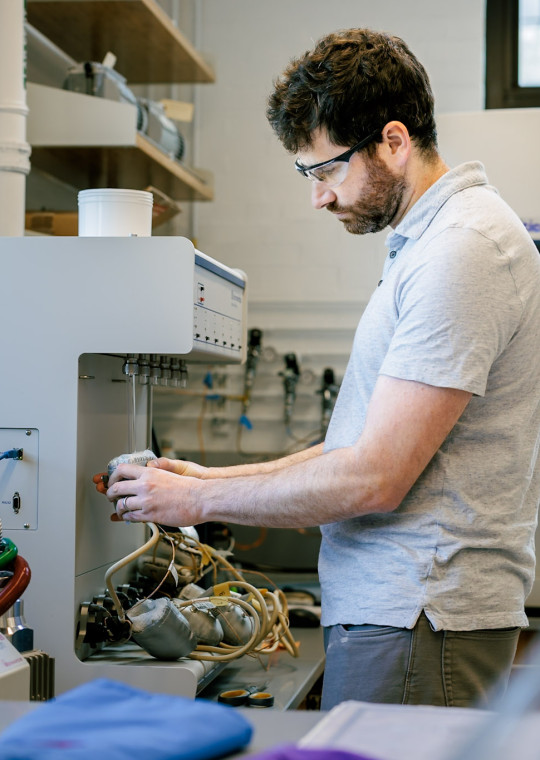
Chemist’s fix for a stubborn biomanufacturing problem? Engineer the liquid, not the machine
FluxBio’s near-term focus is to help biomanufacturers get more out of the reactors they already own.
The pursuit of knowledge through research, teaching, and learning, with impact at the FAS and beyond
FluxBio’s near-term focus is to help biomanufacturers get more out of the reactors they already own.

Harvard biologists have discovered a mysterious distinction at the core of the octopus‘ cellular biology that appears to be unique in the animal kingdom.

Being born a few days on either side of the school-enrollment cutoff date might seem like an arbitrary difference. But new research finds boys born just after the cutoff, who start kindergarten relatively old for their grade, enjoy far more advantages than previously known.

Exhibit showcases tools that powered Revolutionary America
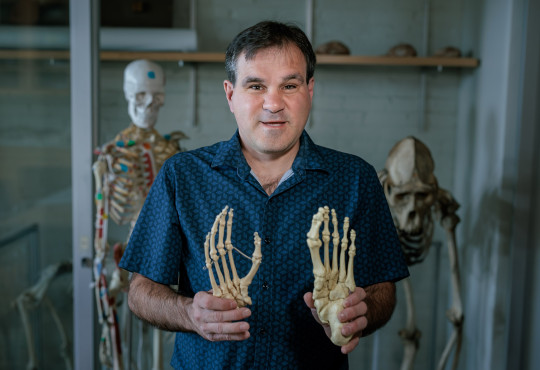
A new study shows how natural selection for locomotion reshaped both extremities

Economists show education gaps are changing who gets married — but not for the people you might think
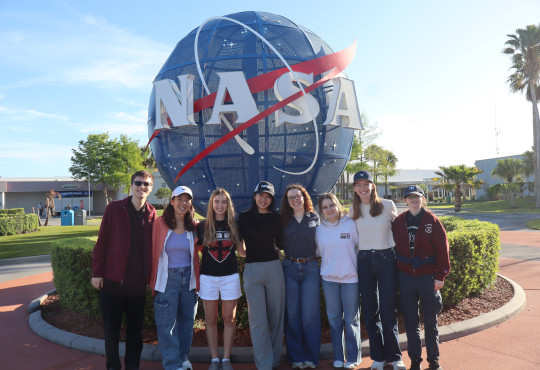
CubeSat launch from Cape Canaveral caps project that began in 2018

A new AI tool called Empirical Research Assistance can automatically write high-performance scientific software, even outperforming software written by experts.
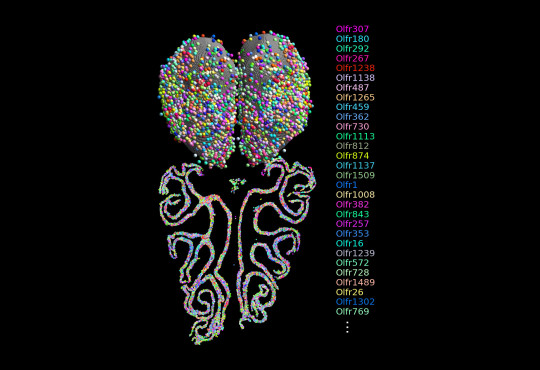
A team of researchers from two labs has created the most comprehensive map to date of how the primary olfactory system detects and organizes social and predator odors.

The Monk Skin Tone scale, devised in 2019 by Professor Ellis Monk, helps create more accurate medical diagnostic tools for patients with dark skin

Students studying the intersections of art and racial justice traveled to Montgomery this semester.
In a new study, OEB researchers CT-scanned 87 ray-finned fish species. Turns out fish aren't simple — they're just built completely differently than we assumed.

Why take a walk or a run when you can just take a pill? These are burning questions in the new era of revolutionary weight loss drugs.

A researcher focused on developing therapeutic vaccines for the human papillomavirus (HPV), Alton Gayton will graduate from the Harvard Kenneth C. Griffin Graduate School of Arts and Sciences in May 2026 with a Ph.D. in virology. He discusses his pioneering work using circular RNA and artificial intelligence to treat and prevent cervical cancer, his upbringing in North Carolina, and his path from there to Harvard, via the University of North Carolina.